 EN
EN  ES
ES  IT
IT  FR
FR  ZH
ZH  PT
PT 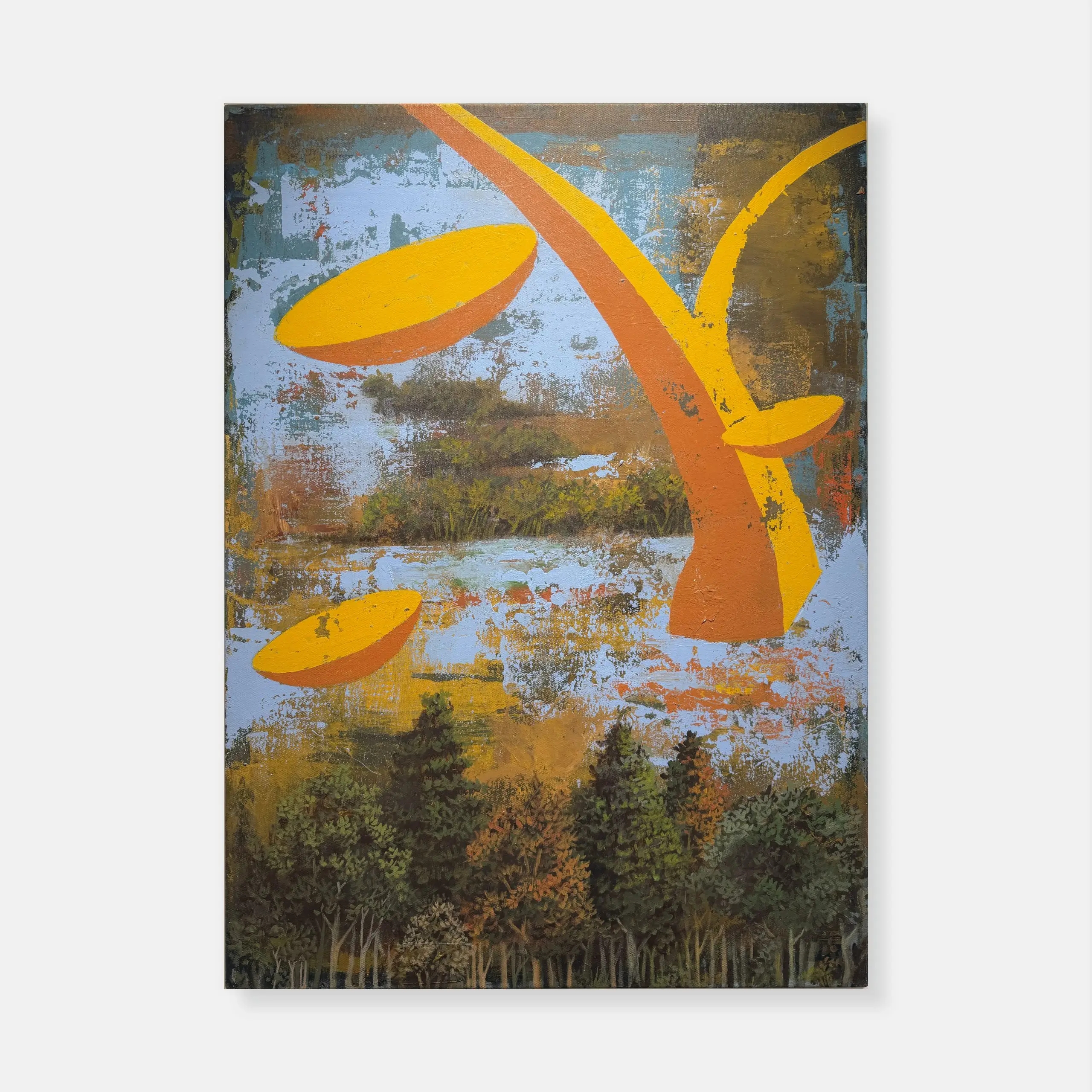
The Ghosts of Tunguska, 2024
Acrylic on canvas
78 x 56 x 4 cm (30 ¾ x 22 x 1 ⅝ in)
«My work is a kind of «atmospheric» state of painting as an «act» artistic fact. A kind of abstraction of its own language.»
It is precisely in those non-rendered spaces - empty, residual, uncomfortable - that a less codified experience of reality seems to persist. Not necessarily more authentic, but less controlled. (Authenticity is another word that has been rendered, that appears in the options menus, that is selected when choosing the difficulty level: easy, medium, authentic. And it no longer means anything, or it means the opposite, or it means exactly what the system needs it to mean to keep working.) Perhaps that's where something not entirely foreseen can still happen: a minimal resistance, or if one wants to be a little more optimistic - and I don't know if I want to be, because optimism has also been rendered, it also appears in the tutorials, it is also part of the «game» - the germ of another form of sensitivity.
I like to think -although I suspect that this idea also has a certain self-justification, that each artist's idea of his own work has a certain self-justification, that self-justification is the underlying operating system of artistic discourse, that we cannot talk about what we do without installing that patch that turns practice into theory and theory into defense- that my artistic practice moves along those margins. Not to fill them. To make visible that they are there. That there are areas where language does not quite reach, where representation gets stuck, where the graphic engine shows its limits in the form of failure, of emptiness, of a black screen that is not black but color #000000, which is a rendered black, which is the black that the system allows, which is not the black of the night or the black of the well or the black of the ink that spills and cannot be controlled. And that in that gap, in that slight discomfort-the discomfort of not knowing if what you see is a mistake or a feature, of not knowing if the artist failed or the system failed or you didn't look-something akin to art can still happen. Not art. Something like it.
The distinction matters. Or it does not matter. Or it matters precisely to the extent that it doesn't matter, to the extent that we keep talking about it without knowing what it is, to the extent that talking without knowing is the only form of talk left when everything else has been optimized, interpreted, explained, guided to its correct conclusion in the multiple-choice exam with which mass culture administers History as if it were the only test that matters.» _Juan Miguel Pozo