 EN
EN  ES
ES  IT
IT  FR
FR  ZH
ZH  PT
PT The Storm, The Pond, and The Fruit Bowl
Eloy Arribas
November 6, 2025 – February 6, 2026
Main Room, El Apartamento, Madrid
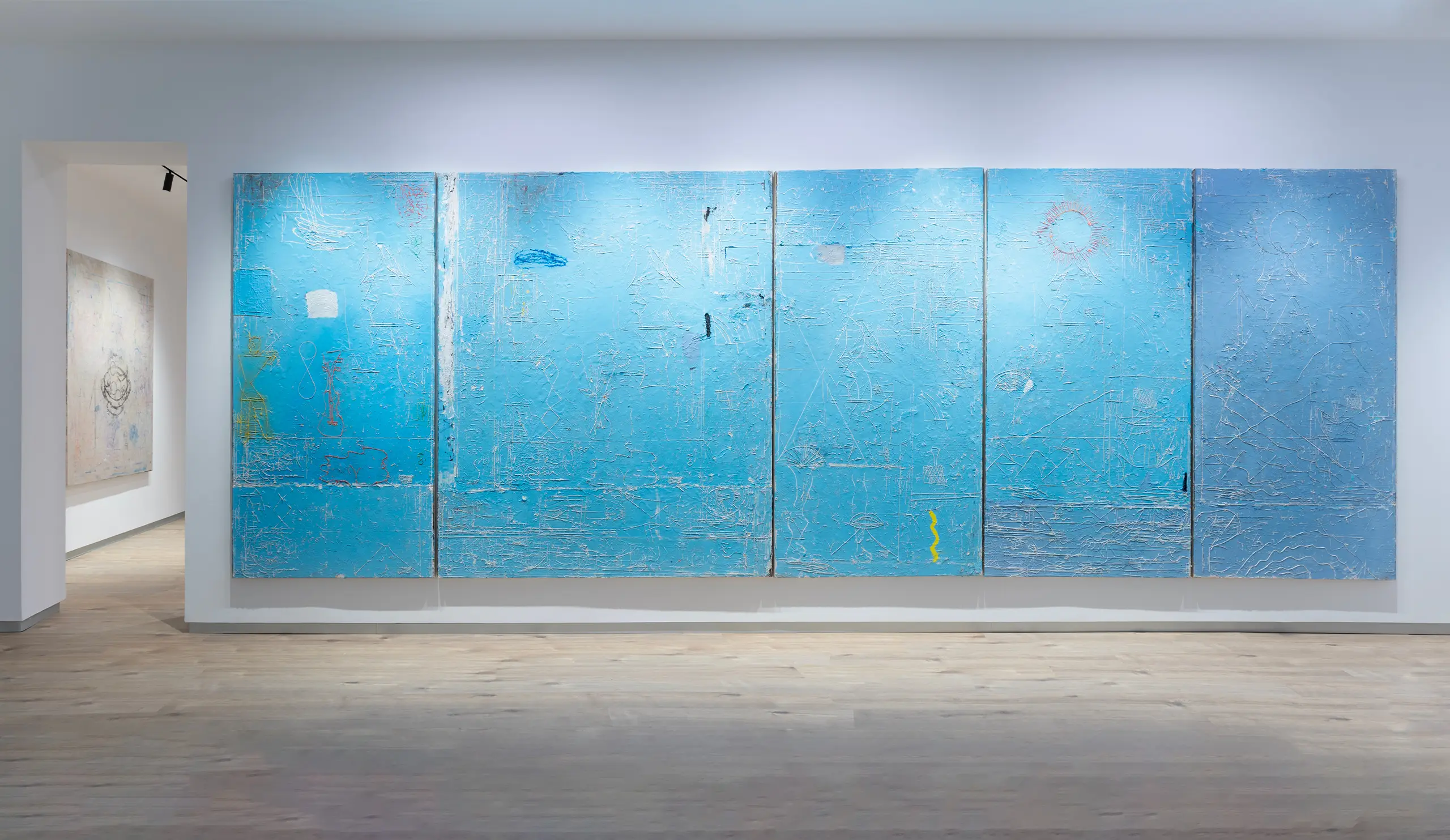

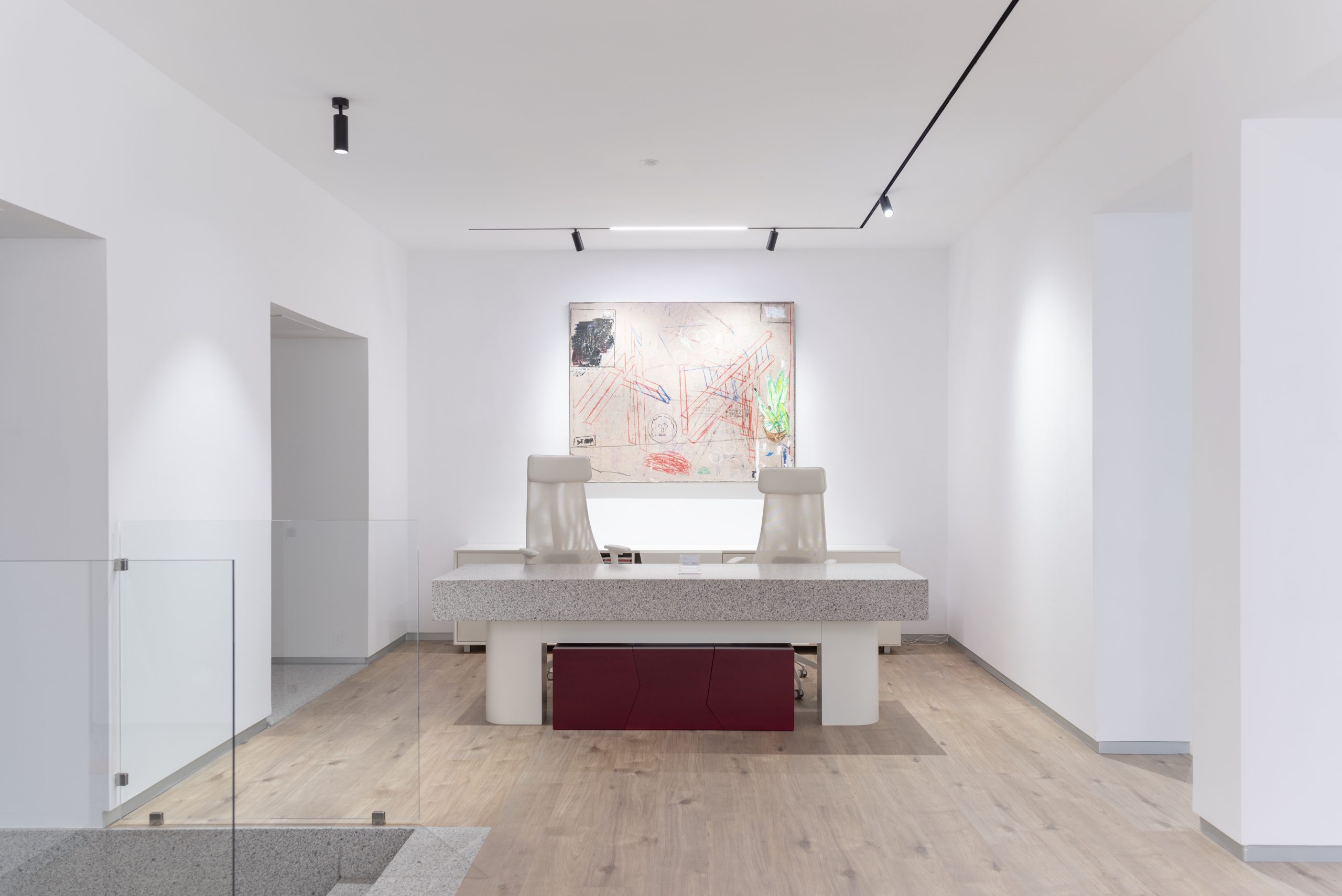
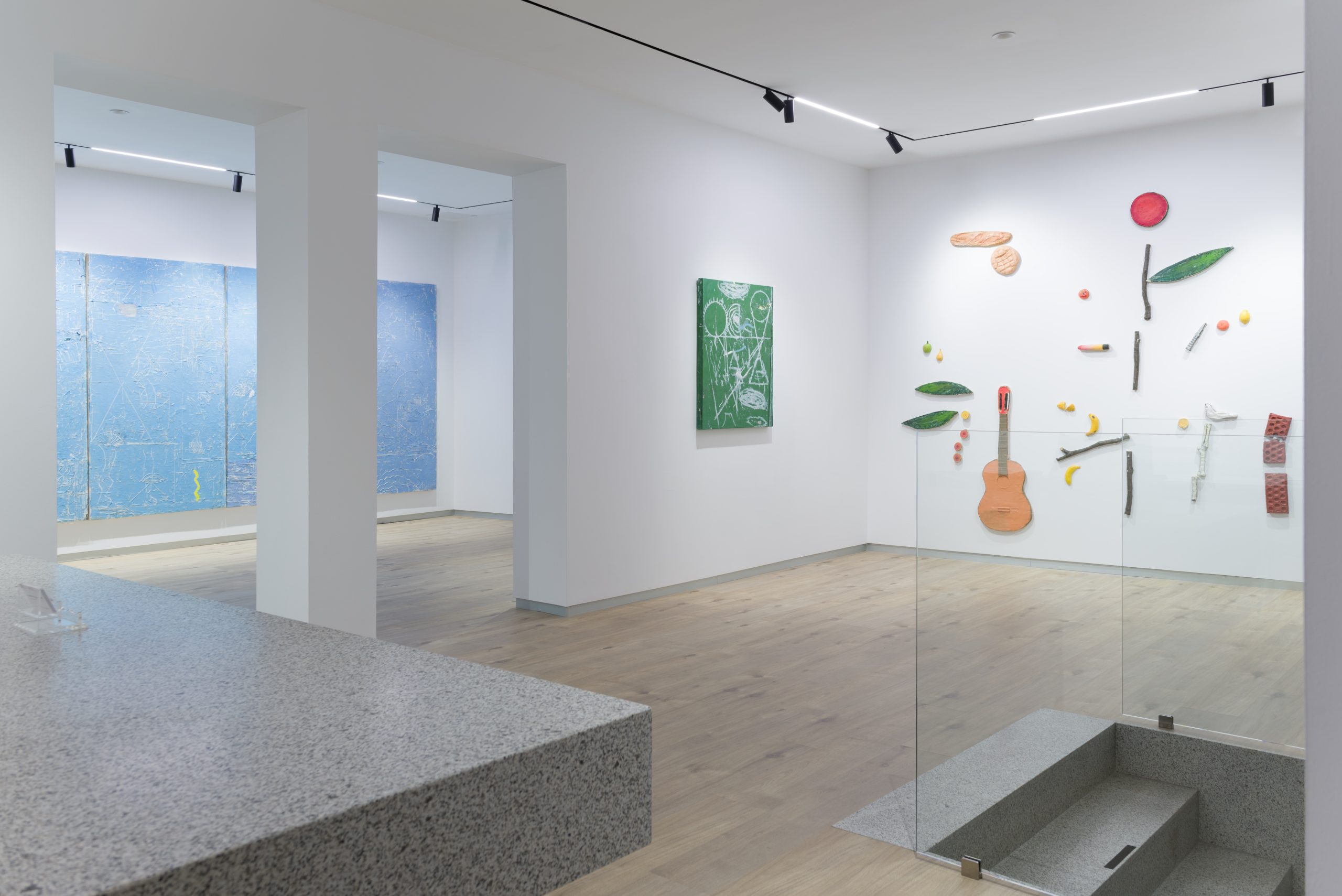
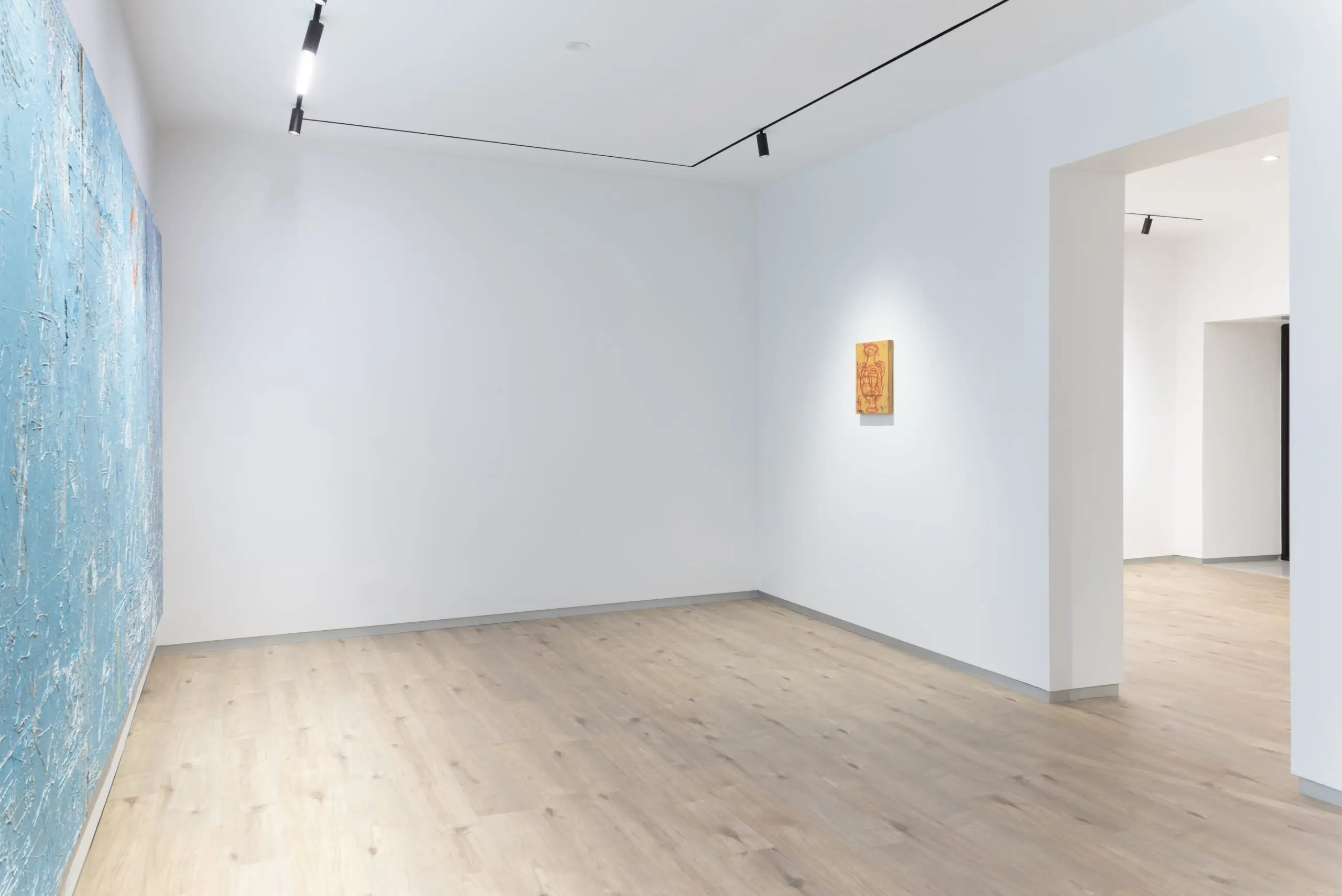
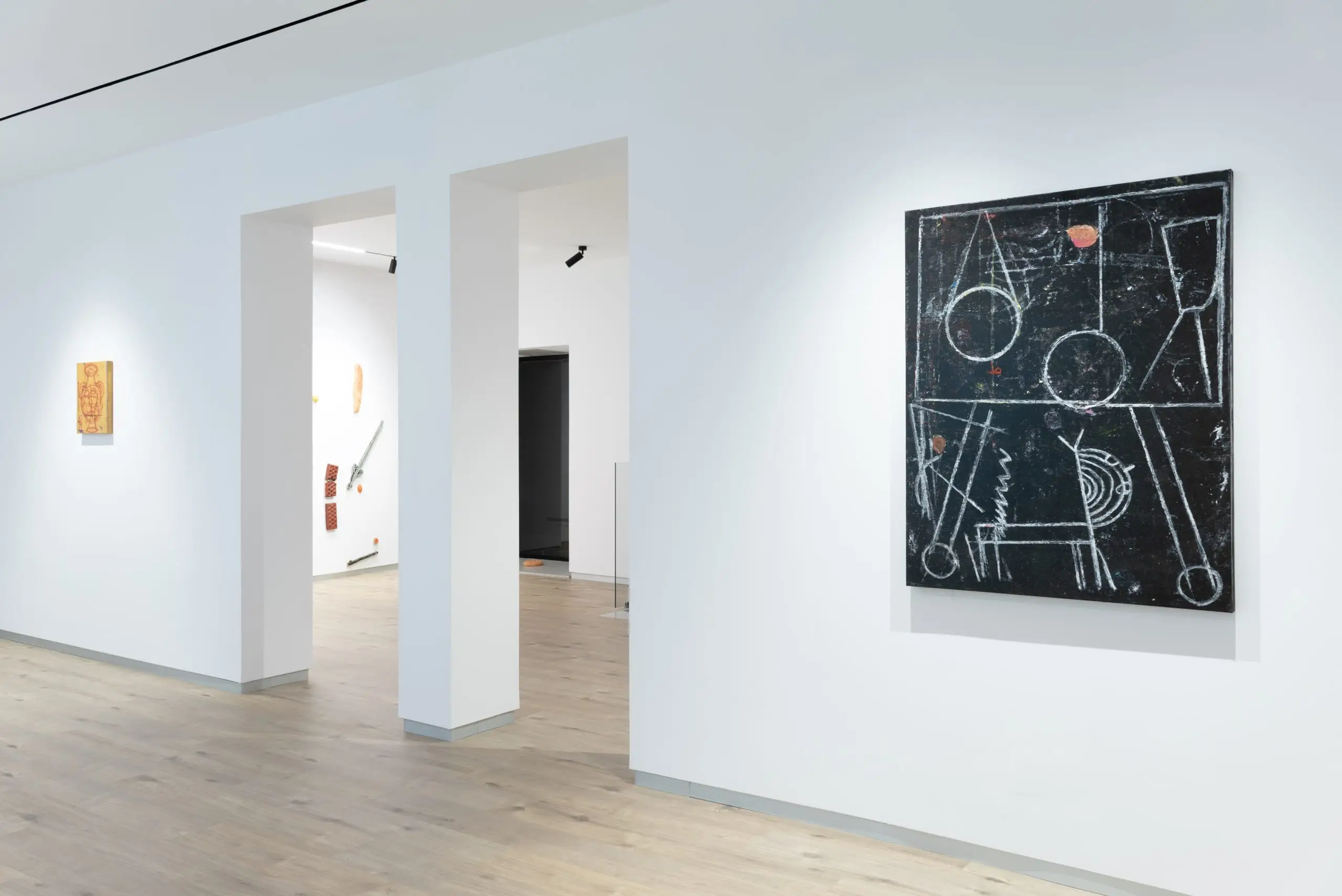
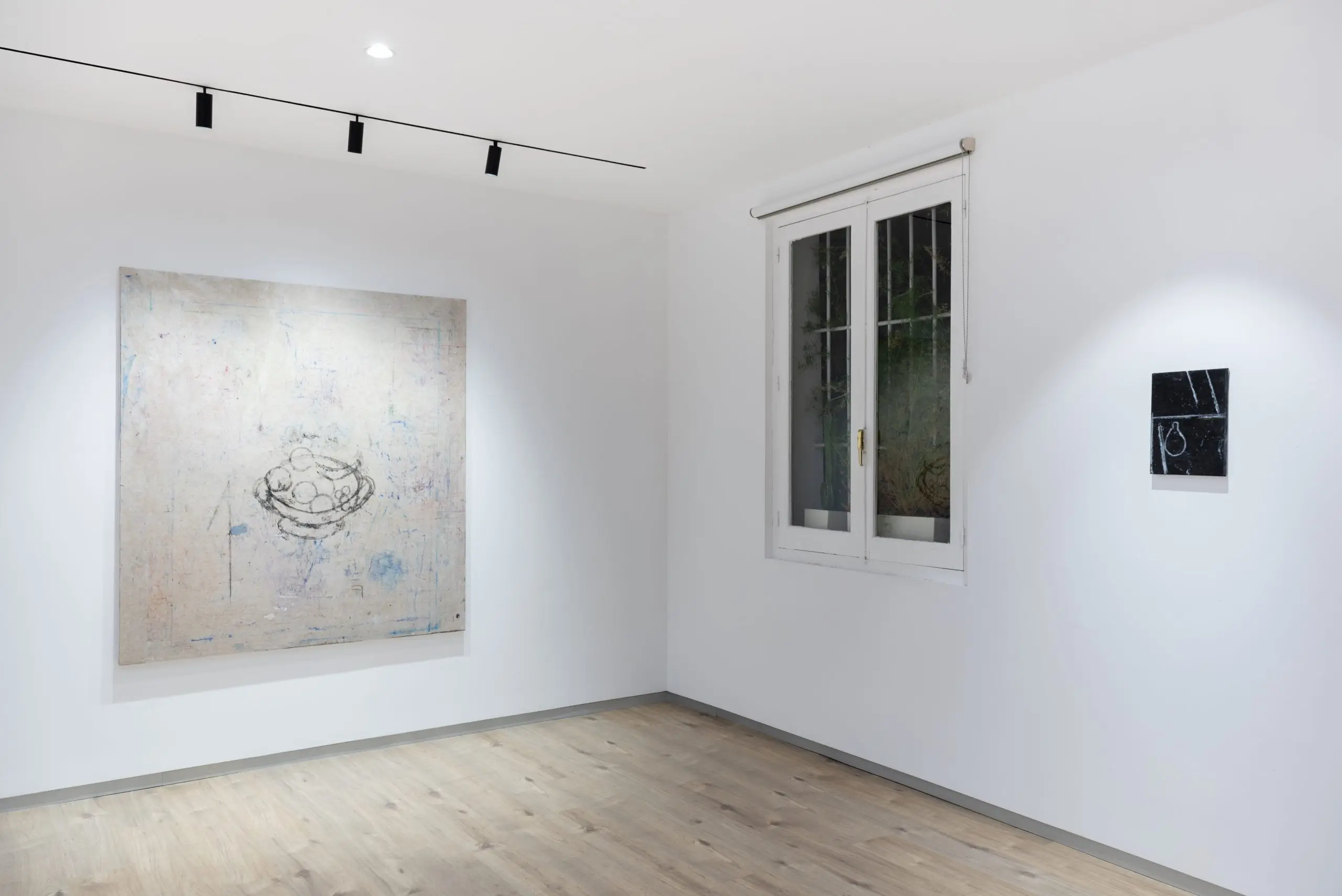
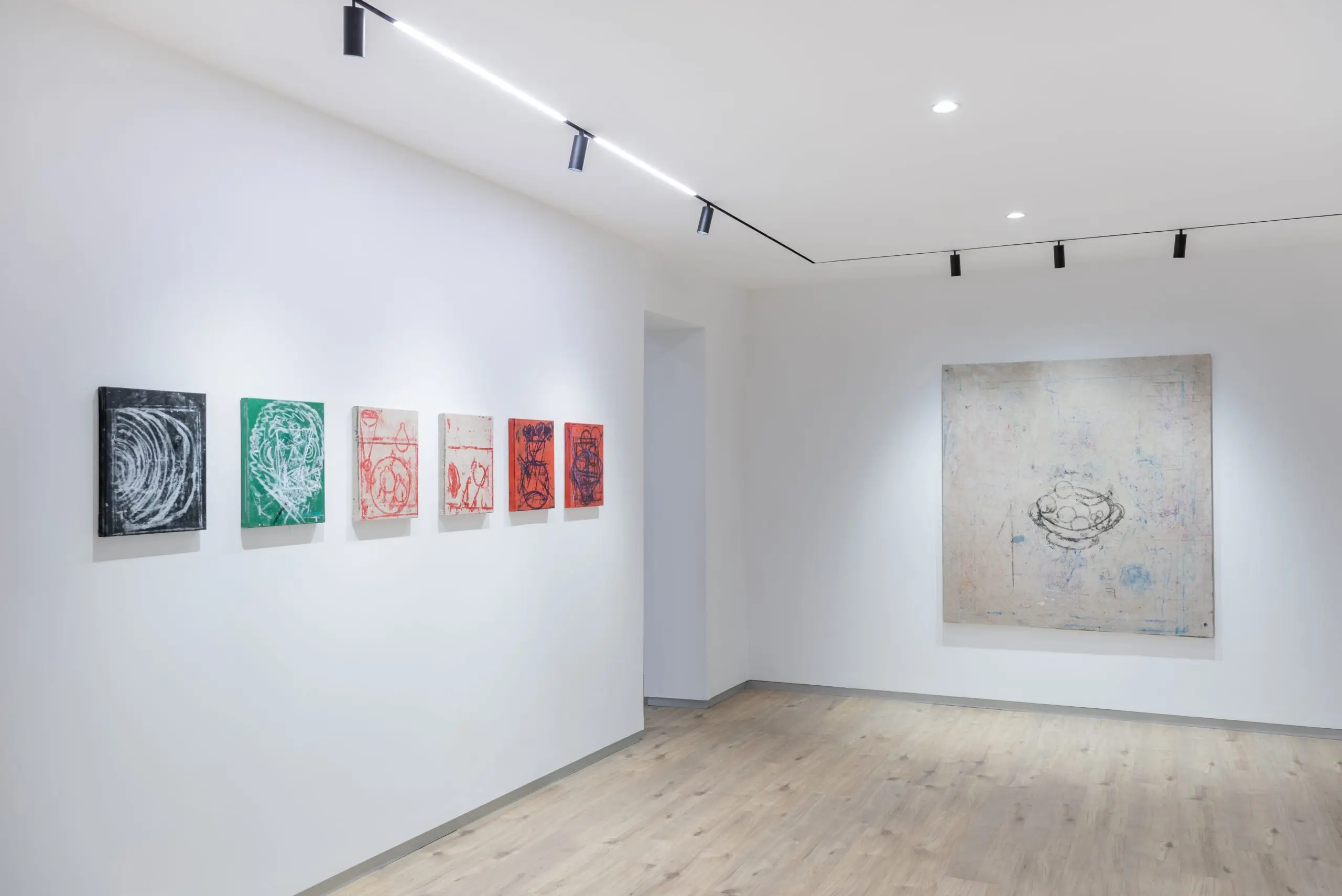
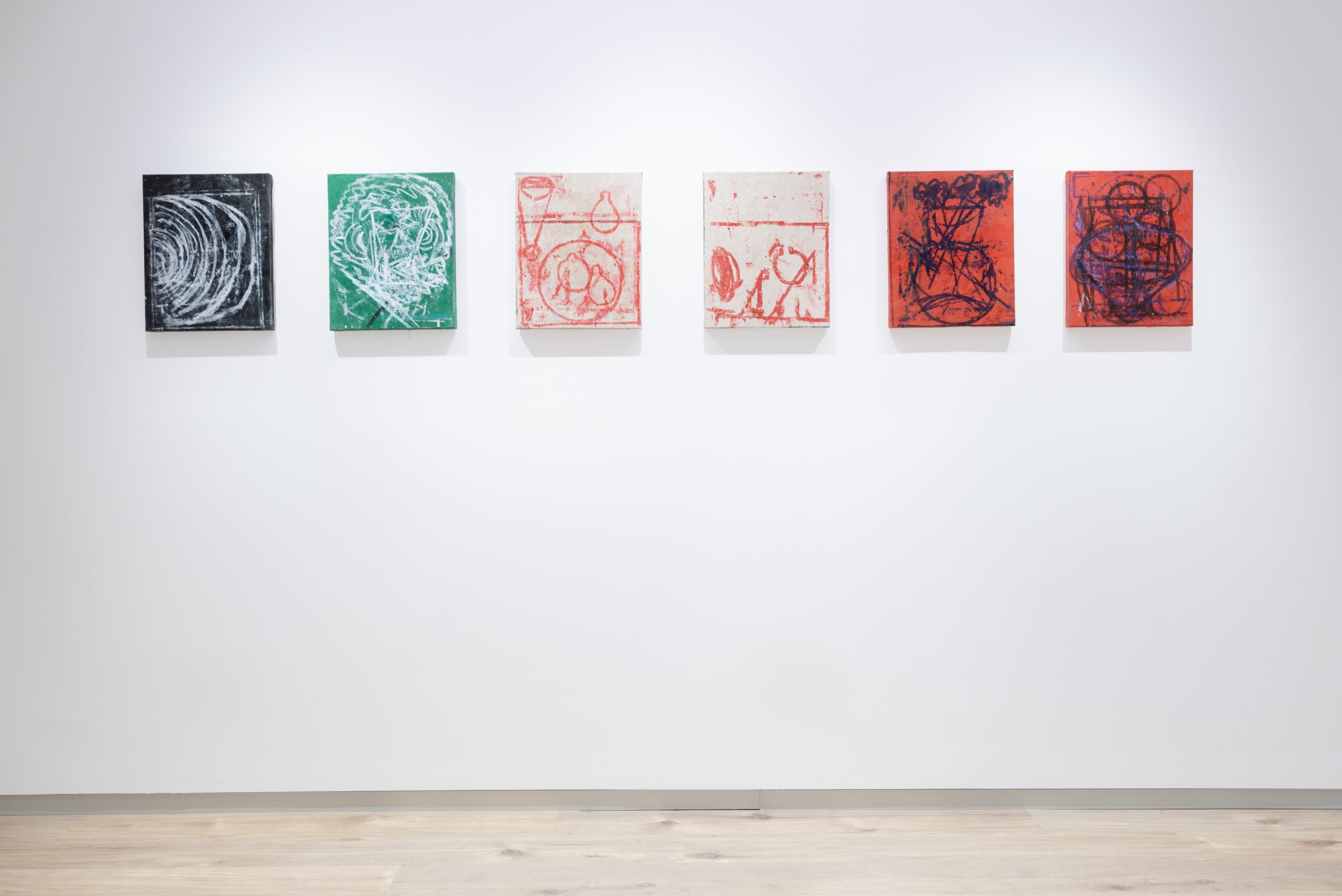
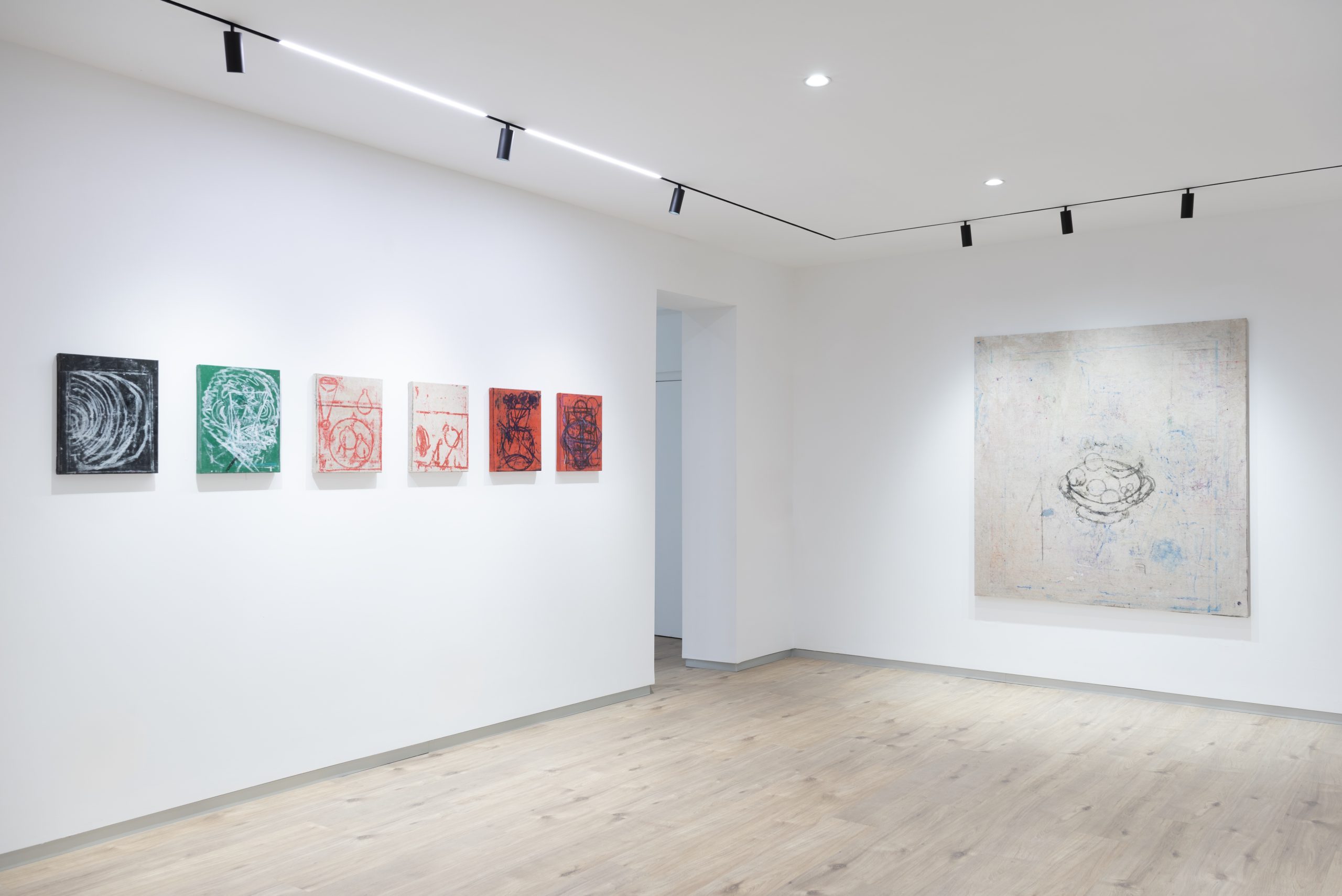
"The Storm, The Pond, and The Fruit Bowl” is the first solo exhibition by artist Eloy Arribas (Valladolid, Spain, 1991) at our gallery. It is a perceptual essay that focuses on painting. Through three series of works, a trio of personal investigations, he draws our attention to the interplay between power, appearances, and myth within our systems of artistic representation.
At first glance, Eloy's work can be understood as painting that is grounded in the deactivation of the most orthodox codes and changes the temporality of events within the canvas, replacing the historical, the mythological, or the anecdotal with a framework of events that took place within the studio, within the creative process itself, within his most personal phantasmagoria.
Footprints and accidents merge with writing and gestures. Memory merges with narrative, and painting merges with archives. The artist takes the modern logic of the multiple original to extremes in a rather novel way. And he unfolds, in a very subtle but mature way, our material understanding of the pictorial surface, enriching his language with artistic techniques that are more related to disciplines such as the restoration and conservation of works of art, museography, or architecture. That vision, typical of Italian Renaissance artists, according to which a painting is an open window (a flow of architectural illusion) is here replaced by a wall, a reflective pond, a wavering body; an archive.
II
Eloy Arribas approaches the pictorial process in three different ways: three material strategies that are also three ways of addressing a category as universal and complex as Memory. The maxim of his vision is that all painting is a form of sedimentation. The visible, the apparent, settles on a surface—like silt at the bottom of a pond—and there, between what remains and what disappears, the image takes shape.
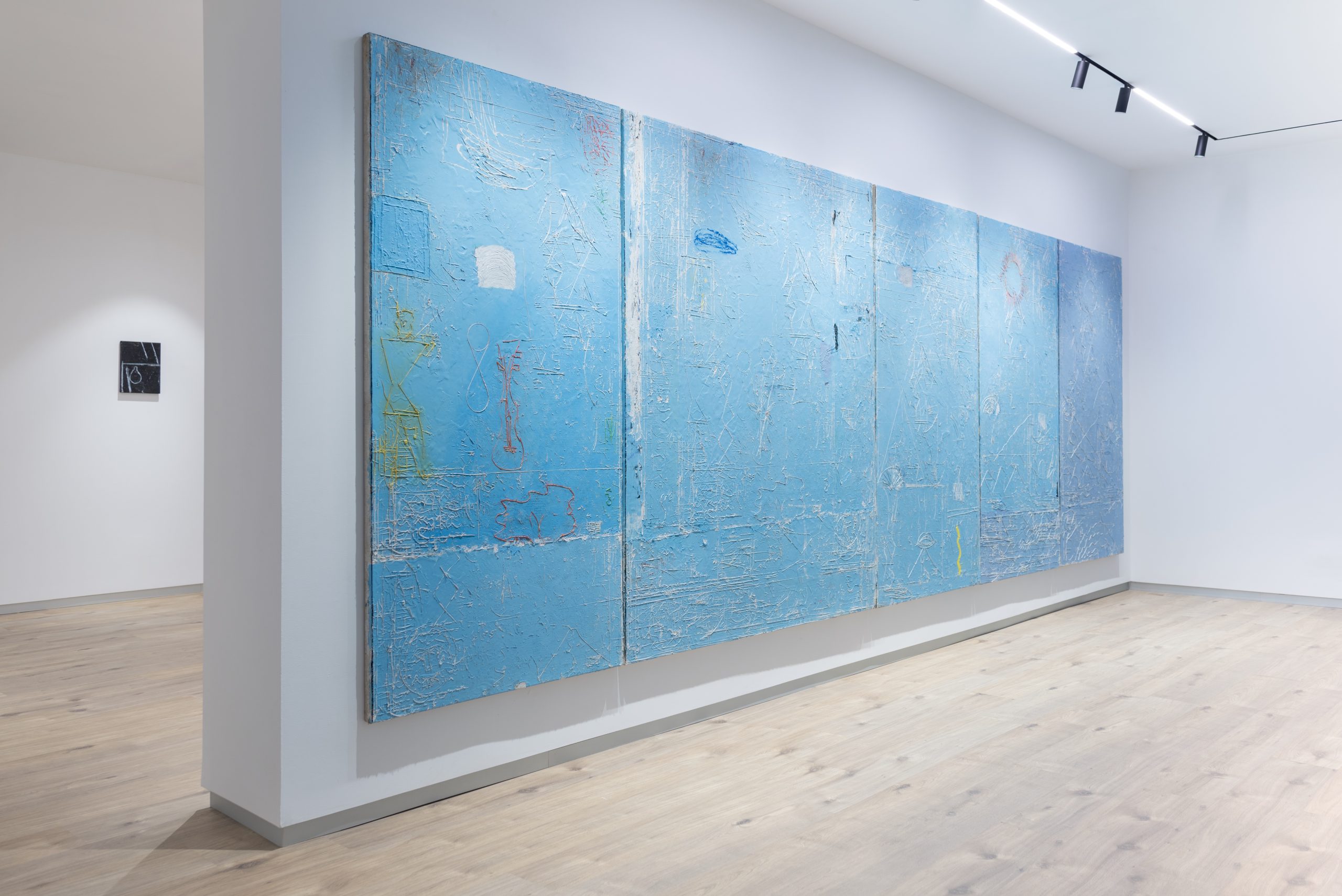
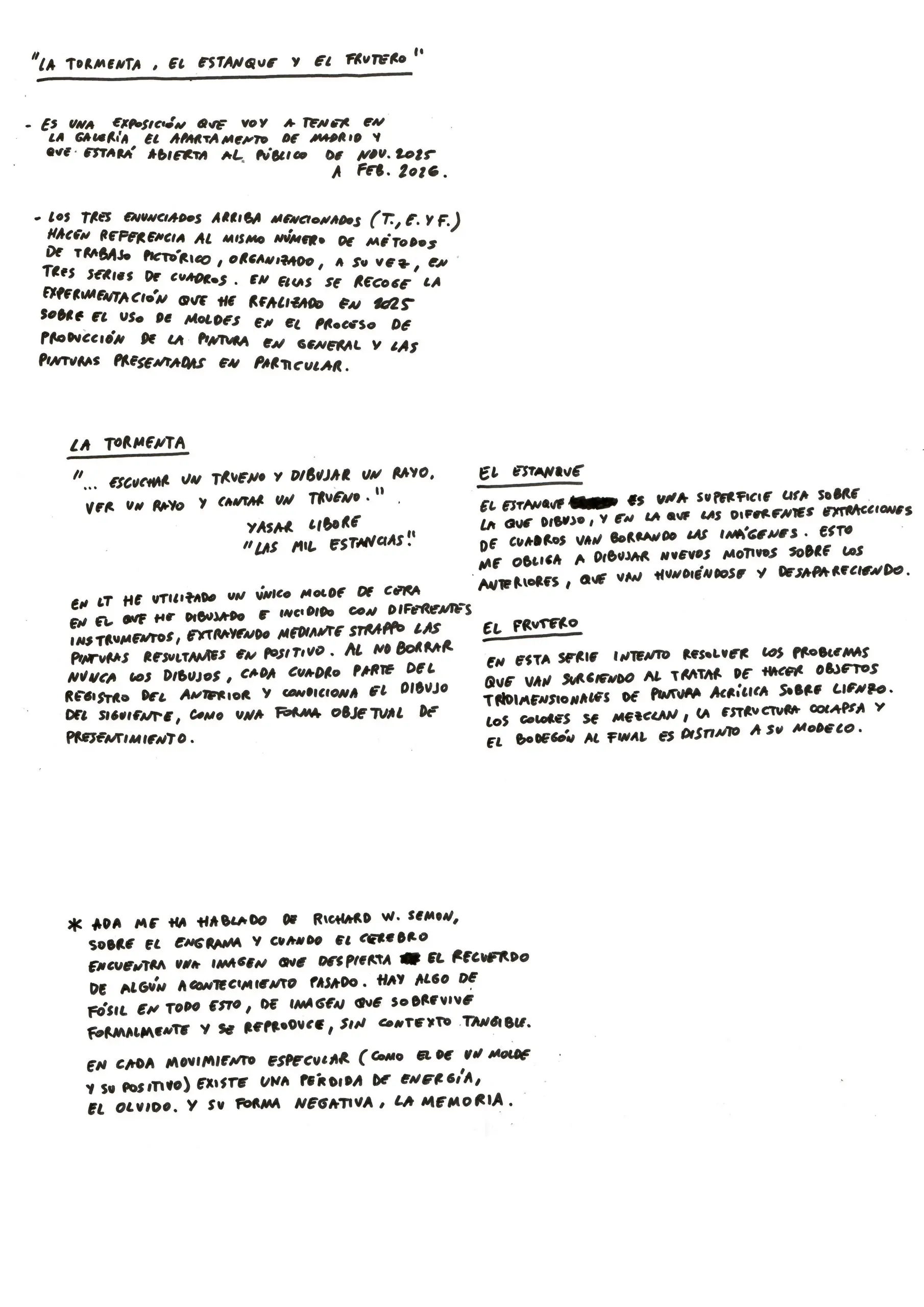
In the first act of this opera, The storm is a direct reference to the series of paintings entitled The Palace. The artist takes a single wax mold and activates it as a matrix and file. Each drawing made, even the accidents resulting from the application of the strappo, impacts the surface of the mold and affects the initial drawing, but without erasing it. This gives rise to a consecutive series of works in which we will always be able to discern, confusedly and mysteriously, what the foundation of the image is. Each work in El Palacio emerges from a visual and material premonition of the past—what has been painted, extracted, imagined. The form is not preserved, but rather the trace; and the zero point of the image is tinged with mysticism. In this process, the artist turns the gesture into a fossil: each image contains the echo of countless preceding images that continue to act, sometimes visibly.
At The pond, this process is reversed: the mold is smooth, receptive, and each extraction partially erases what precedes it. The image sinks, disappears, reappears under another, as if the painting itself obeyed a logic of immersion. In this series, memory is diluted; matter becomes an opaque mirror. Here, forgetting is not a deficiency, but an active principle of form.
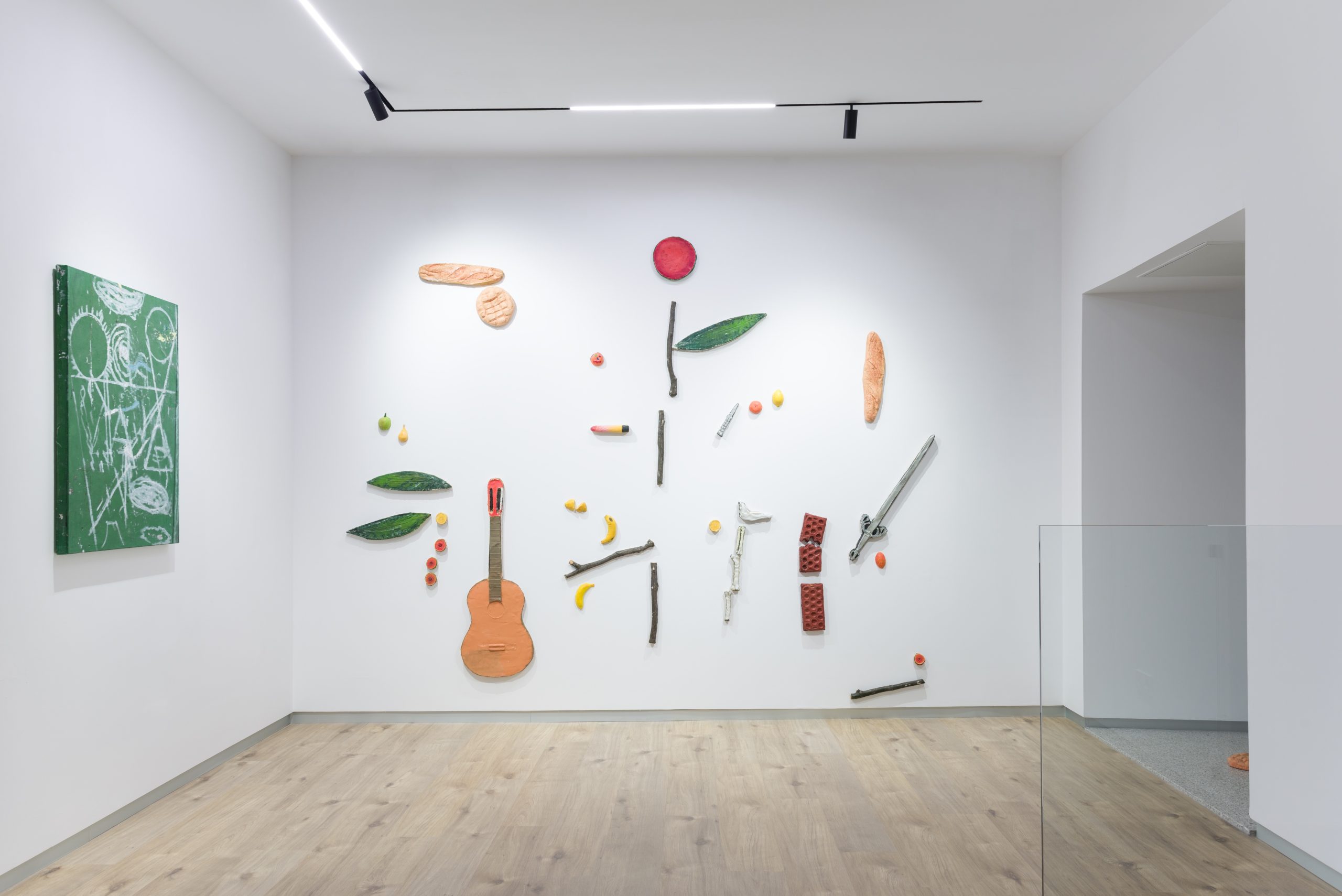
Finally, The fruit bowl It poses a conflict between plane and volume, between the painting that attempts to sustain a body and the material that collapses under its own weight. The objects dissolve in their attempt to be three-dimensional, as if they could not fully retain reality, but only its tension, its drift.
The three series, the three acts, oscillate between the mold and its positive, between the loss of energy and its preservation as memory. In Arribas' work, painting is not a means of fixing an image, but rather a system of thought that questions the persistence of gesture, the fragility of recording, and the power of forgetting as a material form. The logic behind Eloy's work is decidedly Platonic and deeply cavernous: a sensitive correspondence between the real and the imaginary, what disappears and what remains, sound and echo, storm and mnemosyne.
III
We are faced with a type of painting that does not seek to represent the world, but rather repeat your gesture of appearance. A painting that does not ask what to show, but rather how something becomes visible.
Here, the pictorial process is not a means to achieve a final form, but rather a system of transformations, a continuous flow between what is printed and what is erased. It is a work about formal survival, about the way in which matter retains and transmits experience.
In this logic, molds function as thinking devices. They are membranes between the positive and the negative, between the imprint and its absence. In them, each transfer—as in the strappo or in the extraction of color—implies a loss: a decrease in energy, a fading. But that loss is not an accident, but rather the very core of the process: forgetting as a condition of memory.
IV
They say that Barry Schwabsky stated in an informal conversation that “Today, the best paint is found on the floor of artists” studios.", and in doing so, he was not so much talking about the physical location of the painting as its ontological condition. The floor—that space where debris, waste, mistakes, and evidence fall—becomes a metaphor for the liminal state of contemporary painting: a painting that is no longer understood as representation and has become field of expertise.
The floor is where the paint has not yet stabilized. Where the gesture has not yet separated from the material. It is the place of productive ambiguity, where error, accumulation, or accident reveal structures that are truer than those of the controlled image. On the floor, the painting is not exhibited: it happens. It is not subordinate to the gaze, but to the process. What Schwabsky suggests is that the vitality of painting today lies in its inconclusive status, in its evolution.
In this sense, Eloy Arribas' work engages with this intuition in an exceptional way. Schwabsky invites us to look where painting has not yet decided to become image. Eloy Arribas works precisely on this threshold: between residue and form, between recording and disappearance.
From a philosophical point of view, we could say that this painting does not seek to elevate itself to the status of a symbol, but rather to remain within the realm of the event. In other words, he is not interested in representing the world, but rather in showing how the world is imprinted, how matter remembers.
What we find in this exhibition are not paintings that aspire to clarity, but surfaces that preserve the echo of what happens when painting does not yet know that it is painting.
V
The storm is an accumulation of the immediate past, The pond it is disappearance and collapse, The fruit bowl is collapse and reconfiguration. The exhibition, then, functions as a dialogue with time, where the work not only exists in the present of the gaze, but also as a witness to its own history of production.
Arribas' painting is, in that sense, an archaeology of practice, where every imperfection is also a revelation.
Luis Sicre
works
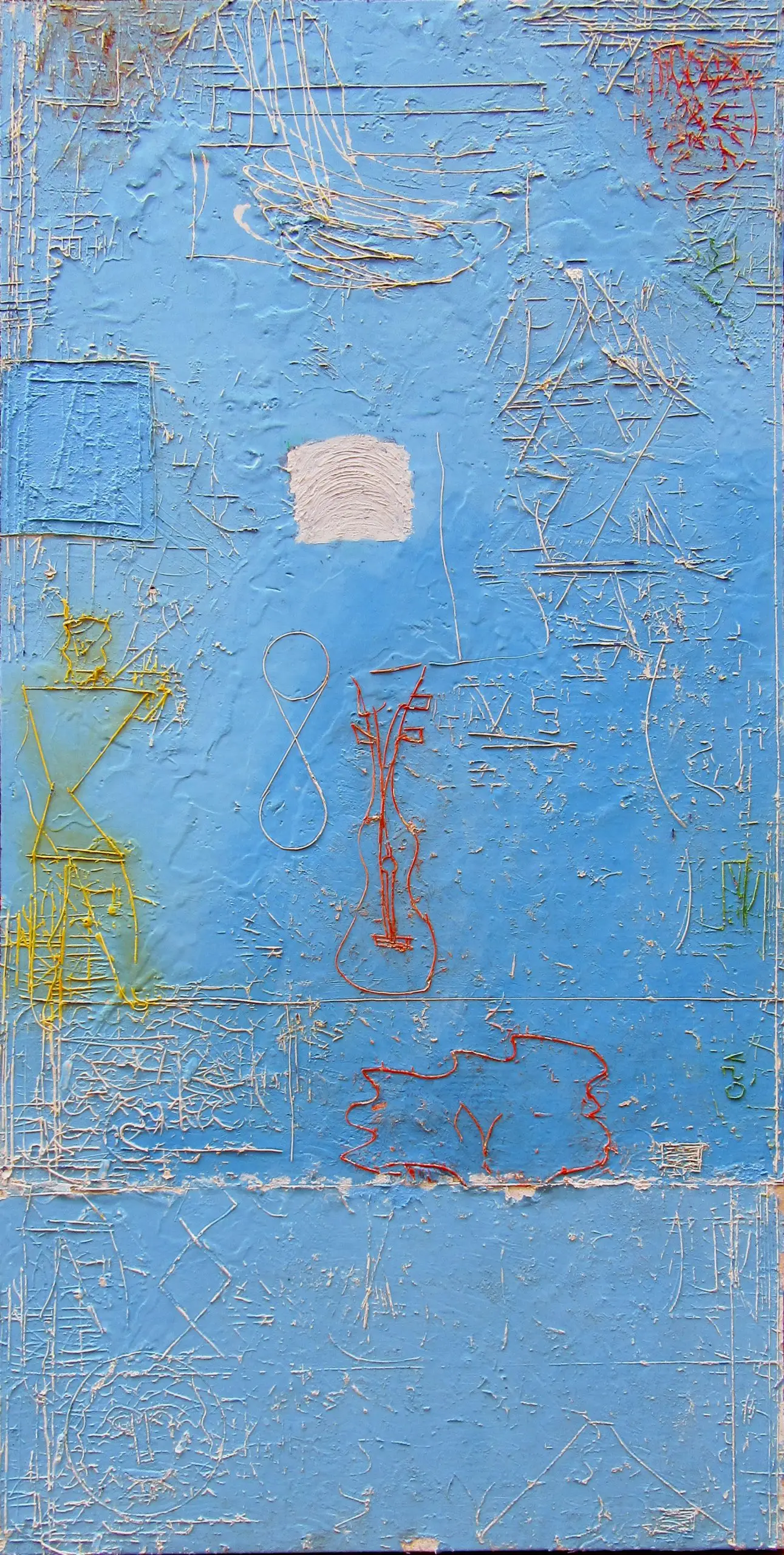
Eloy Arribas
Palace 78 (The Storm 1), 2025,
195 x 100 cm
acrylic on canvas
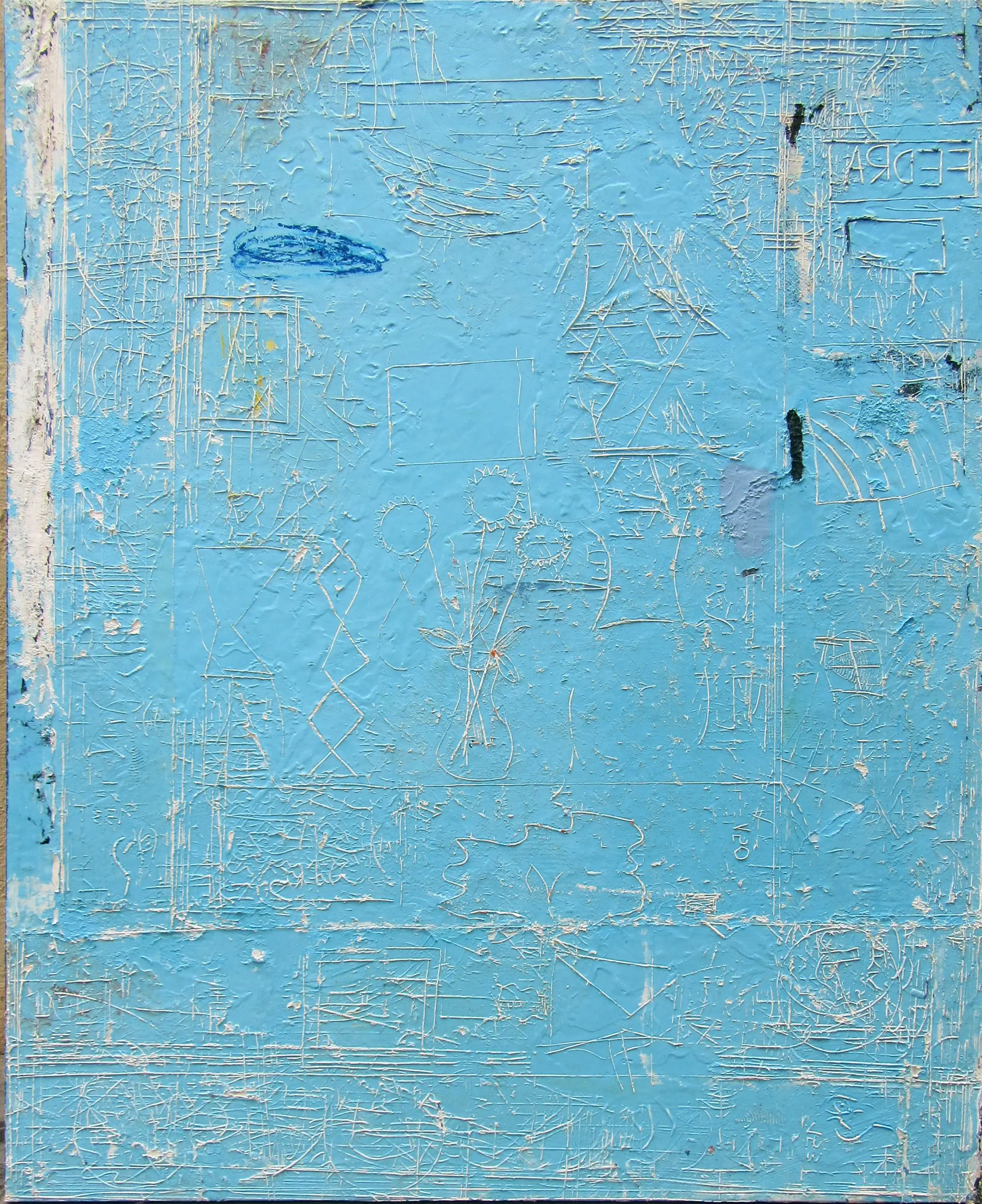
Eloy Arribas
Palace 79 (The Storm 2), 2025,
195 x 162 cm
acrylic on canvas
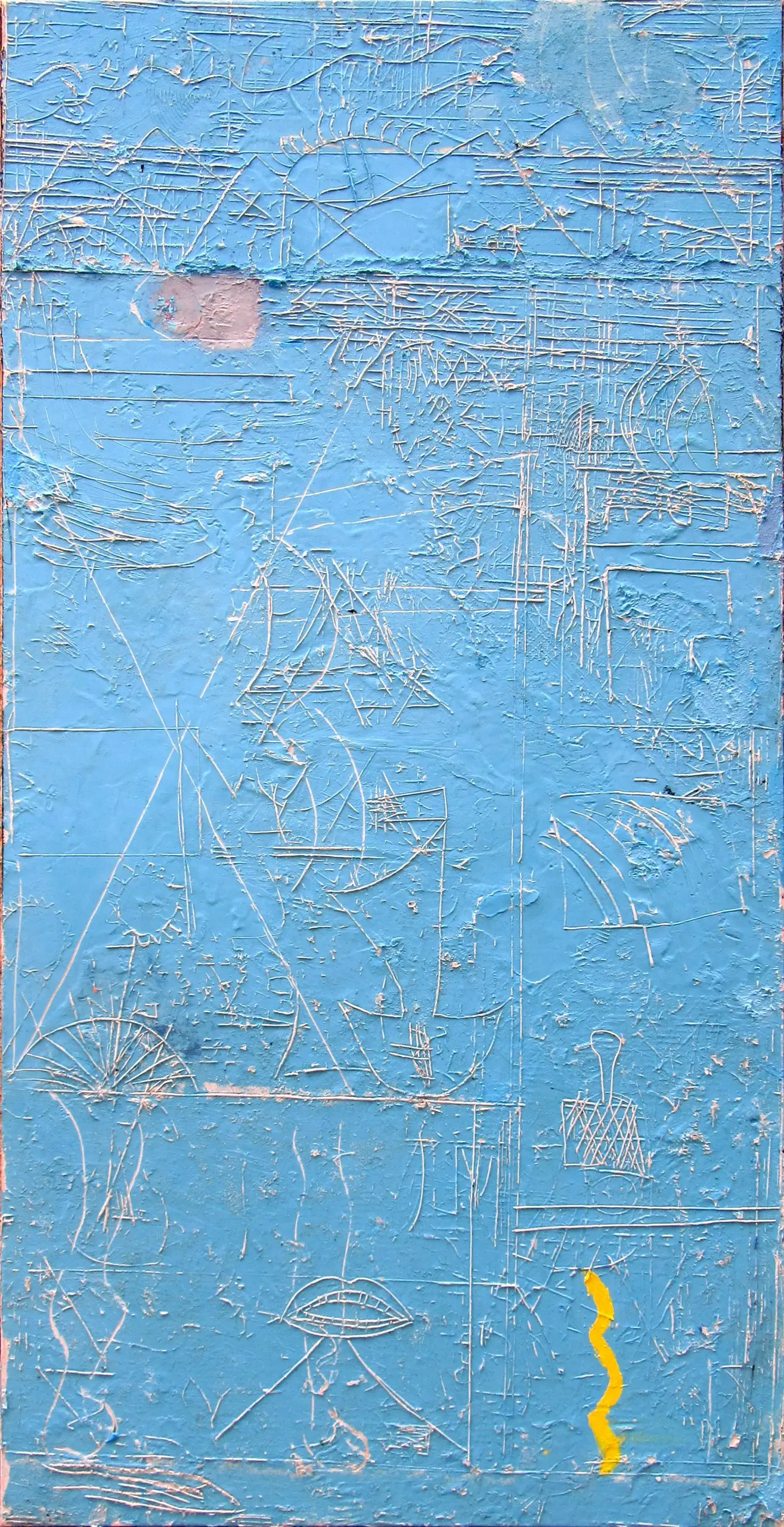
Eloy Arribas
Palace 80 (The Storm 3), 2025,
195 x 100 cm
acrylic on canvas
Eloy Arribas
Palace 78 (The Storm 1), 2025,
195 x 100 cm
acrylic on canvas
Eloy Arribas
Palace 79 (The Storm 2), 2025,
195 x 162 cm
acrylic on canvas
Eloy Arribas
Palace 80 (The Storm 3), 2025,
195 x 100 cm
acrylic on canvas
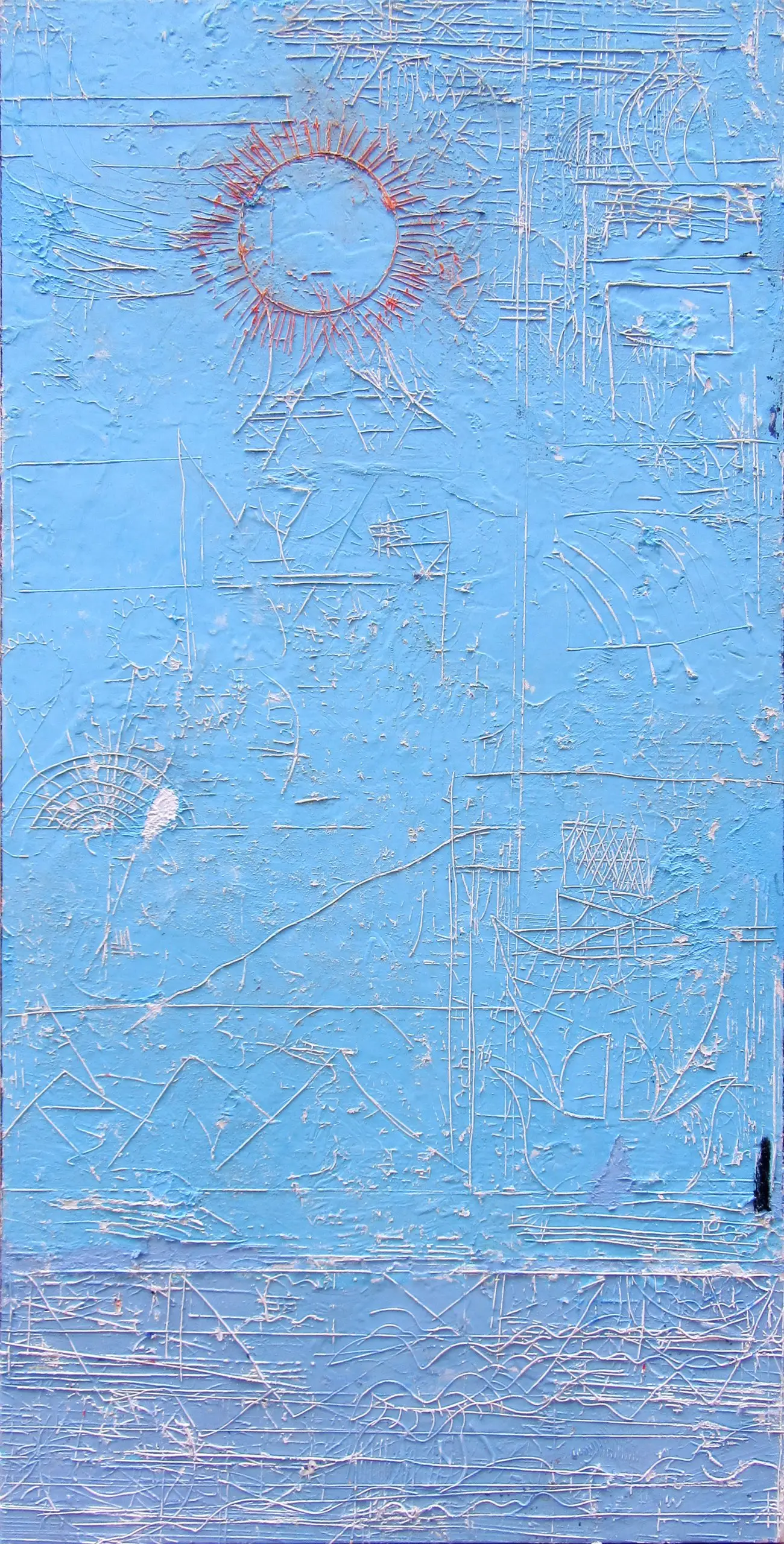
Eloy Arribas
Palace 81 (The Storm 4), 2025,
195 x 100 cm
acrylic on canvas
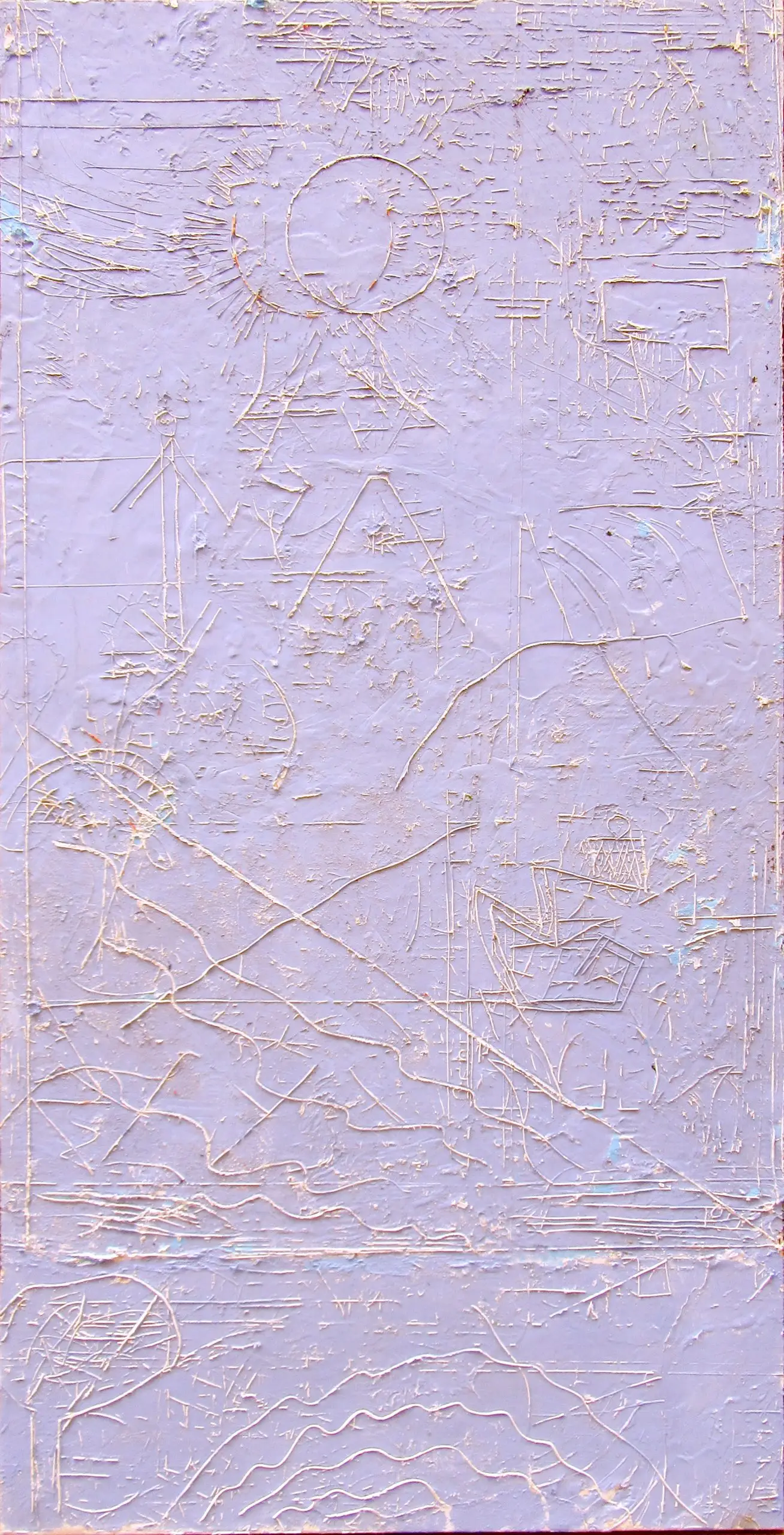
Eloy Arribas
Palace 82 (The Storm 5), 2025,
195 x 100 cm
acrylic on canvas
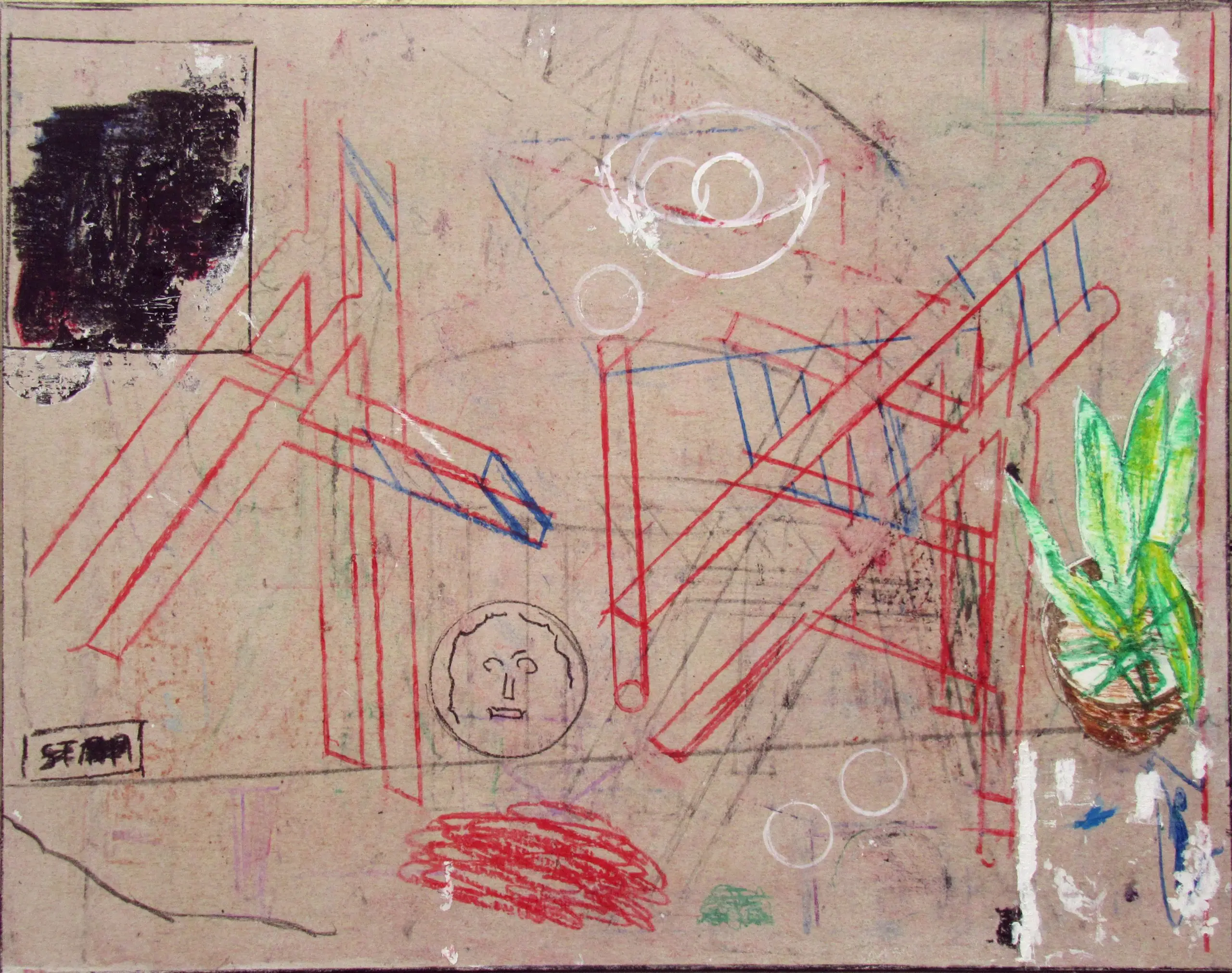
Eloy Arribas
The pond 20, 2025
Acrylic on canvas 130×162 cm
Eloy Arribas
Palace 81 (The Storm 4), 2025,
195 x 100 cm
acrylic on canvas
Eloy Arribas
Palace 82 (The Storm 5), 2025,
195 x 100 cm
acrylic on canvas
Eloy Arribas
The pond 20, 2025
Acrylic on canvas 130×162 cm
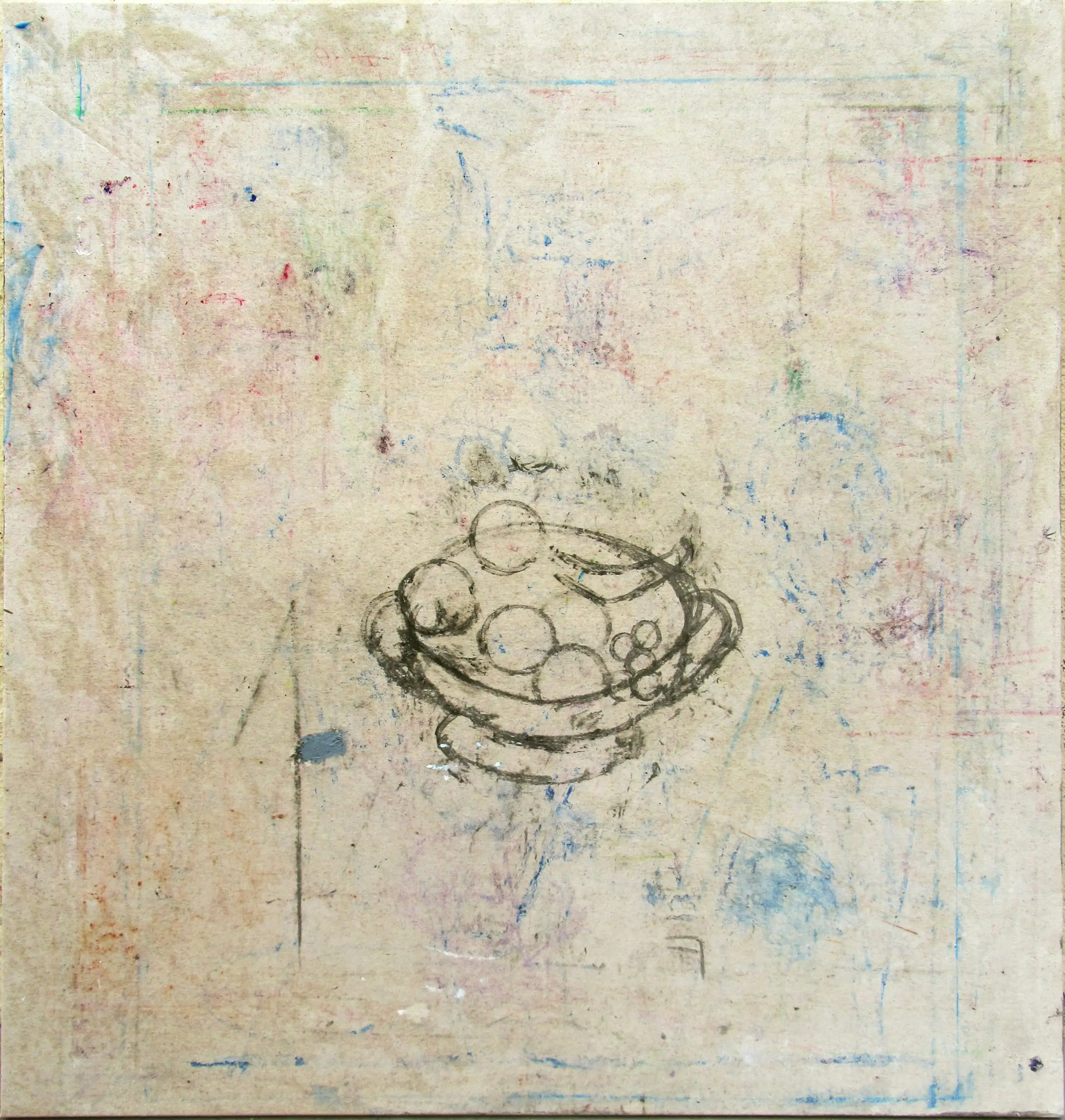
Eloy Arribas
The Pond 18, 2025
Acrylic on canvas 162 x 150 cm
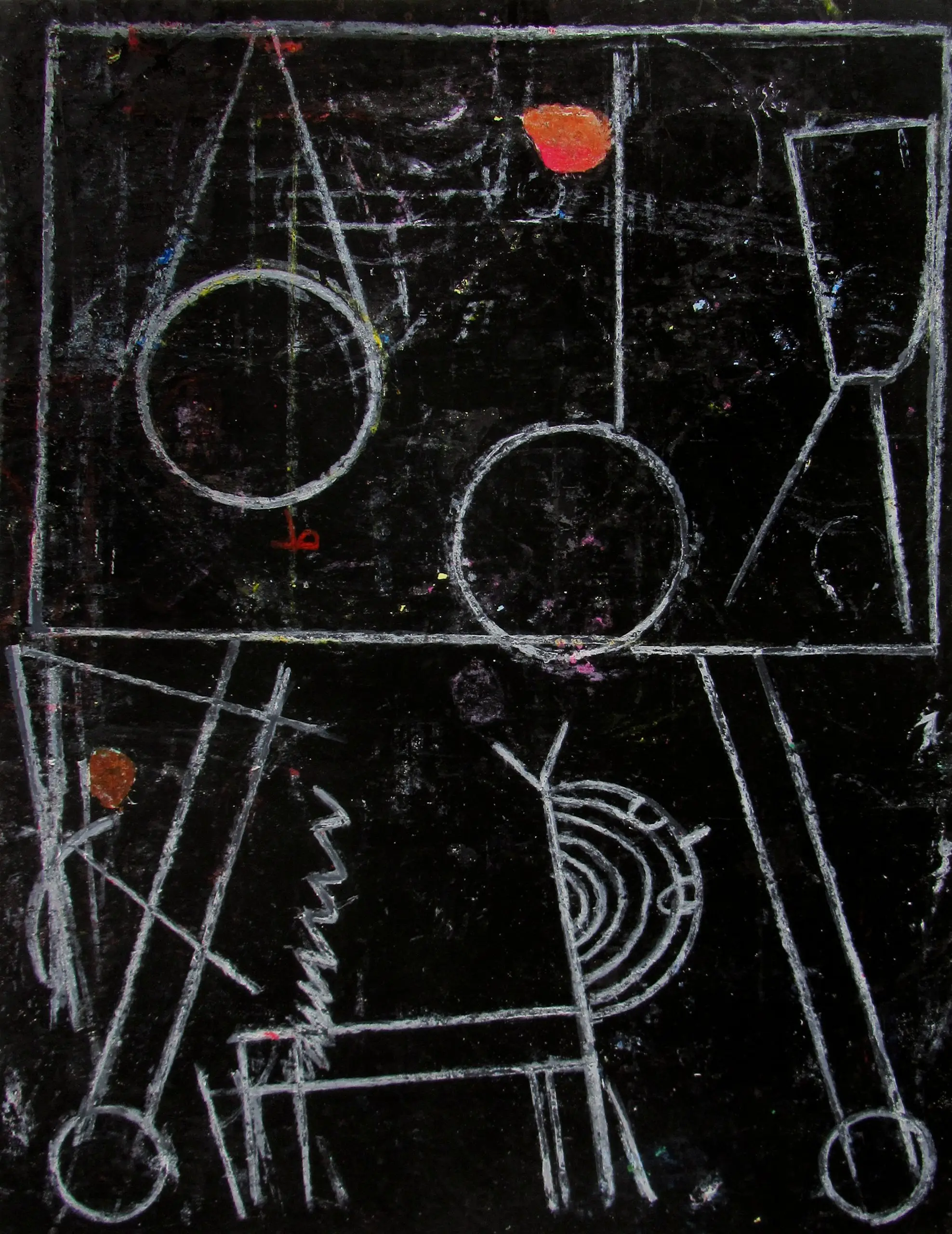
Eloy Arribas
The Pond 16, 2025
Strappo acrylic on canvas
116 x 89 cm
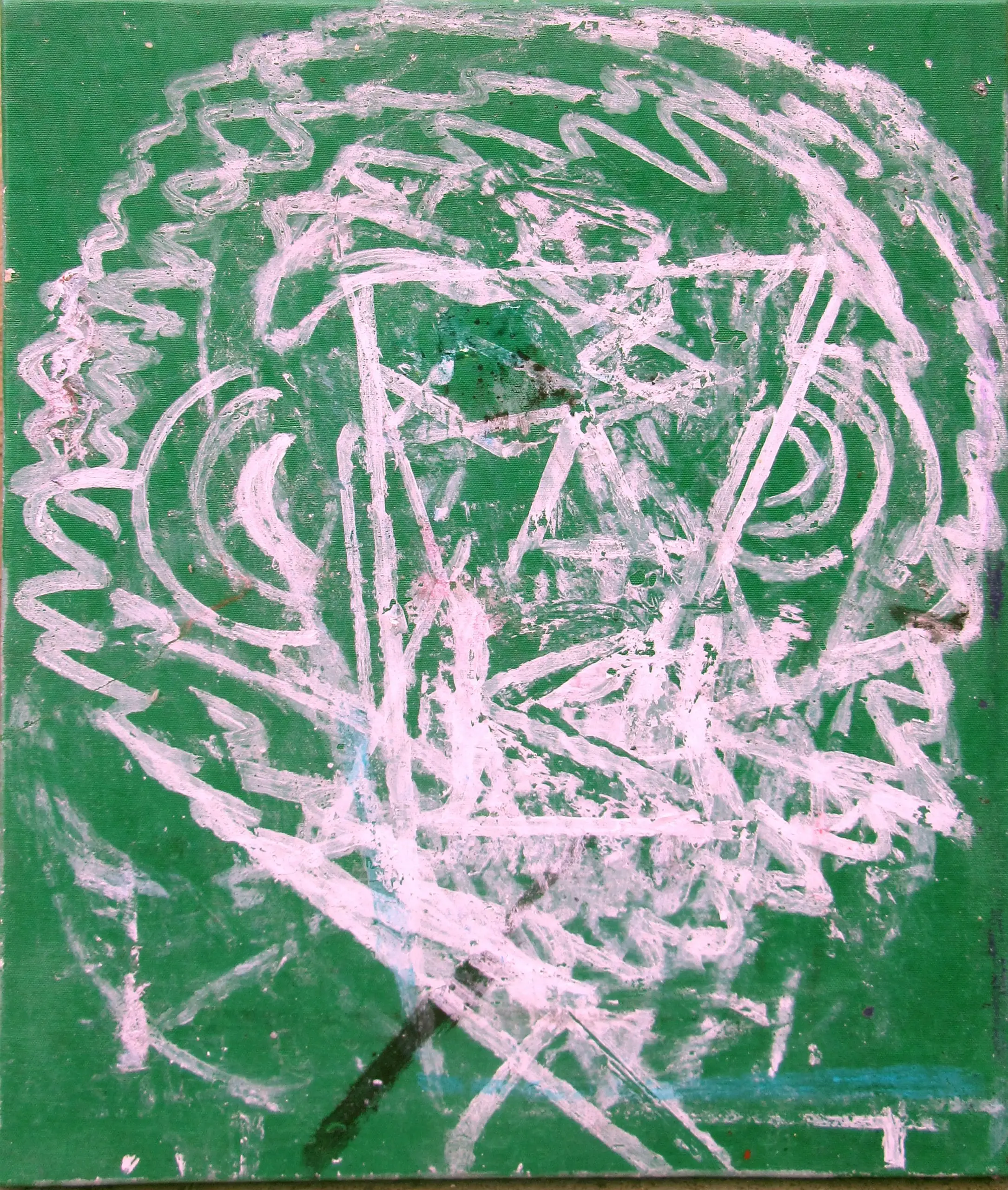
Eloy Arribas
The Pond 7, 2025
Strappo acrylic on canvas
41 x 33 cm
Eloy Arribas
The Pond 18, 2025
Acrylic on canvas 162 x 150 cm
Eloy Arribas
The Pond 16, 2025
Strappo acrylic on canvas
116 x 89 cm
Eloy Arribas
The Pond 7, 2025
Strappo acrylic on canvas
41 x 33 cm
views of the exhibition