 EN
EN  ES
ES  IT
IT  FR
FR  ZH
ZH  PT
PT Los espacios del pánico
(Surface studies
on emptiness and color)
Luis Lopez-Chavez
November 7, 2024 - February 8, 2025
El Apartamento, Madrid (Main Room)

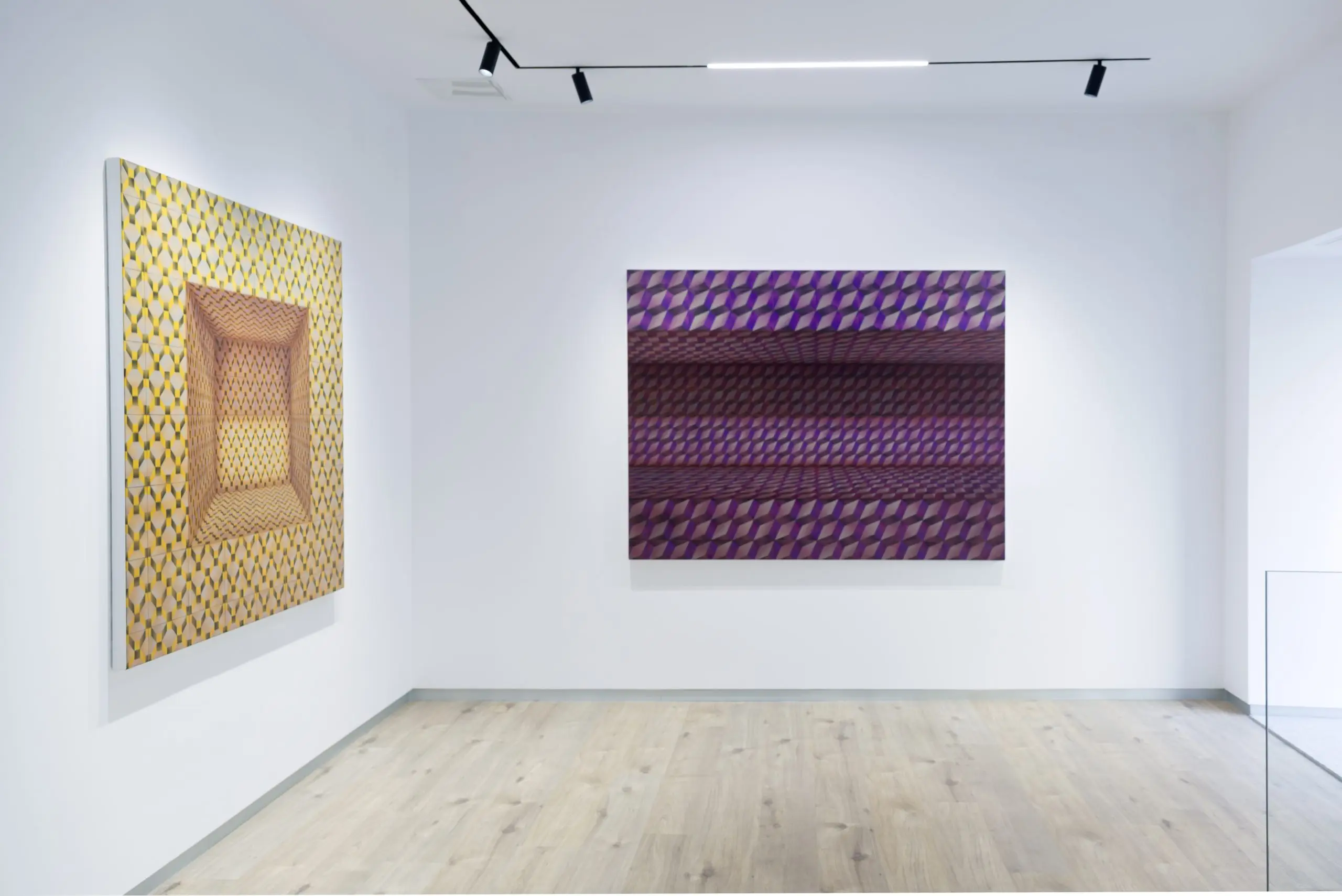
Los espacios del pánico correspond to a formal and thematic genealogy in which we can observe the vacuum as a fundamental theme of my work.
My attention is drawn to common places in colonial and republican architecture in contemporary Cuba. The house transformed into two houses, into several houses, into quarters or state institutions, which has suffered the disarticulation of its original plan. The expropriated house, fragmented, variegated, destroyed, empty.
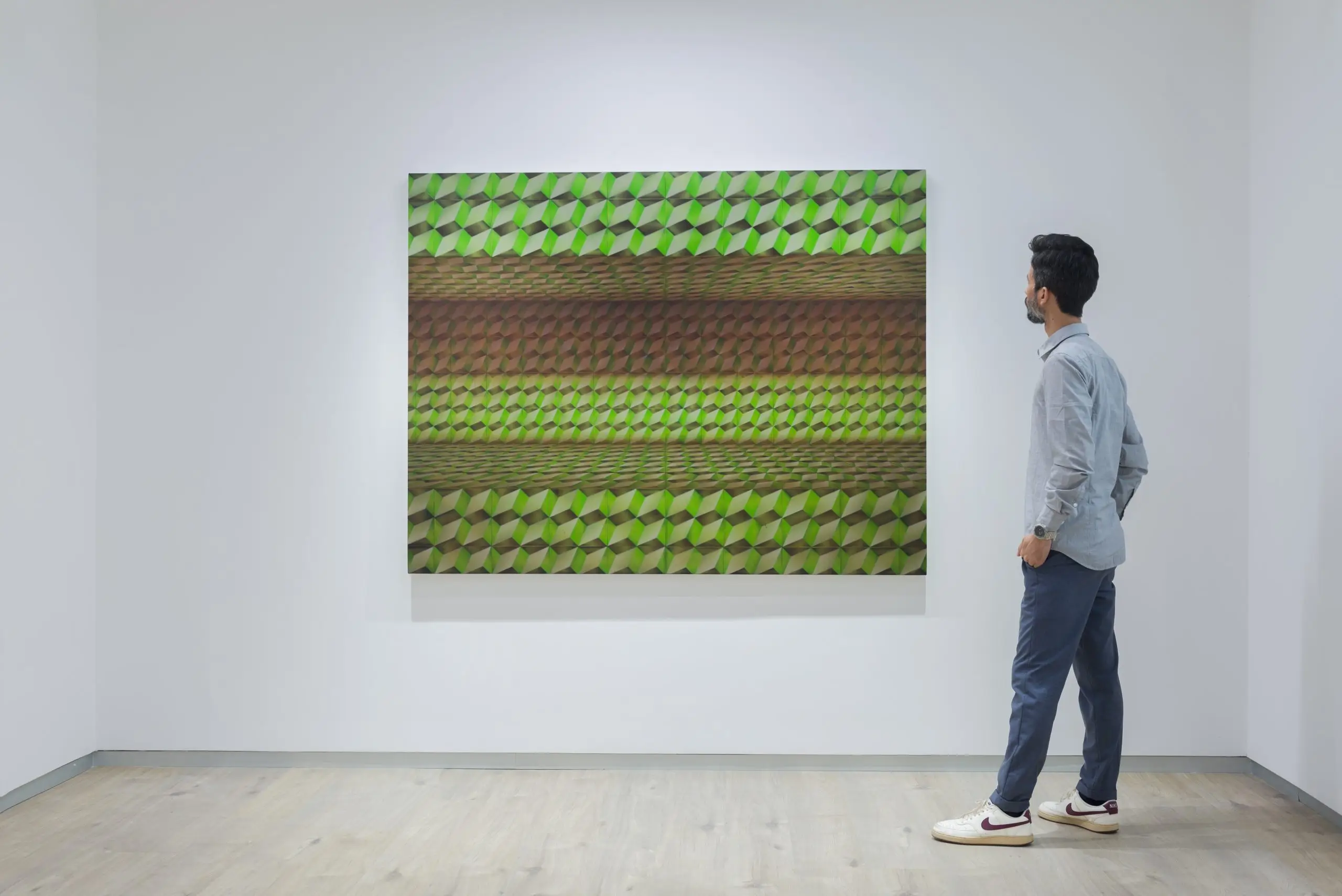
Light and shadow are the fundamental pictorial motifs of this series: that which can be closer to emptiness without being so; that which happens beyond the inhabitant and his ideology. A story of splendor and decadence that floods the rooms and only in the floor finds a parallel, contrasted with an endless number of graphic forms as scenery, scenery or backdrop. Thus light, shadow and floor are transformed into a continuous theater; tokonoma on the surface of a tomb.
The spaces of panic are those places where emptiness is patented in a trivial, yet enigmatic way; considered errors, surpluses or collateral damage of architecture and urban planning, of the design of human life in society and, ultimately, of reason. In every project of reason there is one, where everything that escapes understanding and touches the depths of the unconscious, the intuitive or the visceral ends up, like in a tomb.
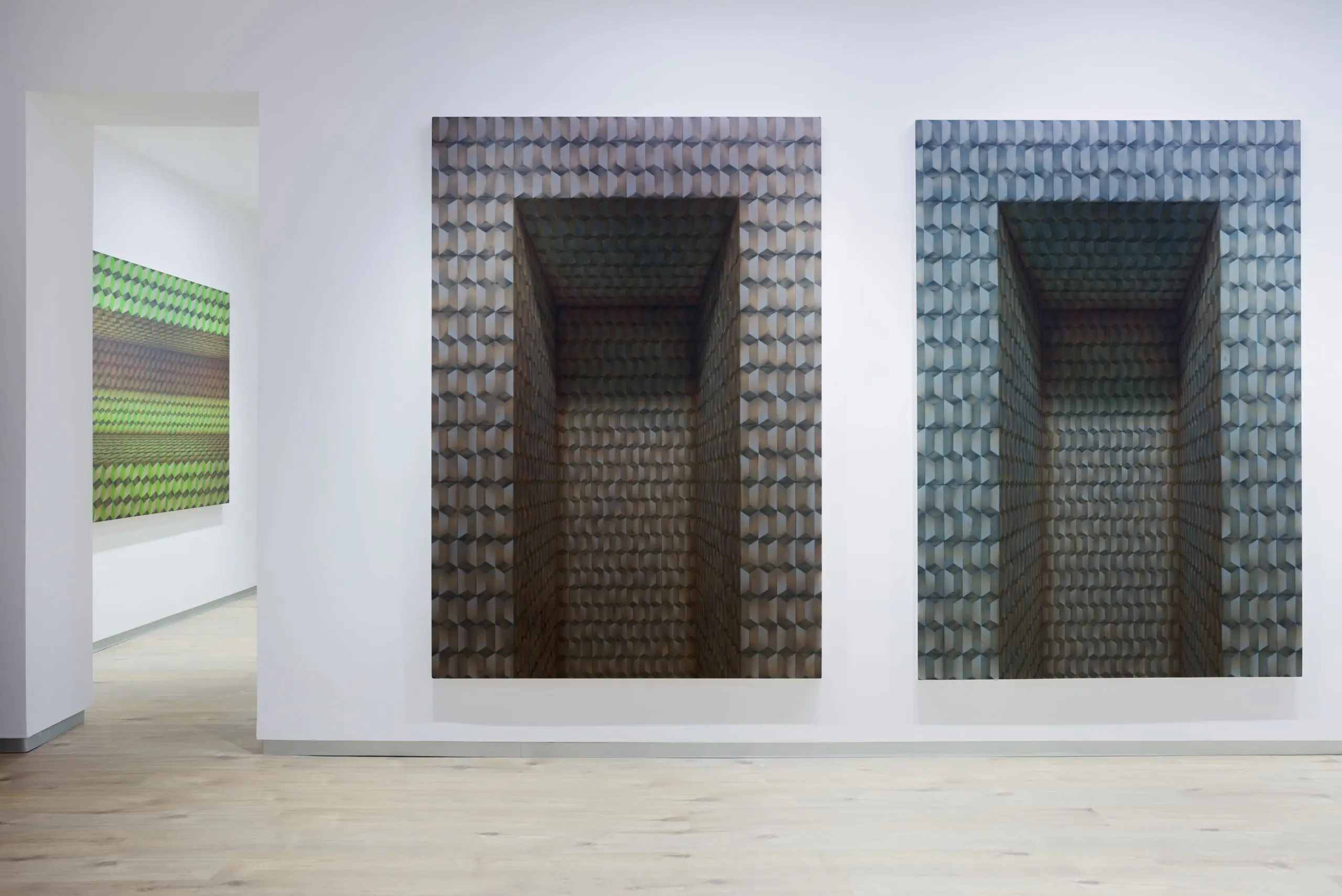
I am investigating a possible pictorial representation of Los espacios del pánico in Cuba. The floor slabs are coverings of emptiness, because they are one of the constructive elements that persists to the architectural destruction. Hollows, cracks, collapses, doors and windows are reduced to a final enclosure: funeral niches. The tomb and its mournful logic articulates the pictorial grammar. The fact of a tomb in the living room of the home is a contradiction of playful resonances, almost a joke in bad taste. Fun that hides a tragic outcome: the spaces of panic as a regime erase man from history.
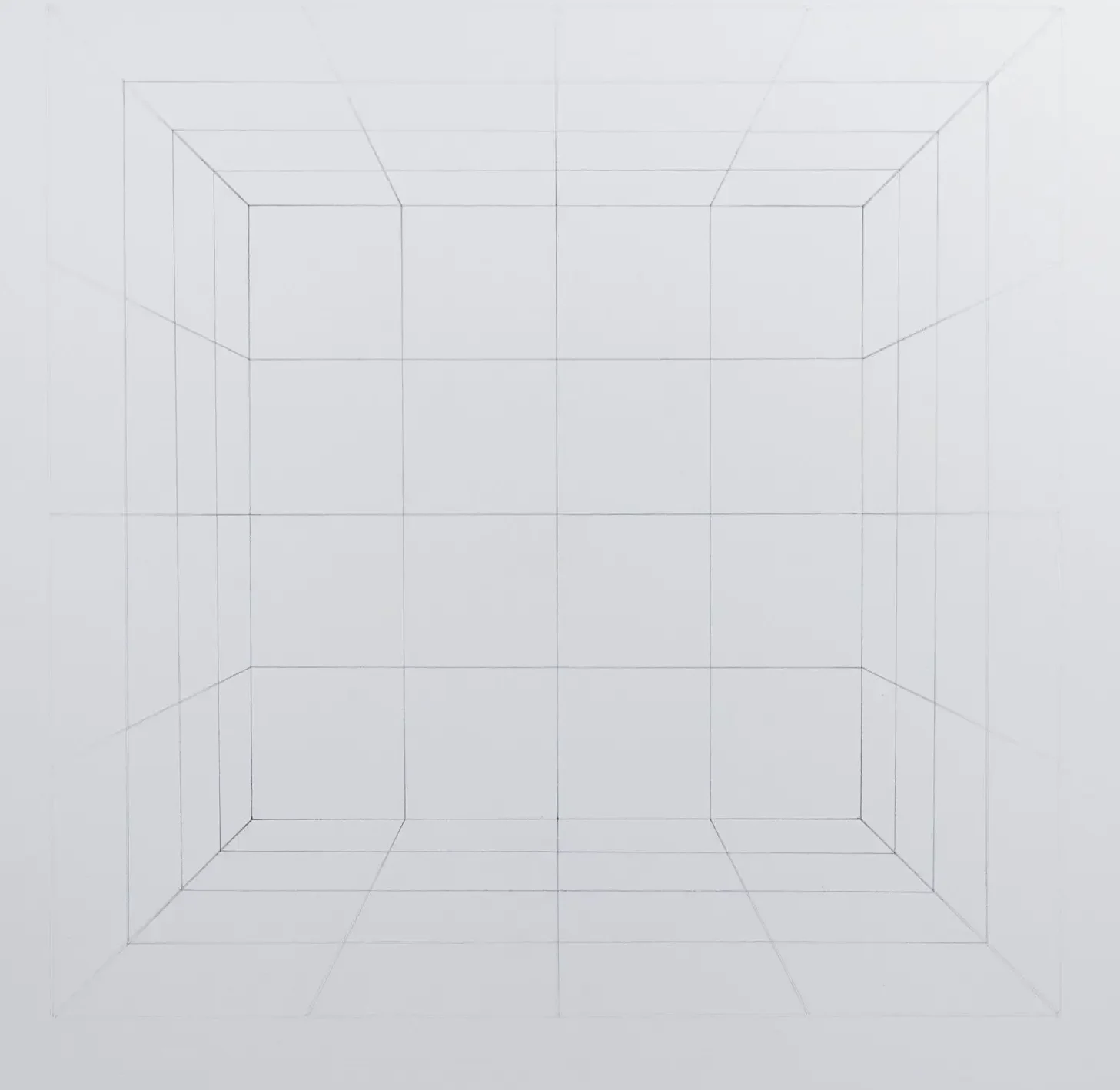
All this thematic and conceptual plot is to some extent relegated by the formalist and technical approach of the project. We are in the presence of surface studies on vacuum and color. Dozens of drawings, digital renders, chromatic studies, tonal scales, grisaille, baces, glazes, etc. Dissimilar experimentations with the medium technique. And all this adapted to airbrushing, which gives the work a tension between the graphic and the plastic, between the artificial and the pictorial. So that the plastic form external narratives, by proposing studies on the relationship between the the interaction of the color as an autonomous aesthetic reality. As Josef Albers would say: "only appearances are not deceiving".
- Luis López-Chávez
works

Luis López Chávez
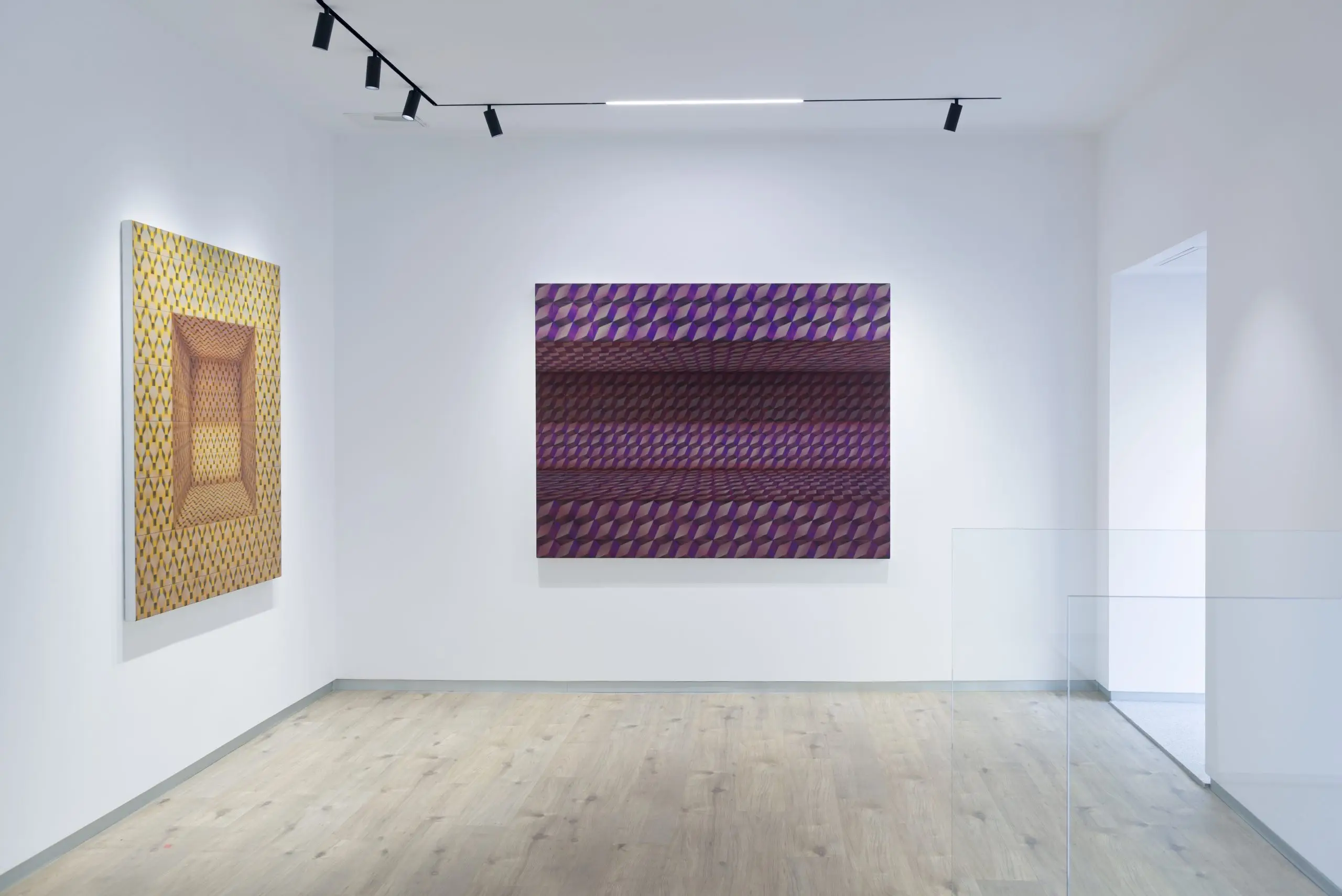
Niche No.4 Violet (Secondary Triptych), 2024
oil on canvas, 140 x 180 cm (55.1 x 70.8 in)

Luis López Chávez
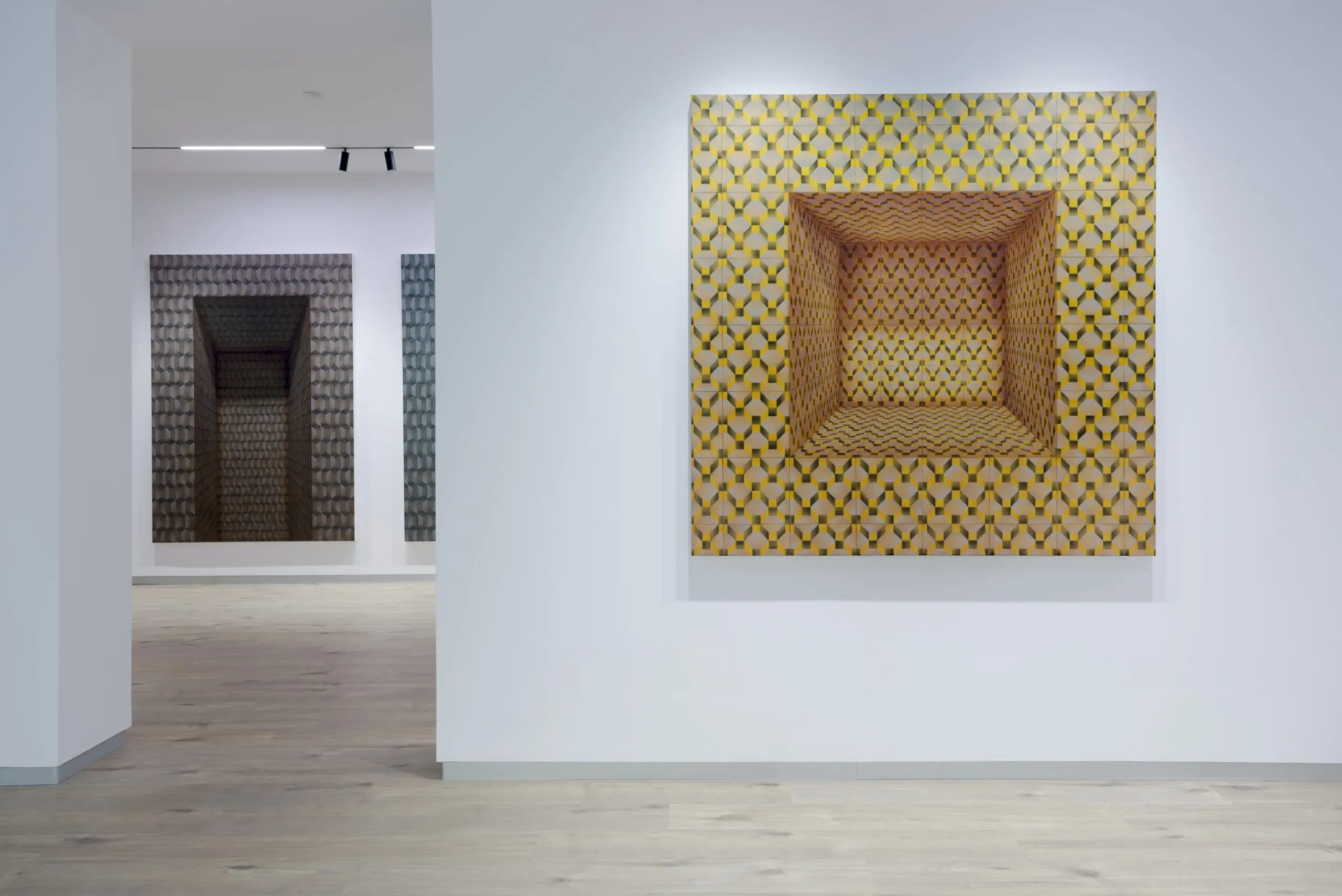
Niche No.1 Yellow (Primary Triptych), 2024
oil on canvas, 140 x 140 cm (55.1 x 55.1 in)
Luis López Chávez
Niche No.4 Violet (Secondary Triptych), 2024
oil on canvas, 140 x 180 cm (55.1 x 70.8 in)
Luis López Chávez
Niche No.1 Yellow (Primary Triptych), 2024
oil on canvas, 140 x 140 cm (55.1 x 55.1 in)

Luis López Chávez
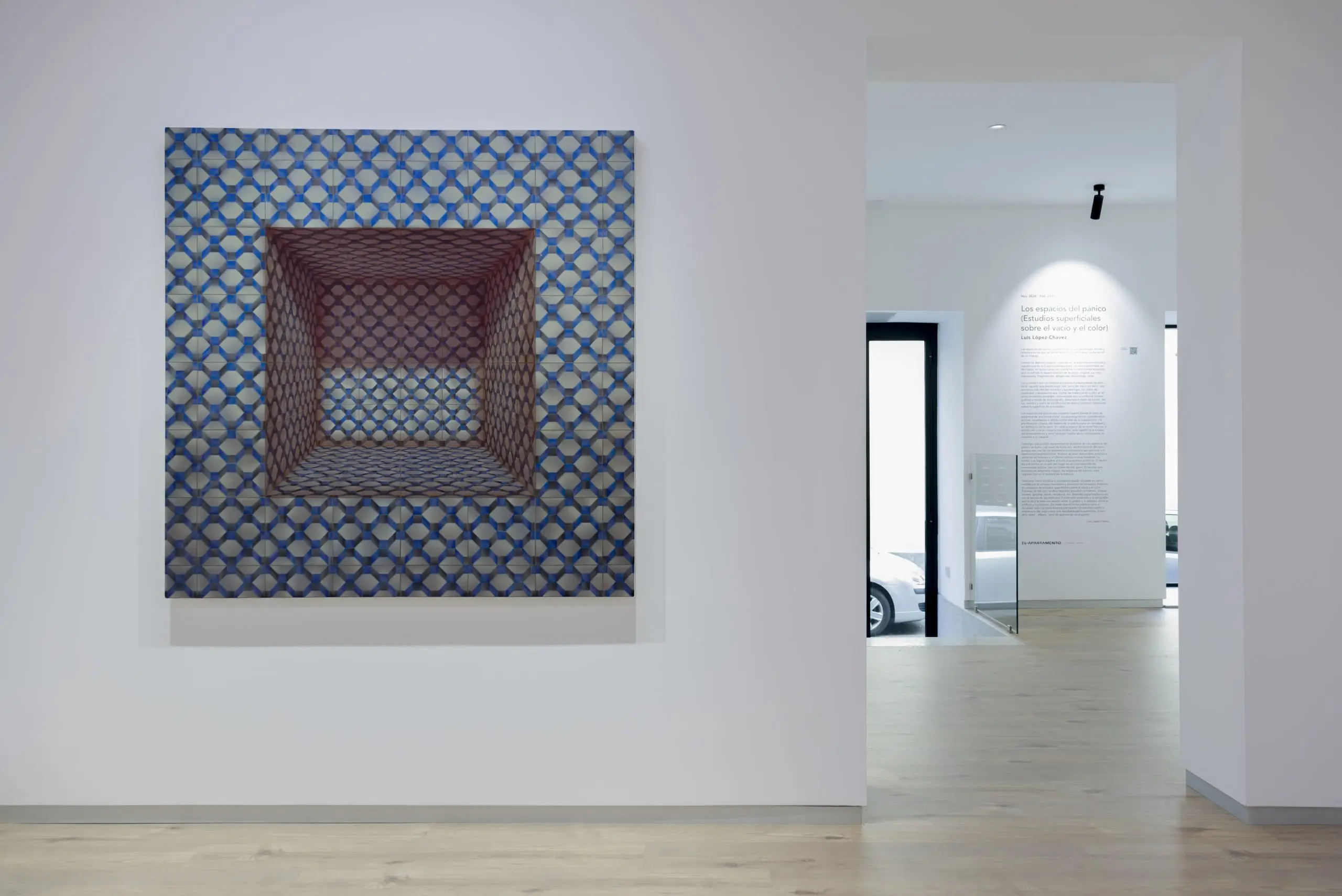
Niche No.3 Blue (Primary Triptych), 2024
oil on canvas, 140 x 140 cm (55.1 x 55.1 in)

Luis López Chávez
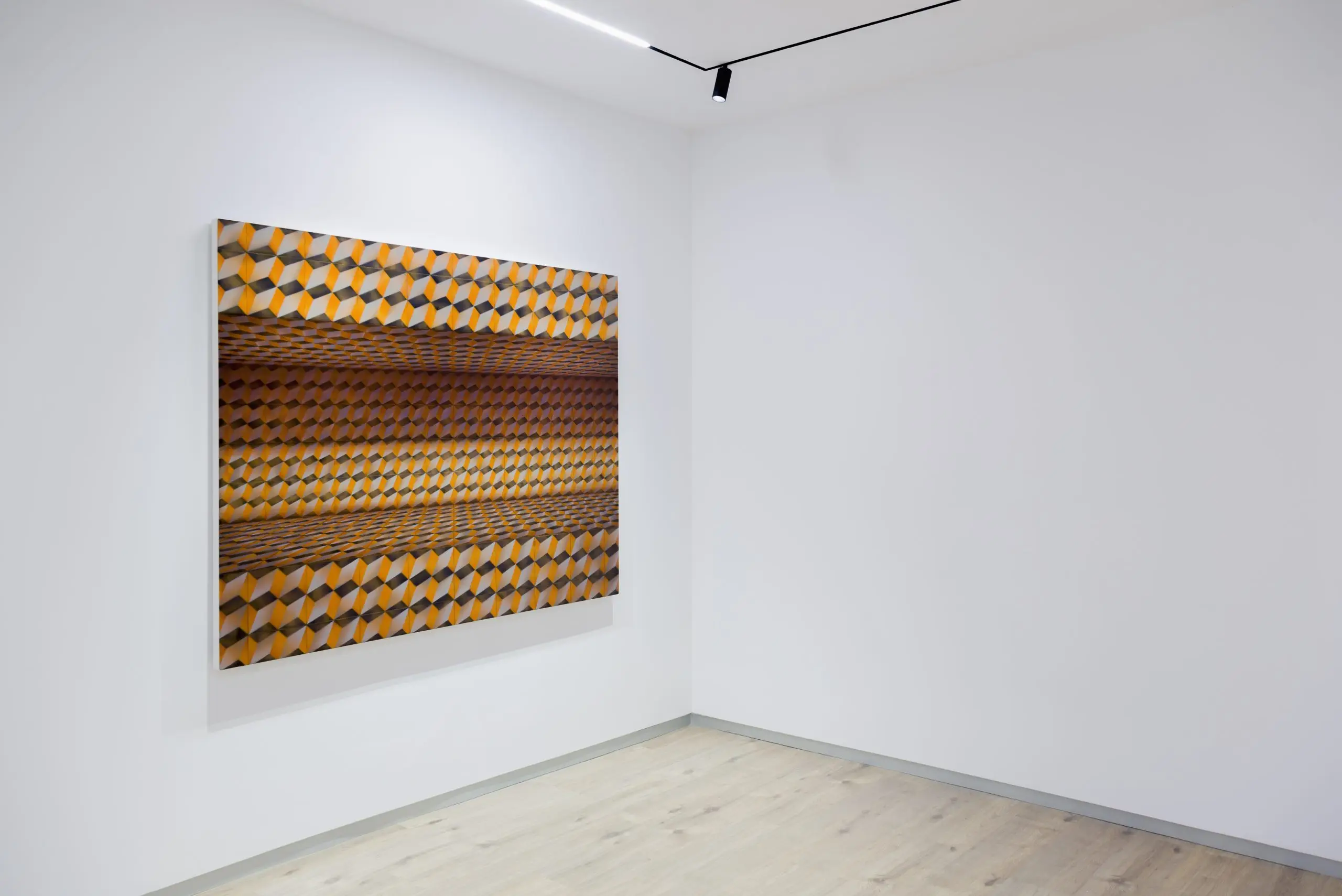
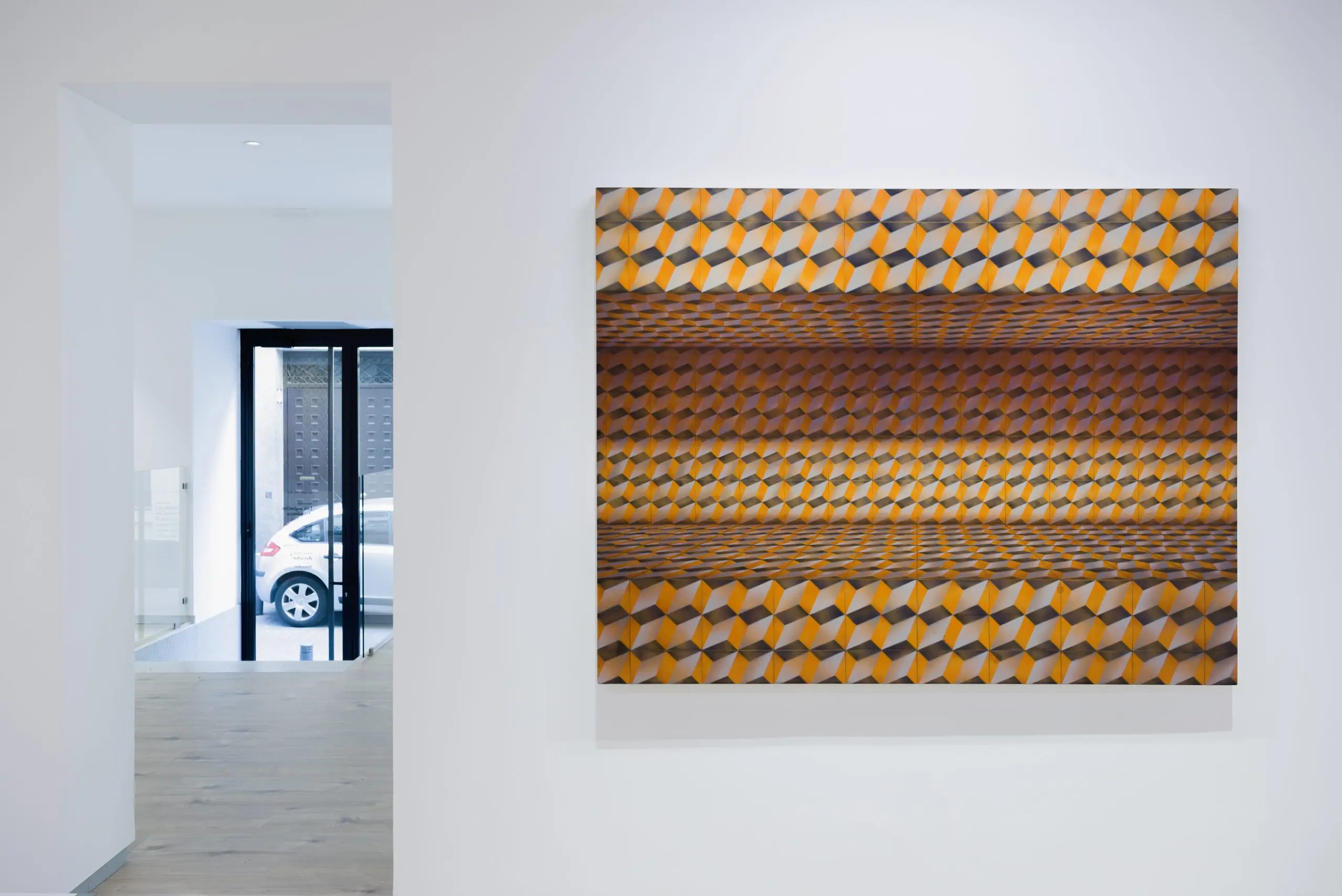
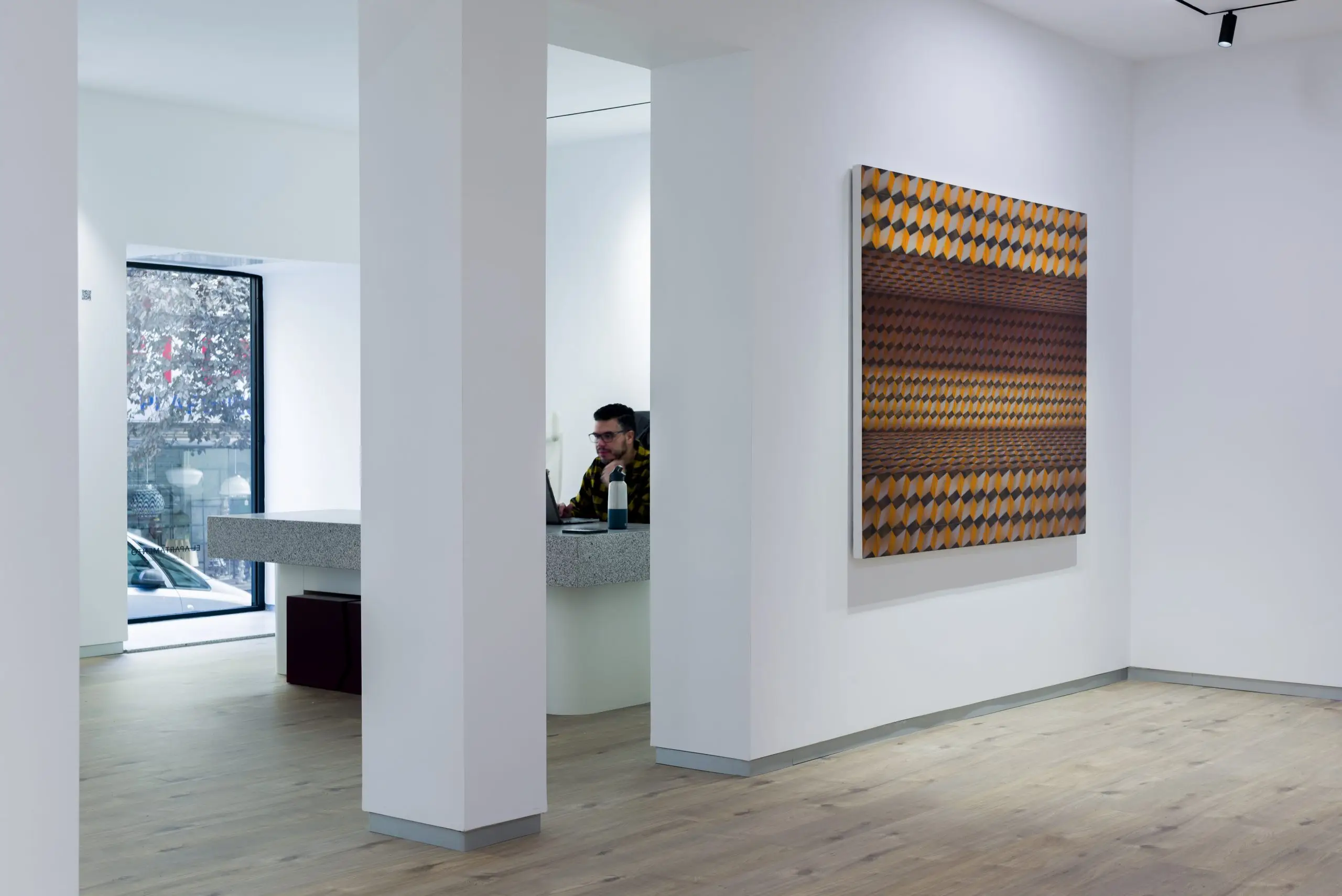
Niche No.6 Orange (Secondary Triptych), 2024
oil on canvas, 140 x 180 cm (55.1 x 70.8 in)
Luis López Chávez
Niche No.3 Blue (Primary Triptych), 2024
oil on canvas, 140 x 140 cm (55.1 x 55.1 in)
Luis López Chávez
Niche No.6 Orange (Secondary Triptych), 2024
oil on canvas, 140 x 180 cm (55.1 x 70.8 in)

Luis López Chávez
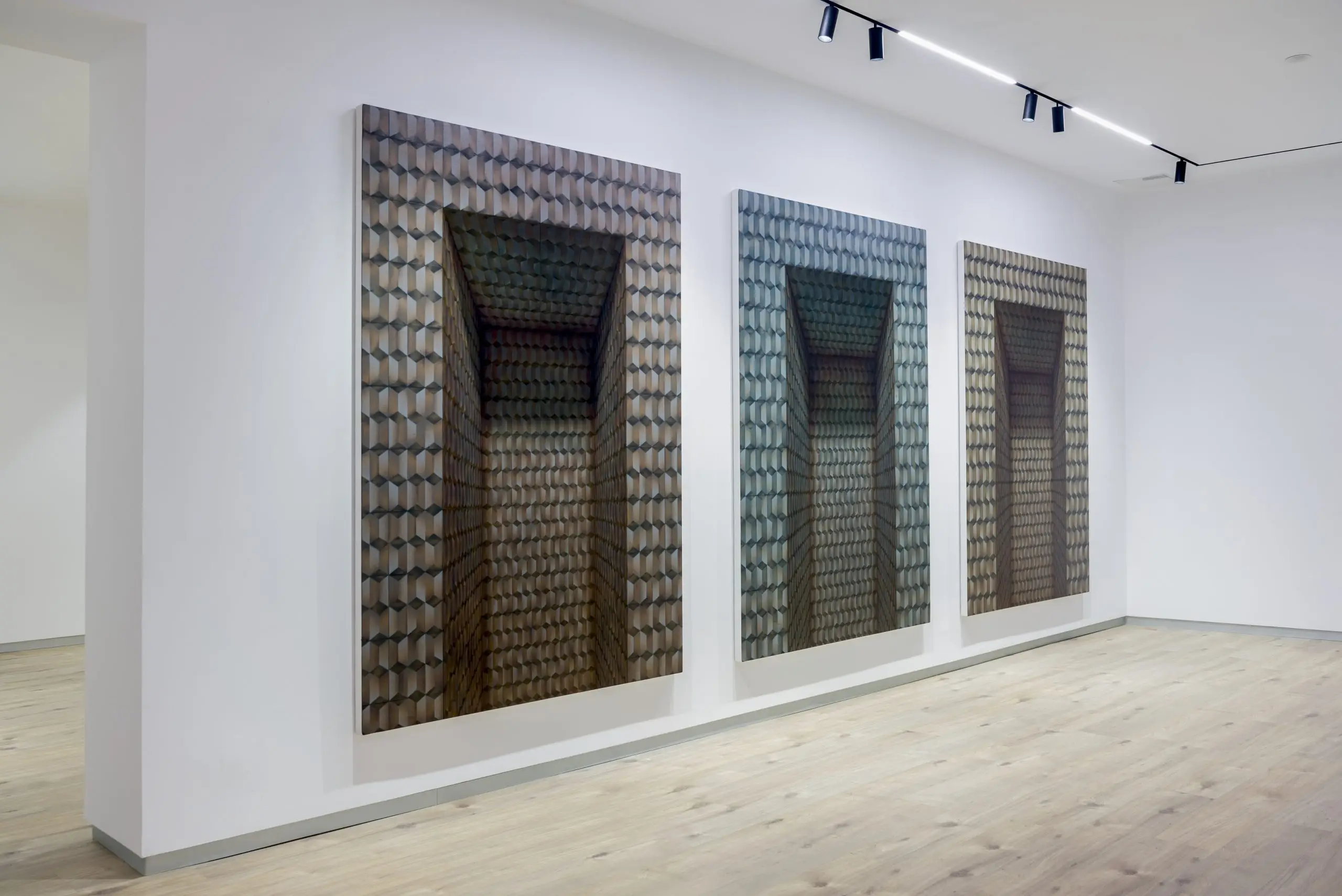
Niche No.8 Gray-red (Tertiary Triptych), 2024
oil on canvas, 200 x 140 cm (78.7 x 55.1 in)

Luis López Chávez
Niche No.9 Gray-blue (Tertiary Triptych), 2024
oil on canvas, 200 x 140 cm (78.7 x 55.1 in)

Luis López Chávez
Niche No.7 Gray-yellow (Tertiary Triptych), 2024
oil on canvas, 200 x 140 cm (78.7 x 55.1 in)
Luis López Chávez
Niche No.8 Gray-red (Tertiary Triptych), 2024
oil on canvas, 200 x 140 cm (78.7 x 55.1 in)
Luis López Chávez
Niche No.9 Gray-blue (Tertiary Triptych), 2024
oil on canvas, 200 x 140 cm (78.7 x 55.1 in)
Luis López Chávez
Niche No.7 Gray-yellow (Tertiary Triptych), 2024
oil on canvas, 200 x 140 cm (78.7 x 55.1 in)

Luis López Chávez
Niche No.5 Green (Secondary Triptych), 2024
oil on canvas, 140 x 180 cm (55.1 x 70.8 in)

Luis López Chávez
Niche No.2 Red (Primary triptych), 2024
oil on canvas, 140 x 140 cm (55.1 x 55.1 in)
Luis López Chávez
Niche No.5 Green (Secondary Triptych), 2024
oil on canvas, 140 x 180 cm (55.1 x 70.8 in)
Luis López Chávez
Niche No.2 Red (Primary triptych), 2024
oil on canvas, 140 x 140 cm (55.1 x 55.1 in)
In his essay On StyleSusan Sontag comments that "every style is a means to insist on something", that more or less conscious vehicle that operates as a catalyst for individual obsessions. Of course, here we are not interested in talking about style, an exercise that, at this point, raises too many suspicions due to its presumed anchorage in the territory of forms. But we are interested in insistence as a device that pulls perception. That tells us: let's look there, to the gap, to the equivocal, to that disjointed space where reason no longer works. We want to talk, I say, about the insistence of Luis Lopez Chavez, an obstinate artist, who turns around, gropes, digs in the joints of the frame looking for clues to penetrate the crack.
López Chávez is moved by the notion of emptiness. What is the function of this liminal structure, how does that space operate in the arithmetical layout of the city, what to do with the leftover, the pothole, the accident, how to deal with its belonging to a mechanism that appears to us as a closed continuum? López Chávez calls these semantic impossibilities "the spaces of panic". And he does so, basically, because that is what they are. Seats of a failed mechanism through which nothingness rushes. But the void, thus said, turns out to be an extremely abstract category that is difficult to approach by means of representation. In any case, he tries. It persists because vertigo does not wear out. Like a black hole, it is infinite.
Very soon, Luis realizes that the naturalistic, referential alibi is insufficient to get where he wants to go. It is not possible to "get out" of the system by repeating over and over again the same linguistic operations that close and stabilize it (that is, make it invisible). So he decides to take a pulse on common sense and insist on error, that which they call error, and which is nothing other than the sensible and conceptual limits of the real. What interests him is not to recreate the void but to install himself in its blind eye. In doing so, he points to Shklovski's premise in relation to an art whose fundamental object would be to "give a sensation of the object as vision and not as recognition". To return to the pang, that rush that is back from the place we have not yet reached.
After several years working on the painting to the premium -or a more flexible variant to which he used to incorporate glazes, Lopez Chavez uses grisaille to develop the pieces of Los espacios del pánico. This technique will allow him to master much better the perspective of these structures in transit, to move towards painting in layers and to focus fully on the investigation of color. Before, he confesses, he was not satisfied with the results. It is hard to imagine the ways in which this discomfort would have settled in his work, especially if we take into account that we are talking about the impossible enterprise of besieging the void.
But Luis knows well what he is referring to, and in pictorial terms it is about enabling a path that makes escape possible. An escape of this kind is only viable if that which we would not have access to from the fief of reason becomes evident. We must begin, then, by replacing the idea of verisimilitude, so dear to certain painting, with the idea of truth. It is necessary to step on solid ground to make the leap.
The series that gives body to this exhibition project concentrates on the figure of the funeral niche. López Chávez is faithful to his usual dimensions in the Colón cemetery in Havana, Cuba (80 x 80 cm), to the strict outline of that square that circulates, like a totem, throughout the history of modern art. Specifically, the approaches of Kazimir Malevich and Josef Albers call to it. Both artists would make the square their investigative bastion, an inexhaustible motif on which to experiment with space and color. Luis is interested in both: space and color, just as he is interested in the links between the everyday and the transcendent, the living room and the family tomb. It is not by chance that much of his work reclaims the element of the decorative slab and makes it part of a very personal liturgy of the annunciation. After all, what are these geometric tiles covering, what do they hide under the aesthetic subterfuge of the color patterns?
Luis tells me that this series has generated more studies than works. Essays on color, which is not objective, although it seems so; which is defined by its interactions with other colors, light, and location on the plane. What he does not say, however, is that his stubbornness seems condemned to the cyclical dynamics of trial and error. And how good that this is so, so that emptiness continues to operate as a territory pending domestication, that living organism that strikes and confuses, the cramp in the back, the disturbance. López Chávez insists on painting those unaccommodated spaces, and sometimes he succeeds. We have looked at the perfect hollows where the notion of meaning, of utility, of object once wanted to be installed; square or rectangular niches that escape towards infinity as a promise of significance. We have seen reds and blues degrade in the darkness, a piece of surface that does not stop deepening the crack. There, it is supposed to be our bones, but in reality there is nothing.
Mario Montalbetti calls this lack "search without finding anything". And that's what it's all about, I think, searching without ever reaching the center. To fight against the crutch of understanding, which is illusory and easy to disrupt. It is functional to the system and, therefore, deceitful. That does not know what to do with the empty house, the open grave, the remains of the tiled floor in the heart of the rubble.
- Daleysi Moya
views of the exhibition