 EN
EN  ES
ES  IT
IT  FR
FR  ZH
ZH  PT
PT Cuasichamánico
Curated by Virginia Torrente
September 12 - November 2, 2024
Project Room, El Apartamento, Madrid


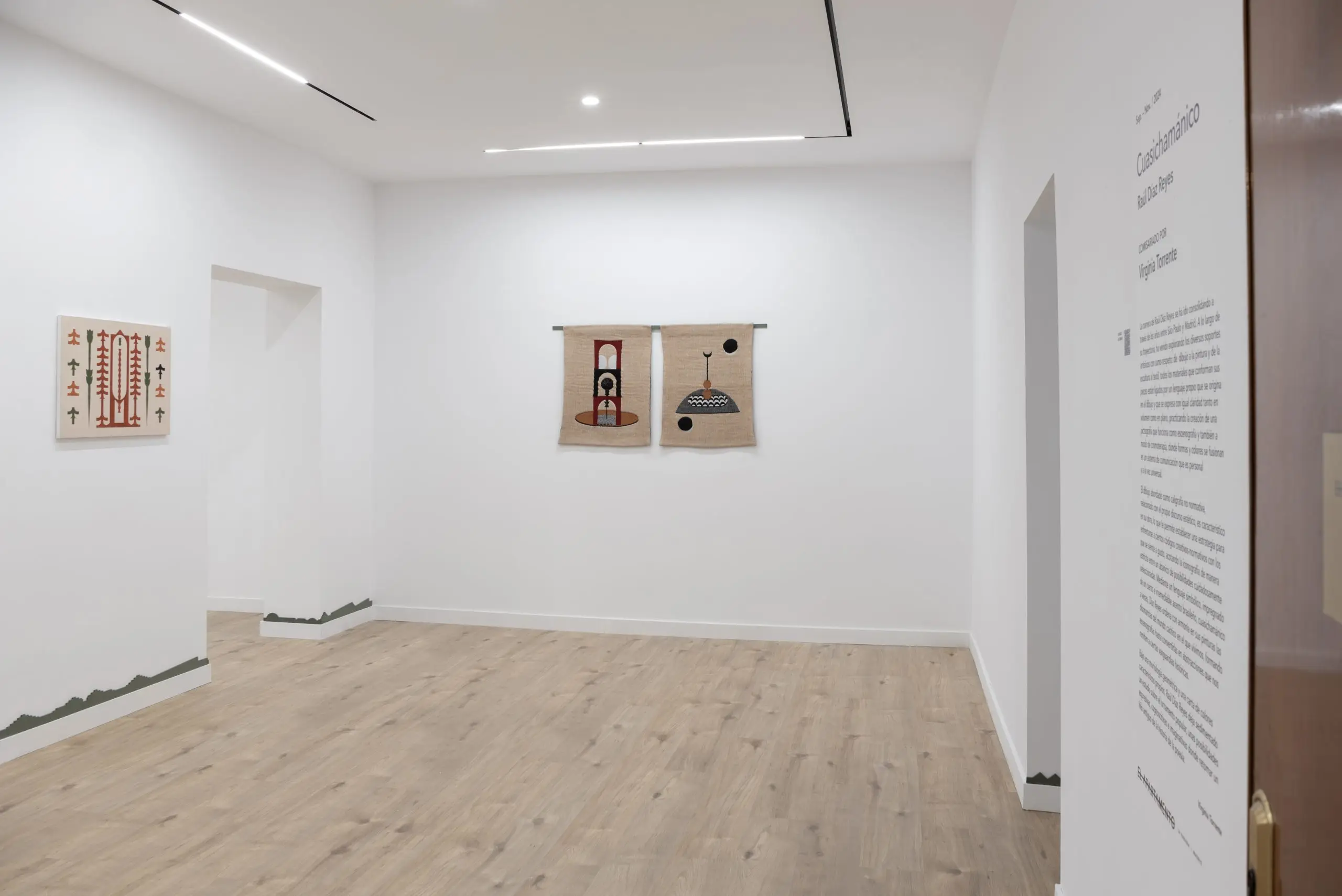
RAUL DIAZ REYES: QUASICHAMANIC
"Things come slowly. My vocabulary of forms I didn't discover all at once. It was formed almost in spite of me." Joan Miró
The career of Raul Diaz Reyes has been consolidating over the years between Sao Paulo and Madrid, being until now the weight of his development in Brazil greater than in Spain. And this Brazilian evolution has contributed many things to his work, making him take a glance at the history of geometric abstraction in the Latin American context.
Throughout his career, he has explored the various artistic media with great respect: from drawing to painting and from sculpture to textiles, all the materials that make up his pieces are linked by a language of his own that originates in drawing and is expressed with equal clarity both in volume and in plan. Díaz Reyes is a teller of brief, concise stories, produced in a language that we identify as his exclusive, and these brief stories come together in an extensive, paved and joint narrative, which links some pieces with others with ease, creating a set of common understanding, being the drawing its natural support, as a medium that expands in tapestries and sculptures in an organic way, without effort.
His work, within an artistic field where the concept of perception can be redefined, explores emotions and sensations related to cultural identity, feelings that are located in a very personal place between memory and fantasy, that invoke faintly veiled references that sometimes remain only for him. All this is developed with a language of signs that has been outlined and defines his latest works, of a carefully elaborated composition, of seductive production, demanding in the choice of each image, in the selection of the elements that make up each piece, to create a set of great visual richness.
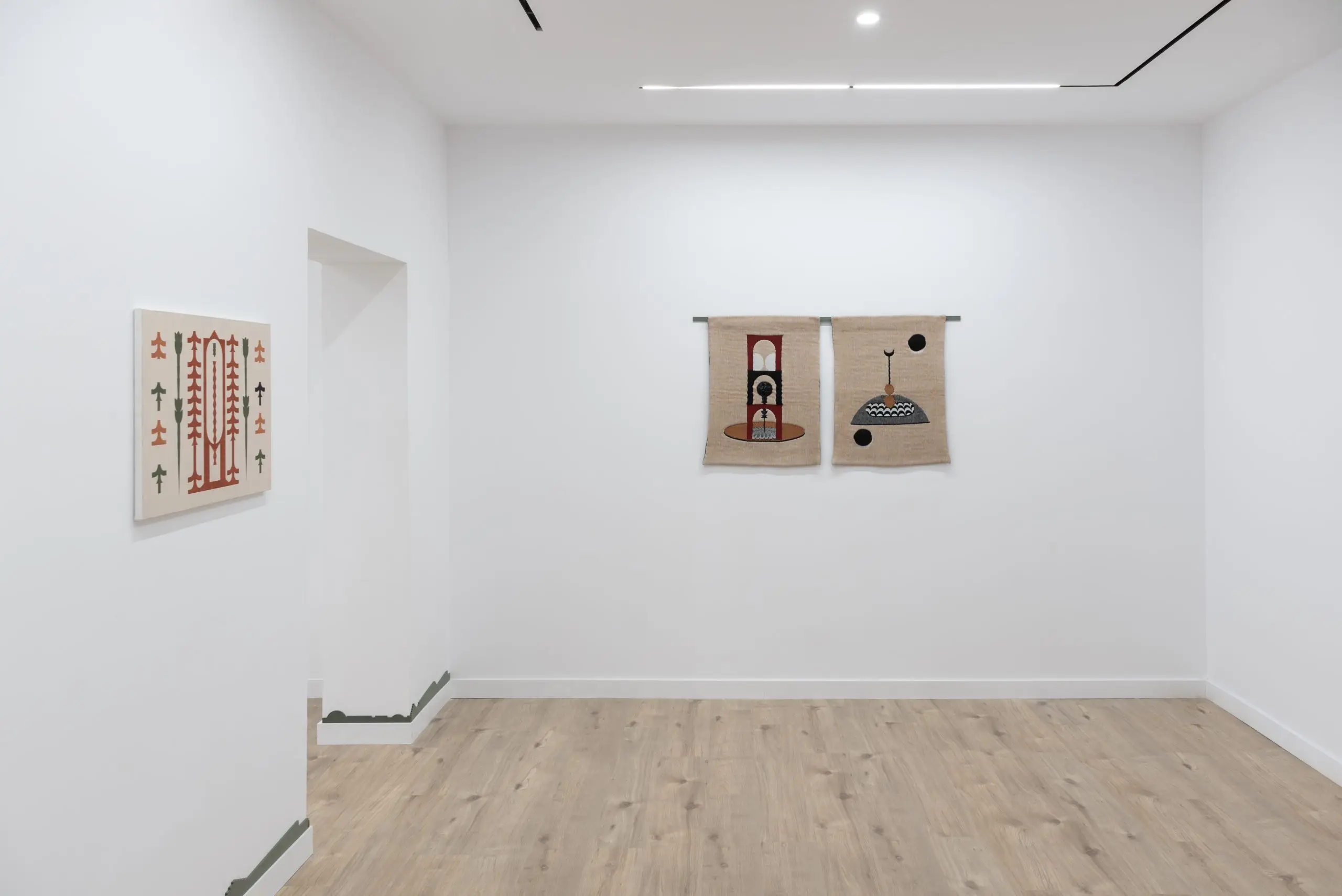
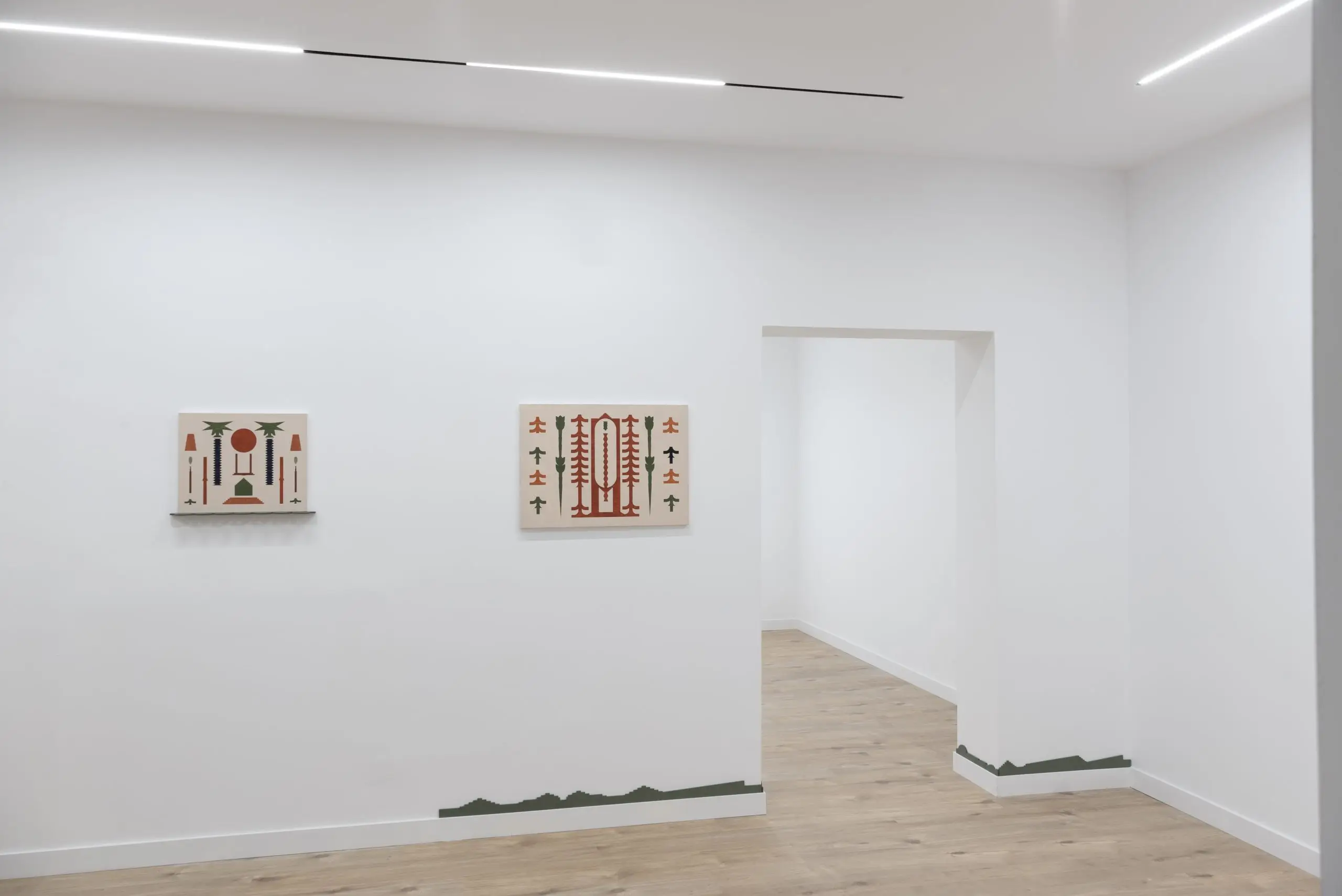
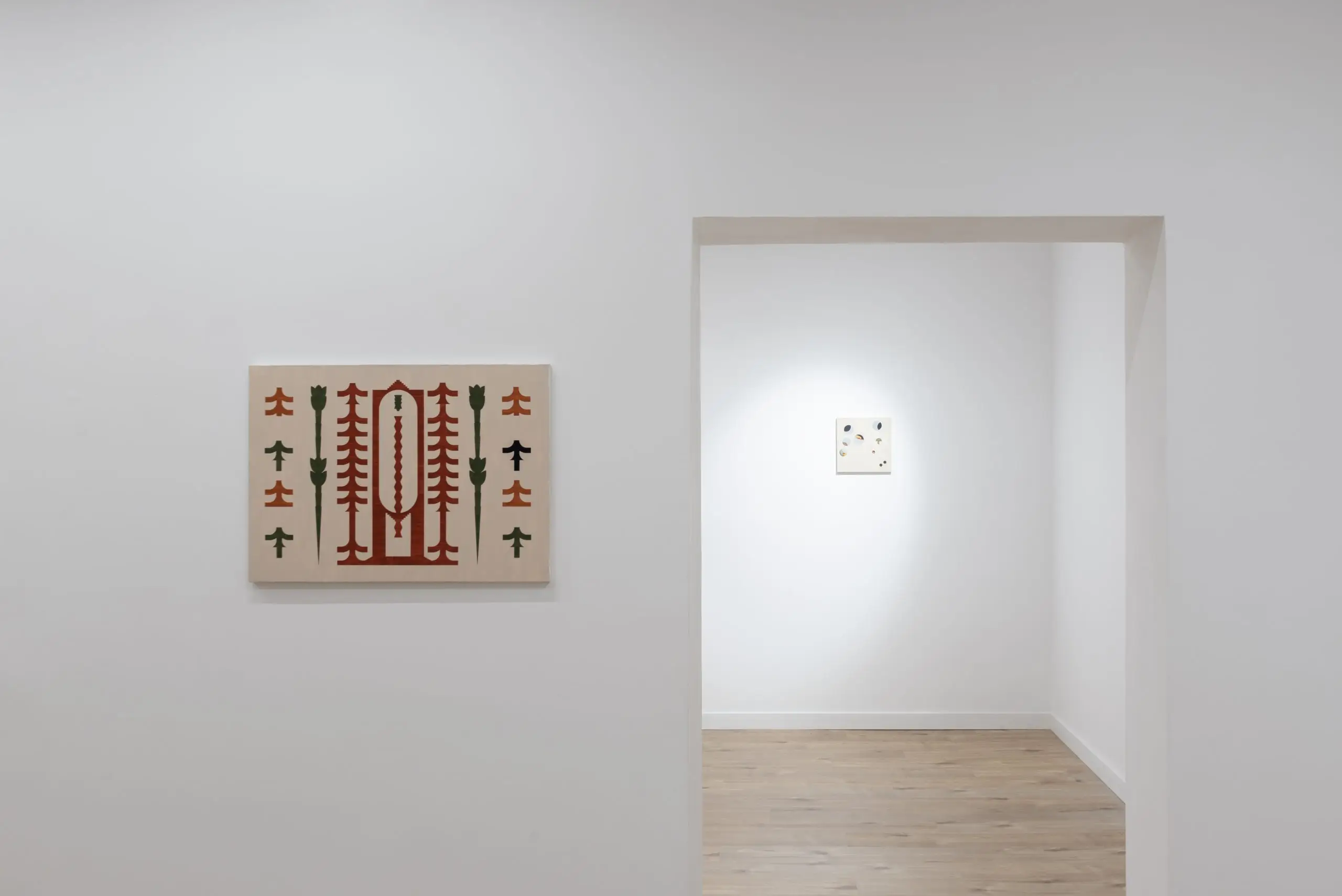
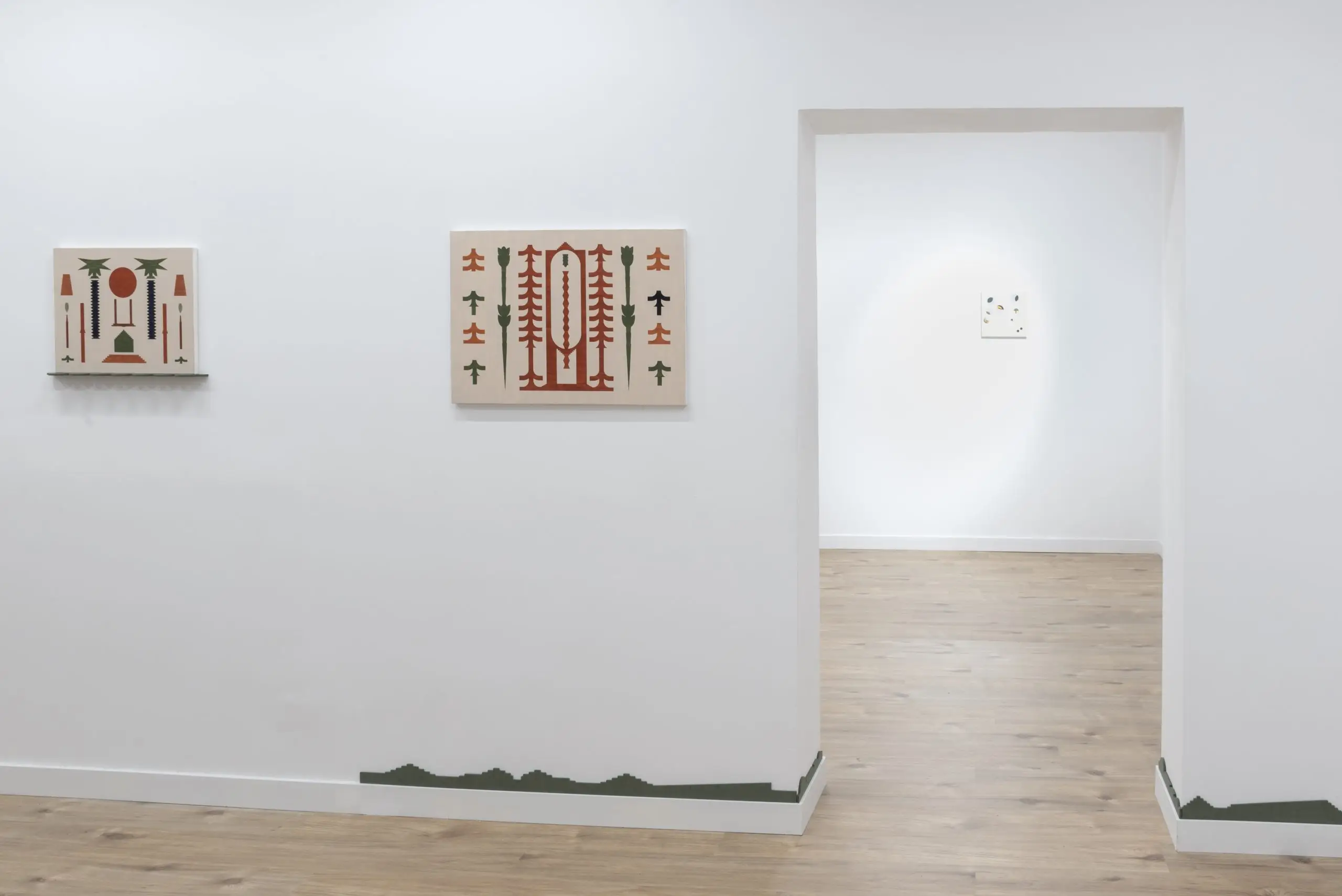
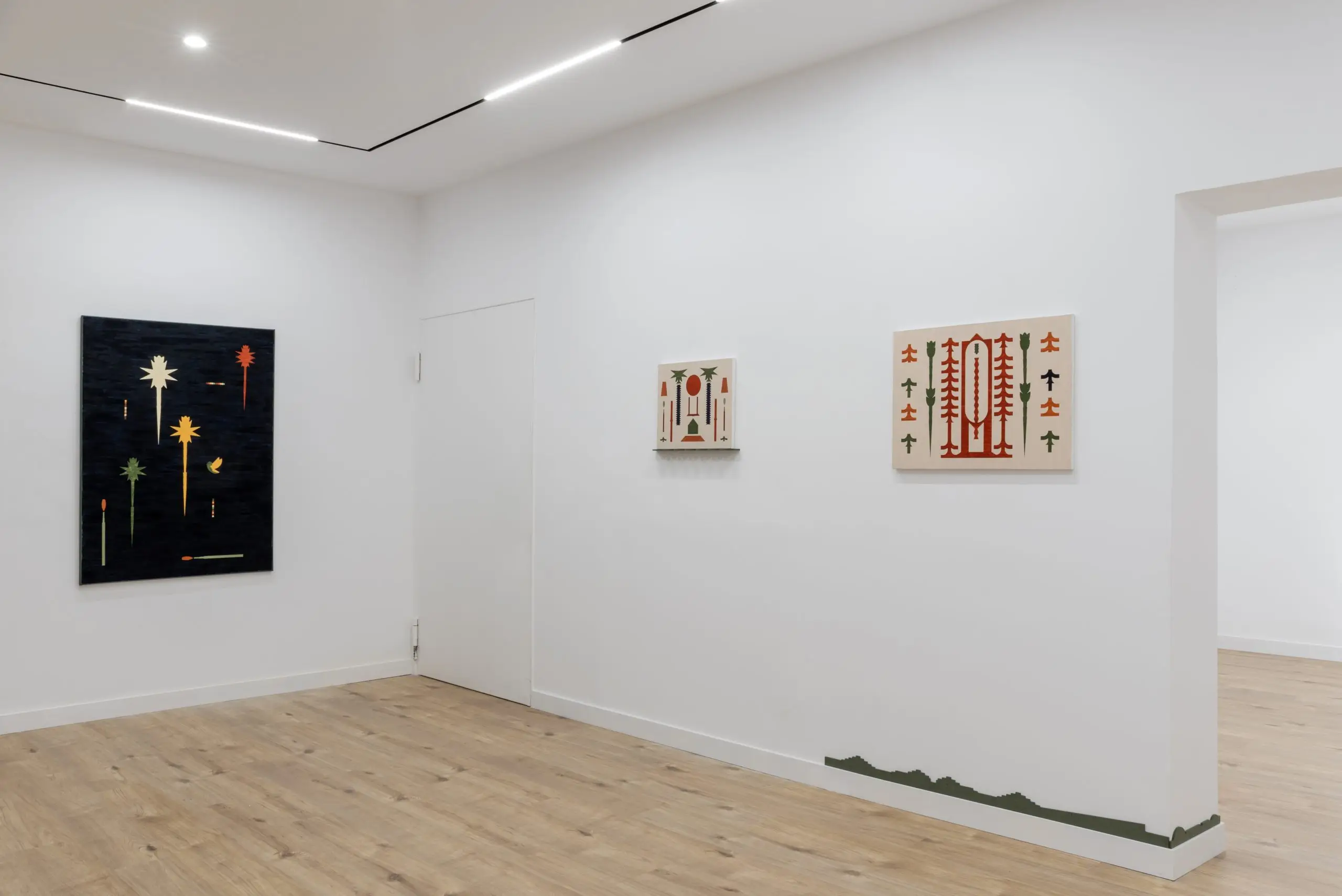
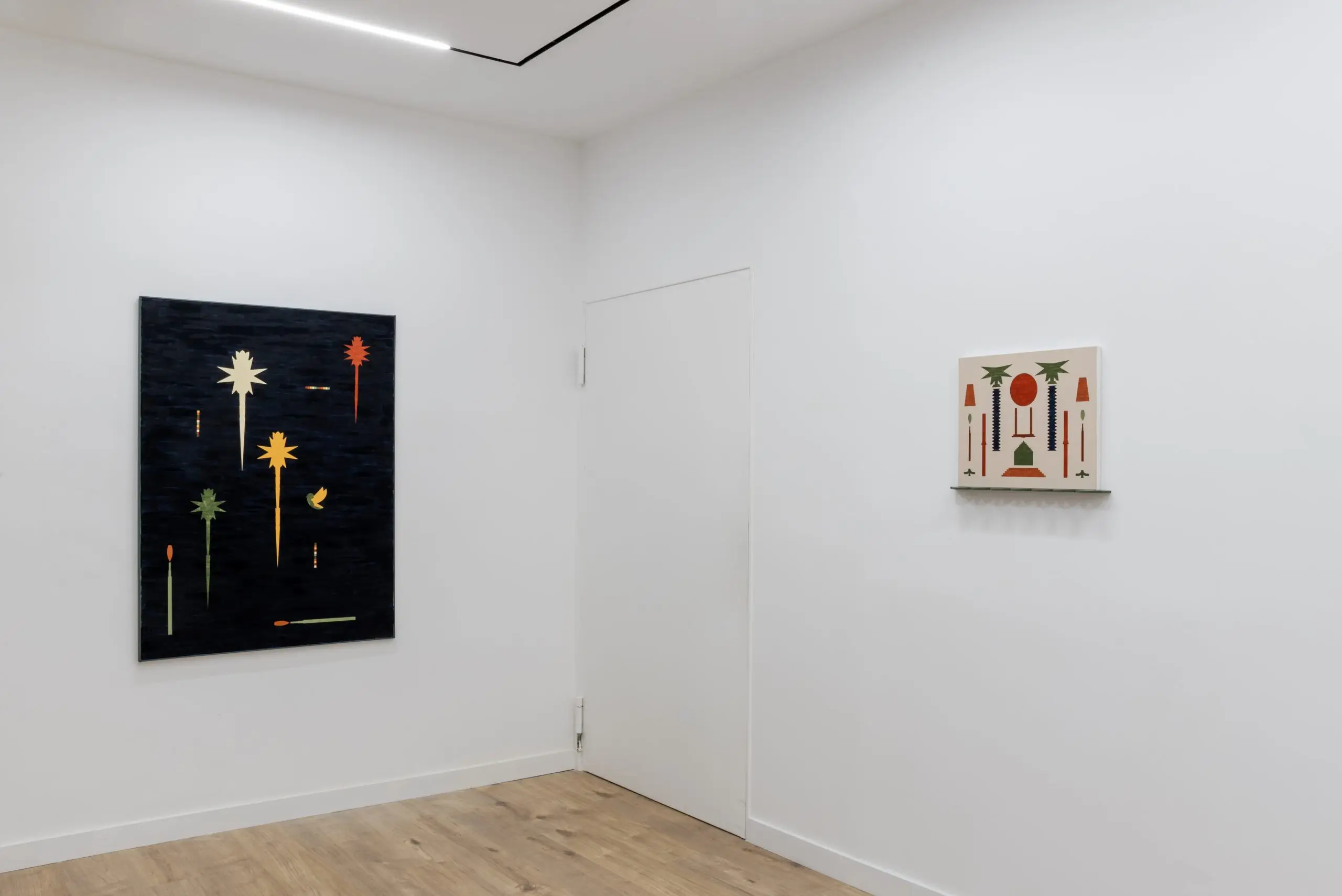
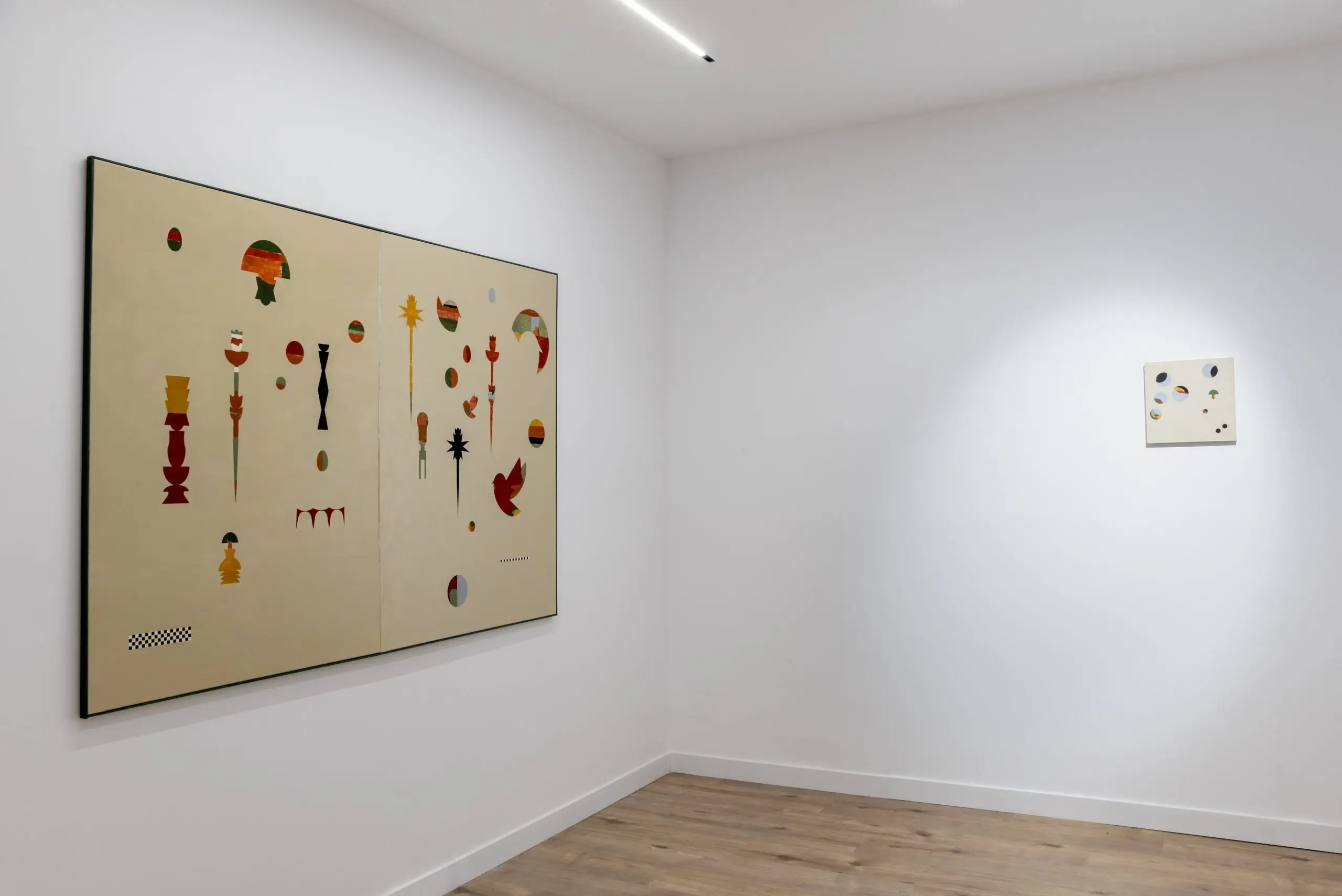
In the works of this exhibition, references dance between the tangible and the fantastic, with folkloric resonances where materiality resonates but does not overwhelm, where we must notice the vital importance of associations that experiment and intertwine supports, textures and colors gathered in families, where it intentionally directs us towards a context of a certain totemic air, practicing a creative integrity born from drawing, where the limits between abstraction and figuration are familiarly transgressed through the exhaustive experimentation between form and matter: wood, metal and textiles combine in a natural way, in a set of choreographic arrangements; rearrangement, conjunction and synthesis of elements are sequentially repeated in a carefully assembled aesthetic program, claiming a poetic presence of unquestionable weight.
Drawing approached as non-normative calligraphy, related to the aesthetic discourse itself, is characteristic of Díaz Reyes' work, where a representation-abstraction duality is always present, allowing him to establish a strategy to confront certain creative-normative codes with which he feels at ease, narrowing the iconography in a strict manner among a carefully selected range of possibilities. And among those possibilities, representations arise linked to an aesthetic that borders on the popular, that knows how to reuse ornament in the noblest sense of the word -giving a new meaning to the Art & Crafts of the master William Morris and the textiles of Anni Albers, to mention the classics-, vindicating artisanal techniques, reconstructing an imaginary with an aesthetic discourse of its own, where shapes and colors order a geometric weft with elementary figurative references, and based on that ordered simplicity, the aesthetic harmony that is distinctive of his production is created, a compositional eagerness that relates volumes both in plane and in relief, through that drawing that tries to escape from its dimension to fly towards sculpture, in order to inhabit the outer space.
Le Corbusier said that "to draw is to observe, to discover. To draw is to learn to see. It is necessary to draw in order to interiorize what has been seen. To draw is also to invent and create. Drawing is a language, a science, a means of expression, a means of transmitting thought. Drawing is the possibility to investigate. Drawing is also a game." And we see this in this exhibition, because Díaz Reyes practices the creation of his own language based on a pictography that works as scenography and also as a way of chromotherapy, where forms and colors merge in a communication system that is personal and at the same time universal. And so we return to the importance of colors: the author has to feel at ease with certain ranges and adopts them in marked patterns that are repeated in his paintings, as a series that work until they are exhausted in themselves, until those colors have given their all for the author.
With his own language, symbolic, impregnated with a certain and irremediable Brazilian accent, quasi-shamanic at times, our artist harmoniously arranges in his paintings the dissonances of the chaotic world in which we live, forming a small theater of scenographies that struggle to stop being static by floating in the air when they are textiles; or of figures firmly placed in symmetrical patterns as schematic characters when they are represented in his paintings, until they become abstractions that refer us to certain historical avant-gardes.
The work of the artisan delimits the use of certain tools, certain materials and certain creative norms that exist to be able to bypass them. Díaz Reyes investigates patterns of a contemporary geopolitical reality in abstraction/representation mode, creating pieces that refer us to a syncretism with influences from diverse geographies and times, like an anthropologist who uses the deconstruction of the system in his own particular way, sending powerful messages through the representations of the most concise forms possible, condensing the language until metamorphosing it into gestures as simple as they are explicit. And as Gaston Bachelard said: "the image, in its simplicity, does not need knowledge. It is the property of a naive consciousness (...) the image is before thought. Before being a conscious spectacle, every landscape is a dreamlike experience".
Under a geometric morphology and his own characteristic color chart, Raúl Diaz Reyes leaves sedimented a study on the popular ornament, some expressive, cognitive and imaginative possibilities where to retake an ancient thread of the history of poetry.
Virginia Torrente
works

Raúl Díaz Reyes
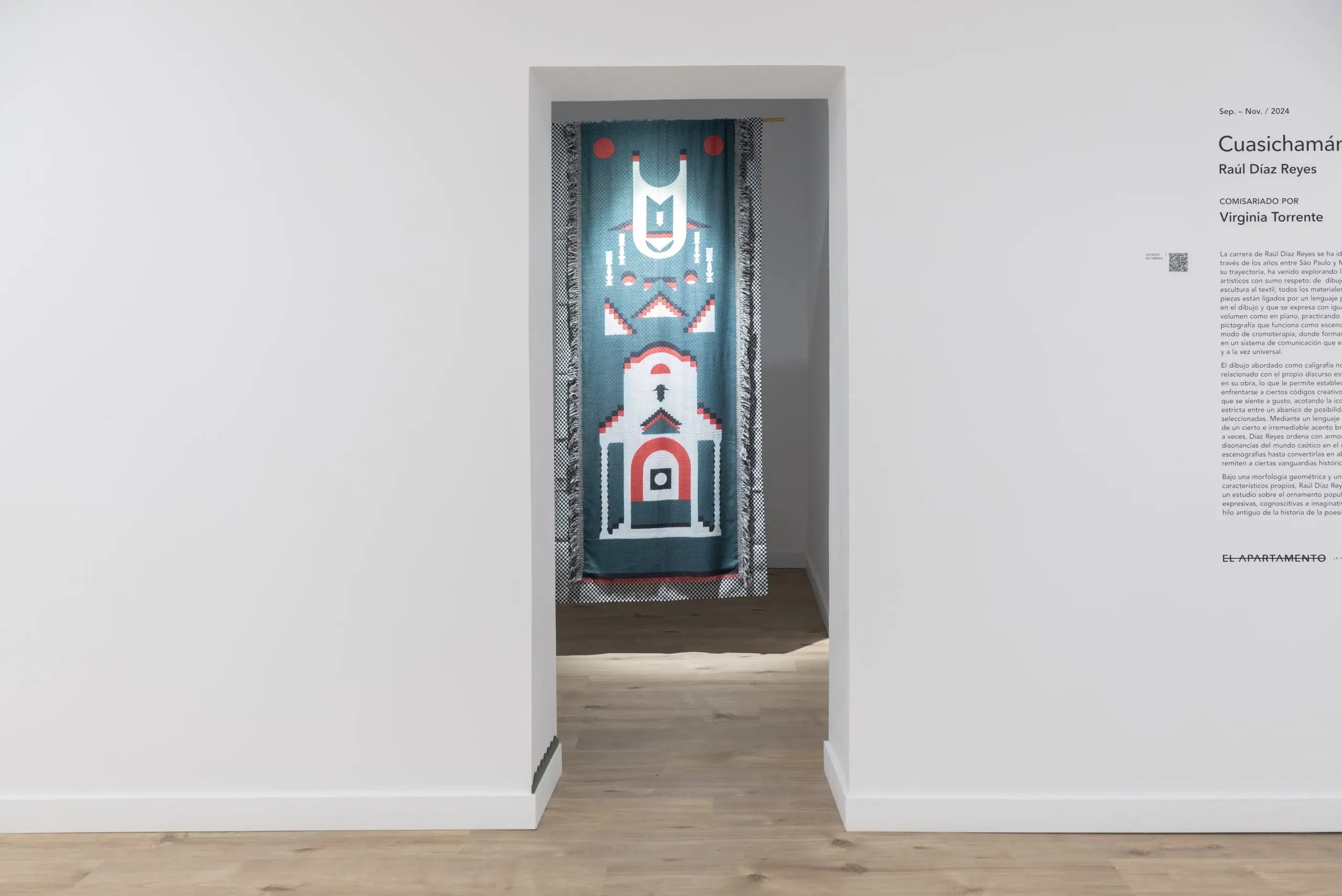
God (green), 2024
Upholstery and print in baby alpaca and silk.
200 x 92 cm (78.7 x 36.2 in)
Raúl Díaz Reyes
God (green), 2024
Upholstery and print in baby alpaca and silk.
200 x 92 cm (78.7 x 36.2 in)

Raúl Díaz Reyes
Solange, 2024
Acrylic on canvas
38 x 46 cm (14.9 x 18.1 in)

Raúl Díaz Reyes
Uma arca, 2024
Acrylic on canvas
50 x 70 cm (19.7 x 27.6 in)
Raúl Díaz Reyes
Solange, 2024
Acrylic on canvas
38 x 46 cm (14.9 x 18.1 in)
Raúl Díaz Reyes
Uma arca, 2024
Acrylic on canvas
50 x 70 cm (19.7 x 27.6 in)
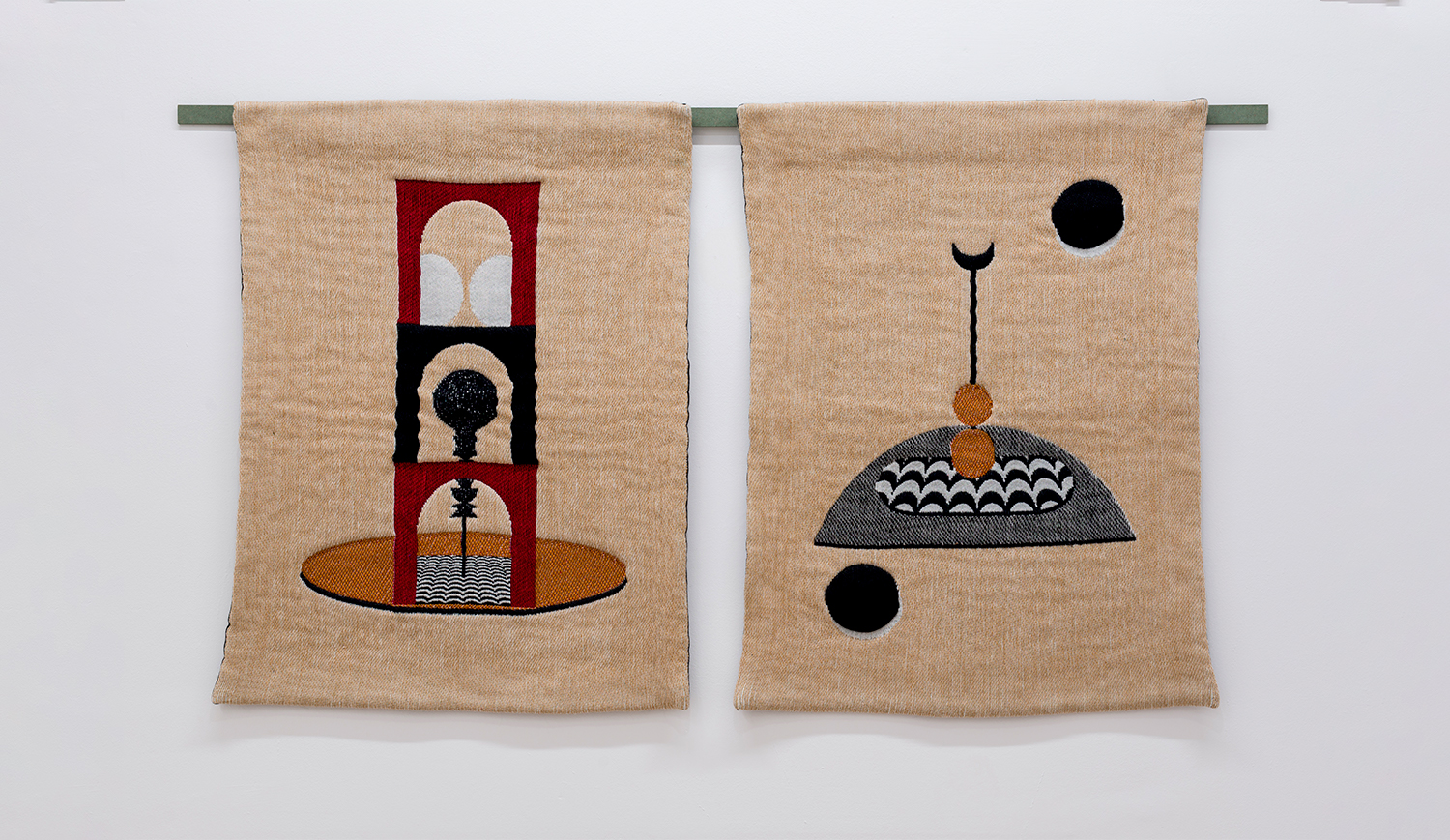
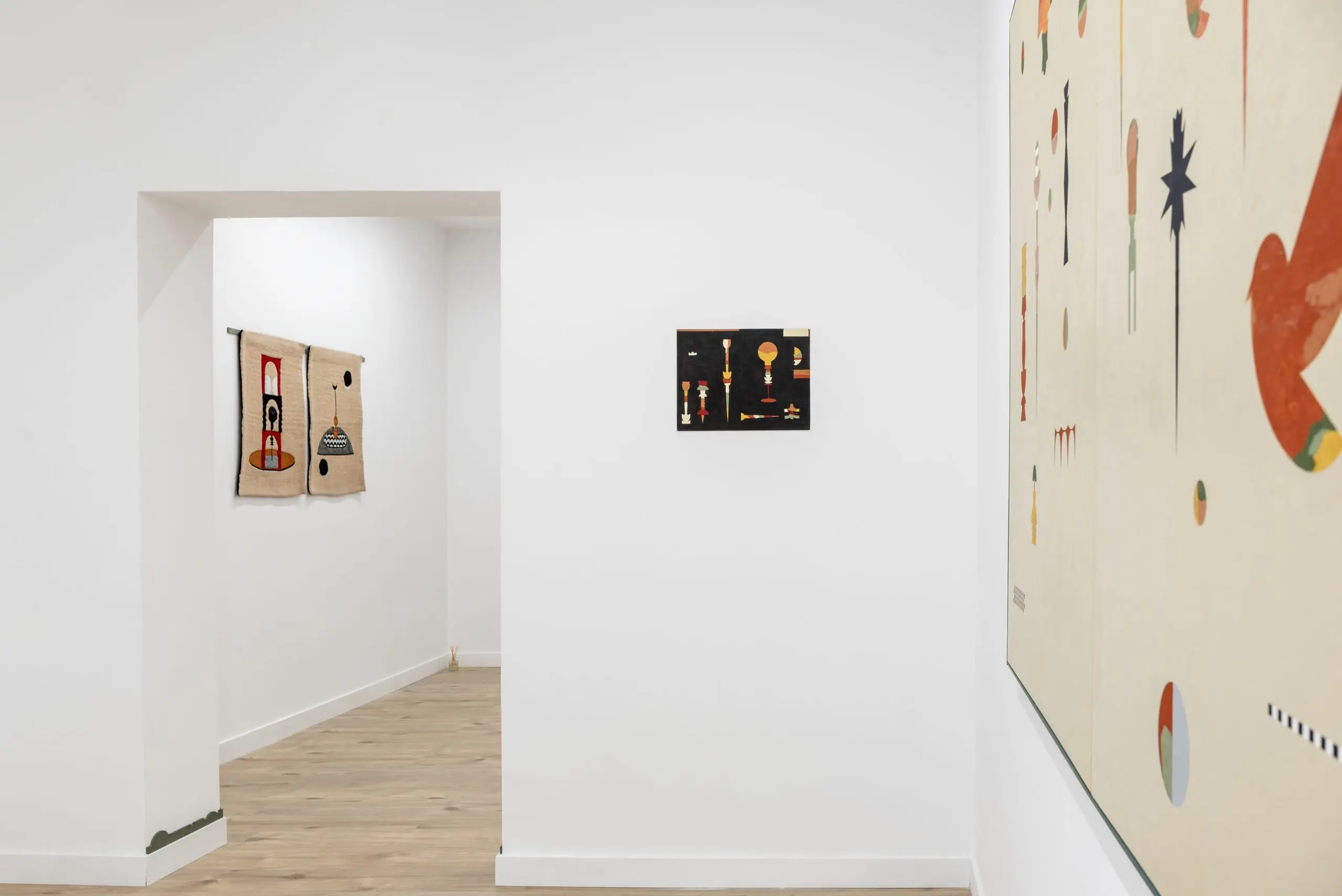
Raúl Díaz Reyes
Untitled, from the Fronteira Oeste series, 2021
Jacquard, wool, merino, linen, and cider cloth upholstery.
Unique pieces.
76 x 56 cm
(30 x 22 in) each
Raúl Díaz Reyes
Untitled, from the Fronteira Oeste series, 2021
Jacquard, wool, merino, linen, and cider cloth upholstery.
Unique pieces.
76 x 56 cm
(30 x 22 in) each

Raúl Díaz Reyes
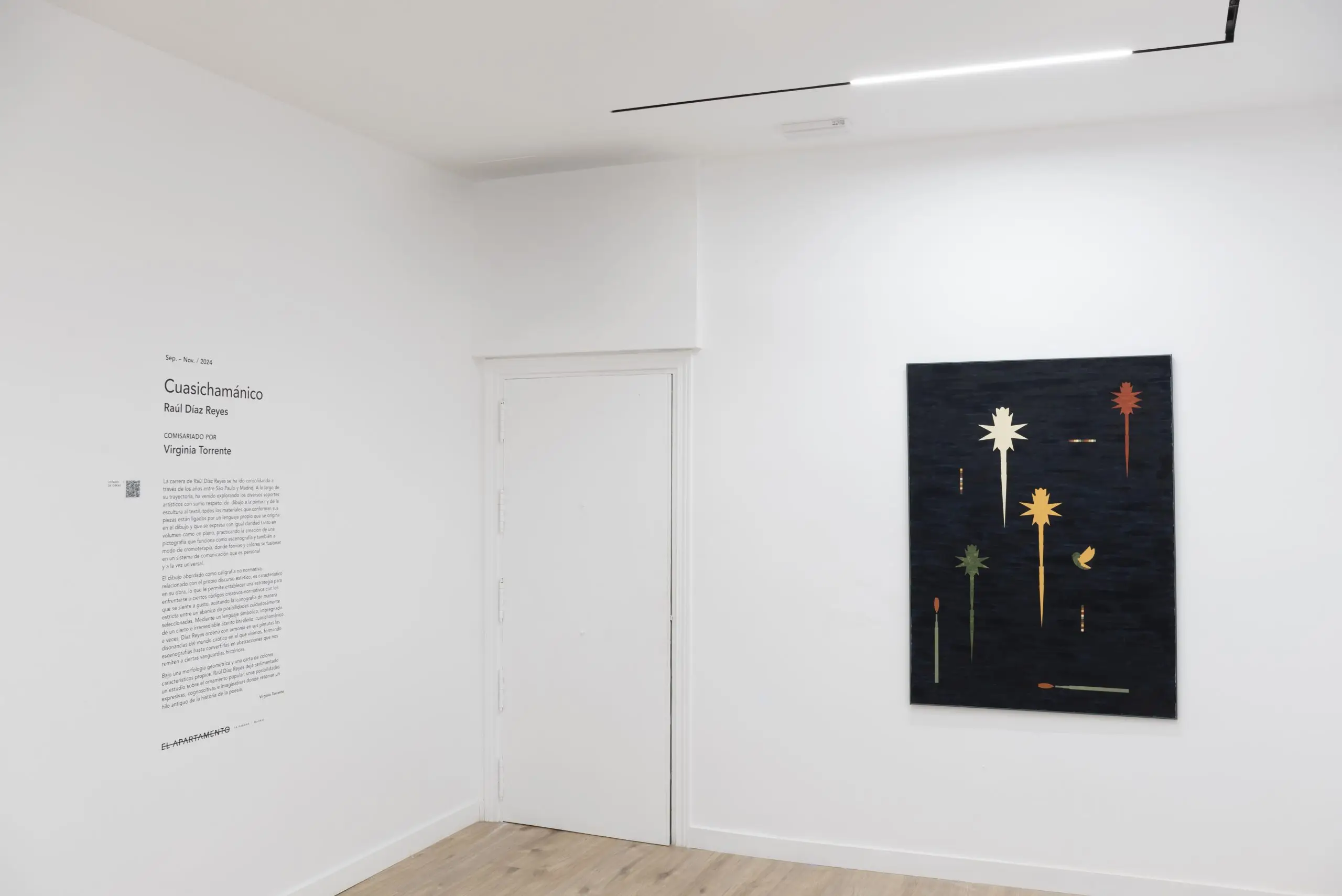
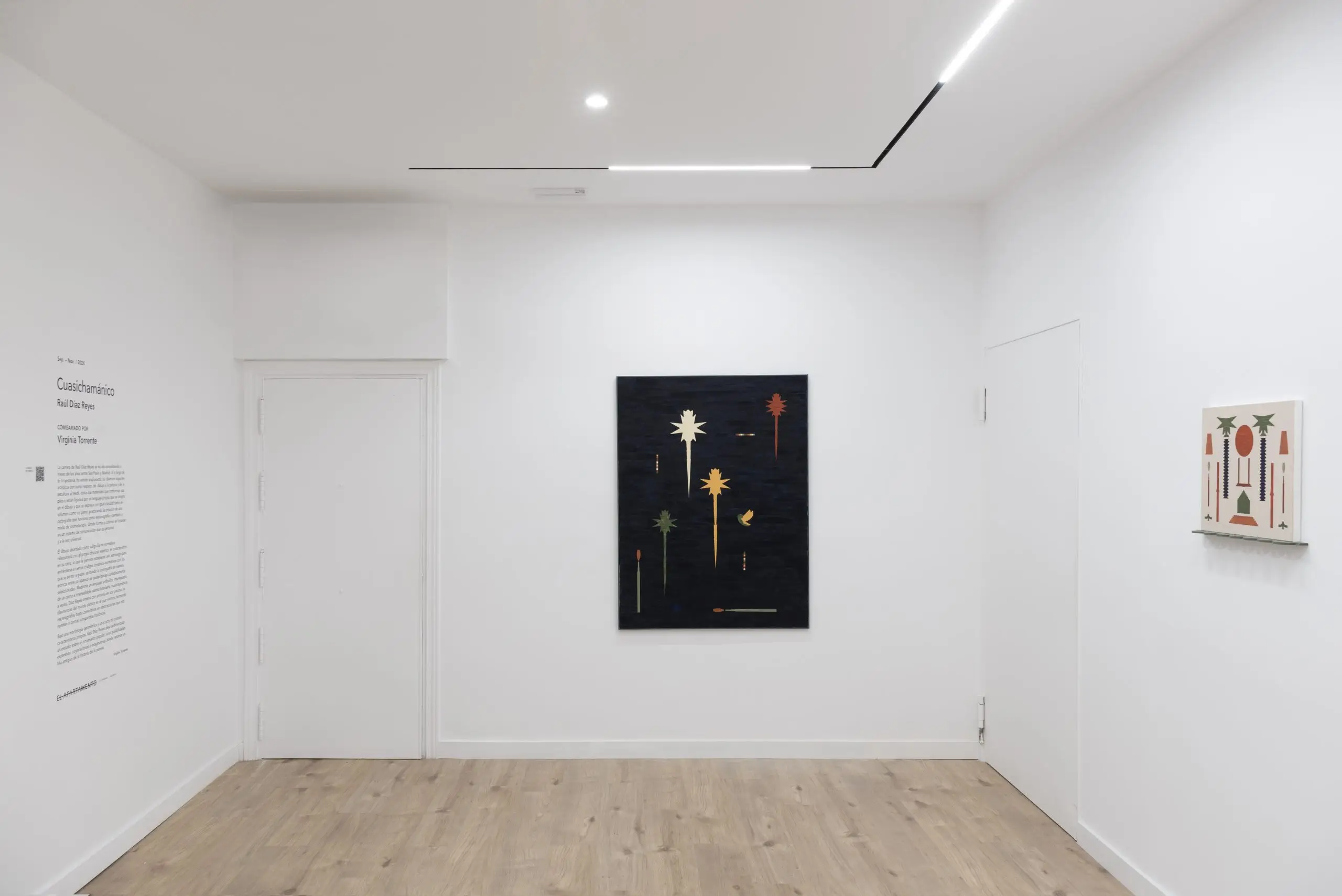
Koume, 2024
Acrylic on canvas
130 x 97 cm (51.2 x 38.2 in)
Raúl Díaz Reyes
Koume, 2024
Acrylic on canvas
130 x 97 cm (51.2 x 38.2 in)

Raúl Díaz Reyes
JCM, 2024
Acrylic on canvas
30 x 30 cm (11.8 x 11.8 in)

Raúl Díaz Reyes
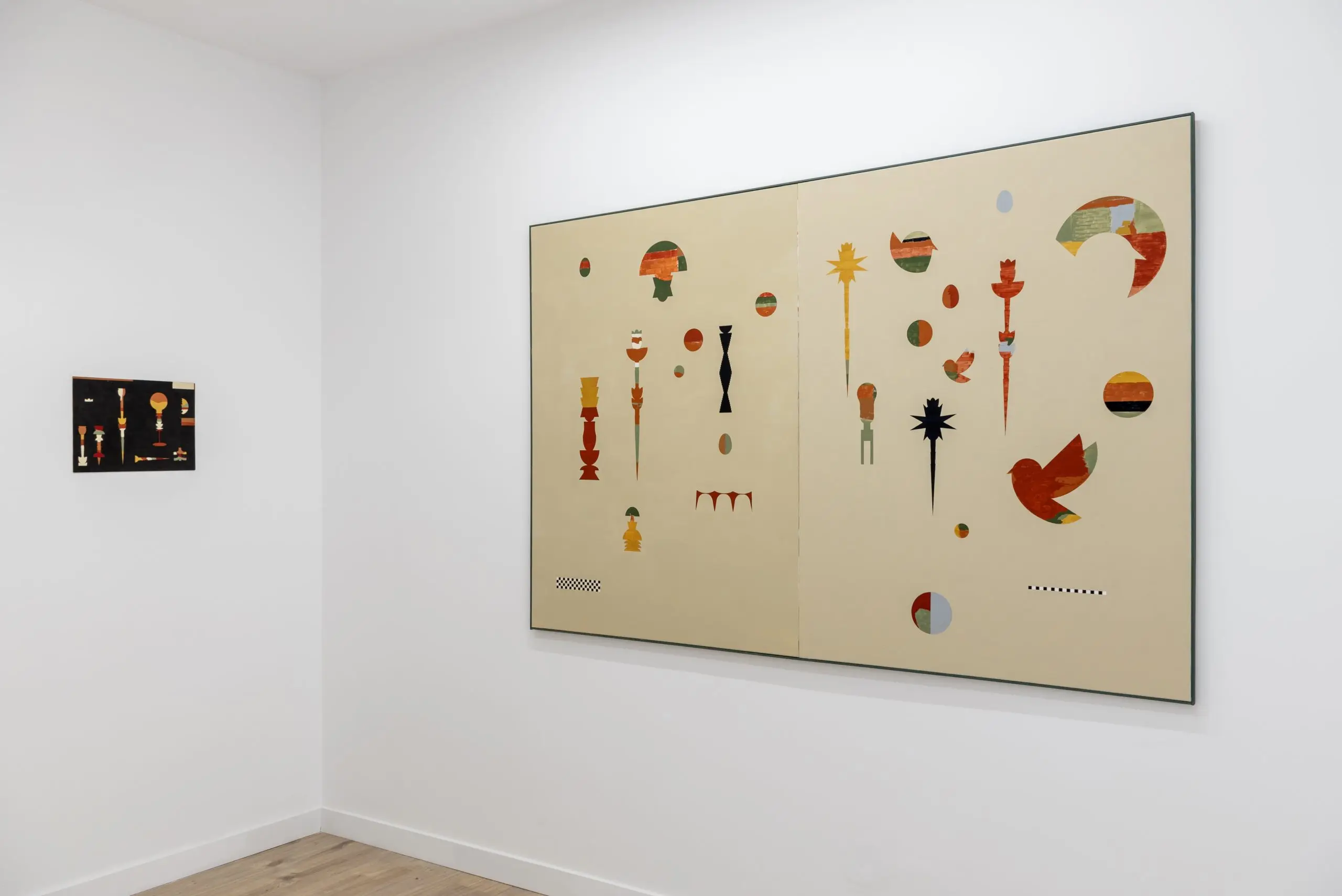
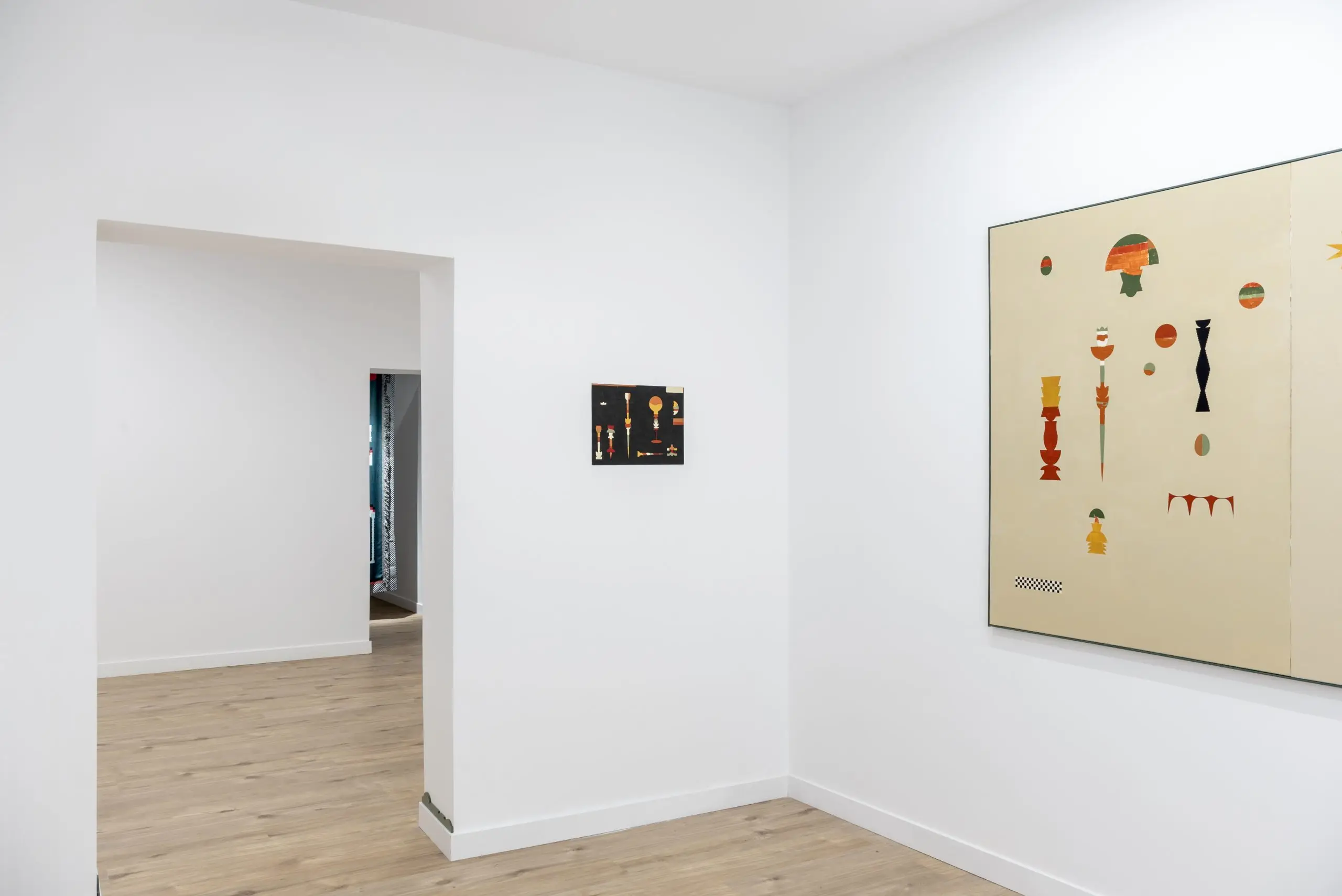
Ark (mega), 2024
Diptych / Acrylic on canvas.
97 x 130 cm (38.2 x 51.2 in)
Raúl Díaz Reyes
JCM, 2024
Acrylic on canvas
30 x 30 cm (11.8 x 11.8 in)
Raúl Díaz Reyes
Ark (mega), 2024
Diptych / Acrylic on canvas.
97 x 130 cm (38.2 x 51.2 in)

Raúl Díaz Reyes
L com S, 2023
Acrylic on cardboard.
30 x 40 cm (11.8 x 15.7 in)
Raúl Díaz Reyes
L com S, 2023
Acrylic on cardboard.
30 x 40 cm (11.8 x 15.7 in)
views of the exhibition