
 FR
FR  ES
ES  EN
EN  IT
IT  ZH
ZH  PT
PT 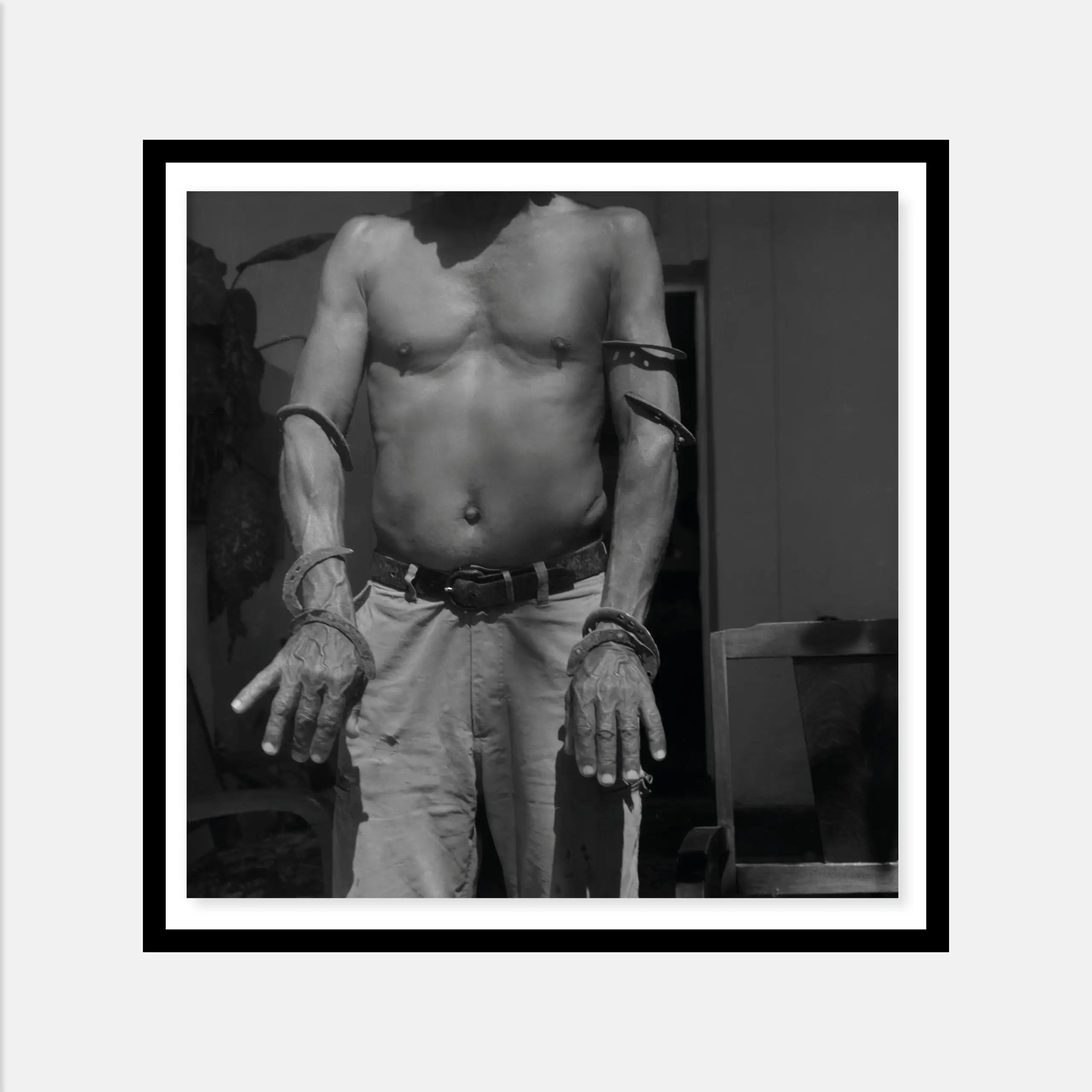
La fortuna no es liviana, 1989
Impresión digital a partir del negativo sobre papel fotográfico: Moab Juniper Baryta Rag, 305
g/m², 100 % algodón
100 x 100 cm
39 ⅜ x 39 ⅜ pouces
Édition de 5 exemplaires plus 2 épreuves d'artiste
Juan Carlos Alom is one of the most outstanding figures in Cuban photography, documentary cinema, and experimental film. His work, alongside that of other major artists, forms part of the generational drive of the 1990s—a movement determined to reinvigorate the island’s established discourses and aesthetic conventions.
Alom’s practice reflects the habits, beliefs, and emotional life of plebeian Cuba. Drawing on the spontaneity and expressive potential of the “domestic” portrait, he develops a spare yet powerful visual language through which he narrates the story of the universal human condition. The sense of precariousness that runs through much of his work, together with his almost exclusive use of black and white, operates not merely as a socioeconomic marker or aesthetic strategy, but as a metaphysical inquiry into Cubans rooted in the post-historical aftermath of the Revolution.