Where the air is fresh
and the flowers tremble

The Bravú

September 11 - November 1, 2025

El Apartamento, Madrid

The Bravú

El Apartamento gallery presents the first solo exhibition dedicated to Los Bravú with an Opening Weekend, an experience that will include the whole weekend, from Thursday September 11 to Sunday September 14, with special schedules. Among the activities scheduled are an Artist-led Tour on Thursday, September 11, at 7 pm.

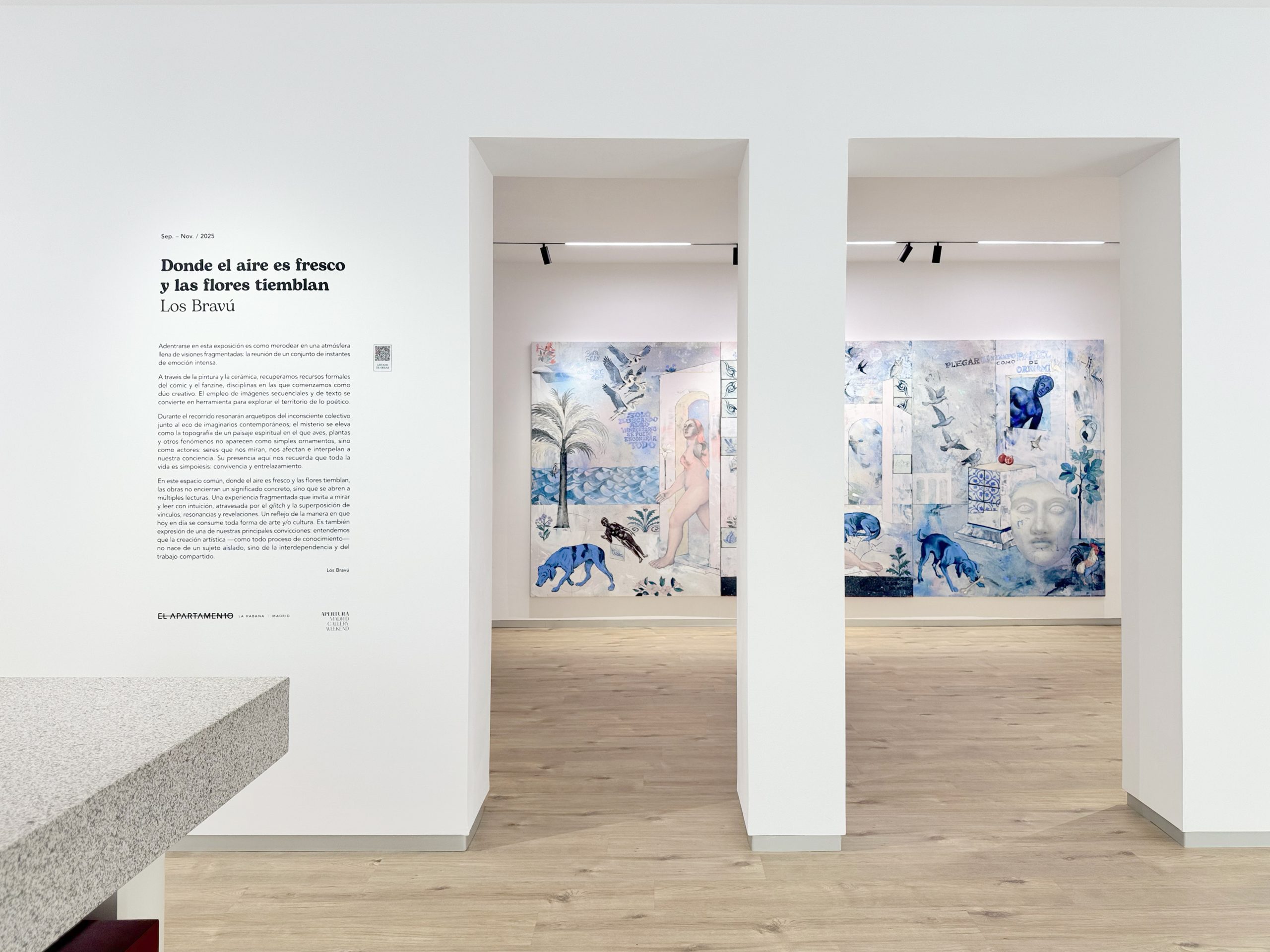
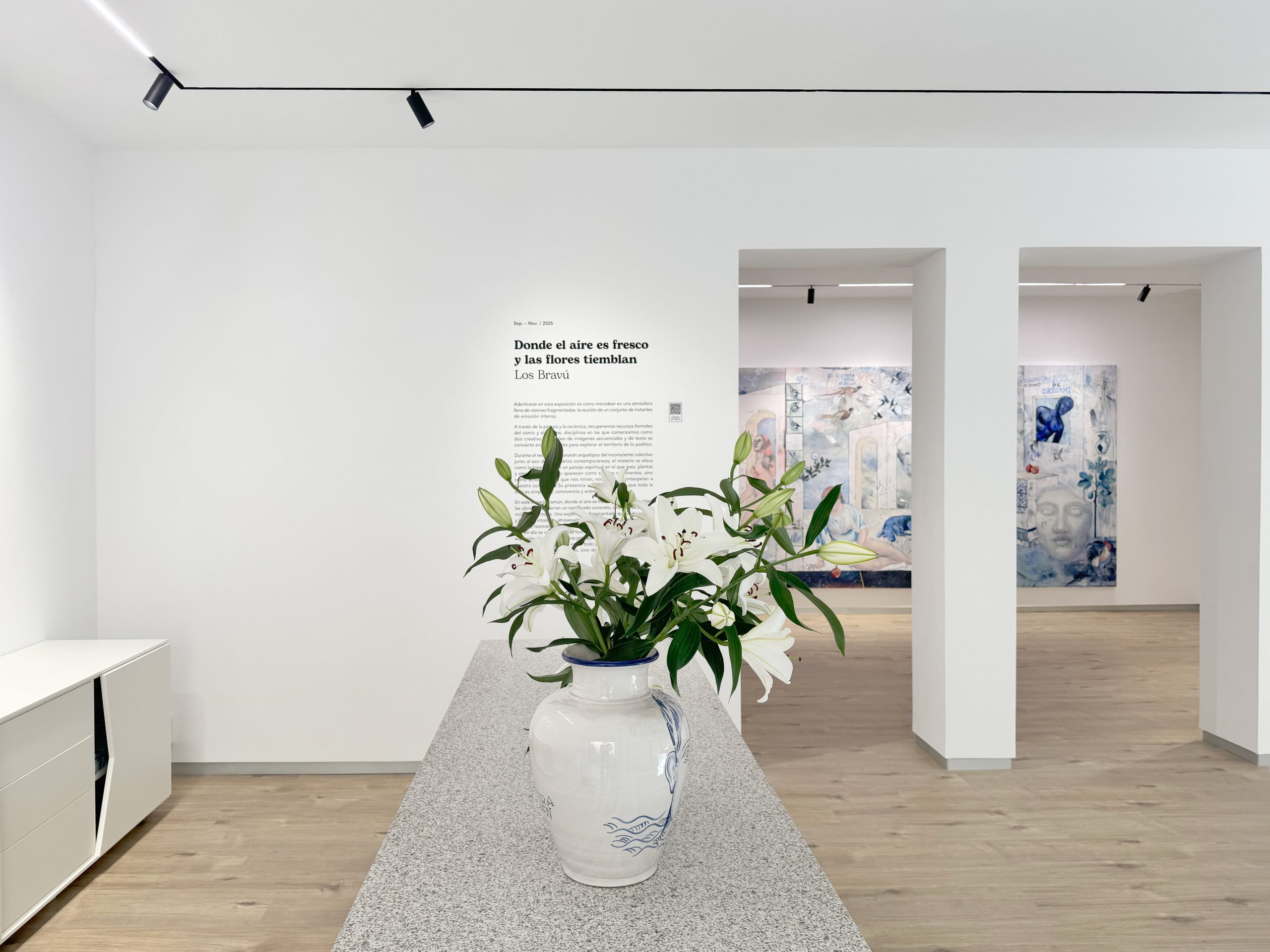
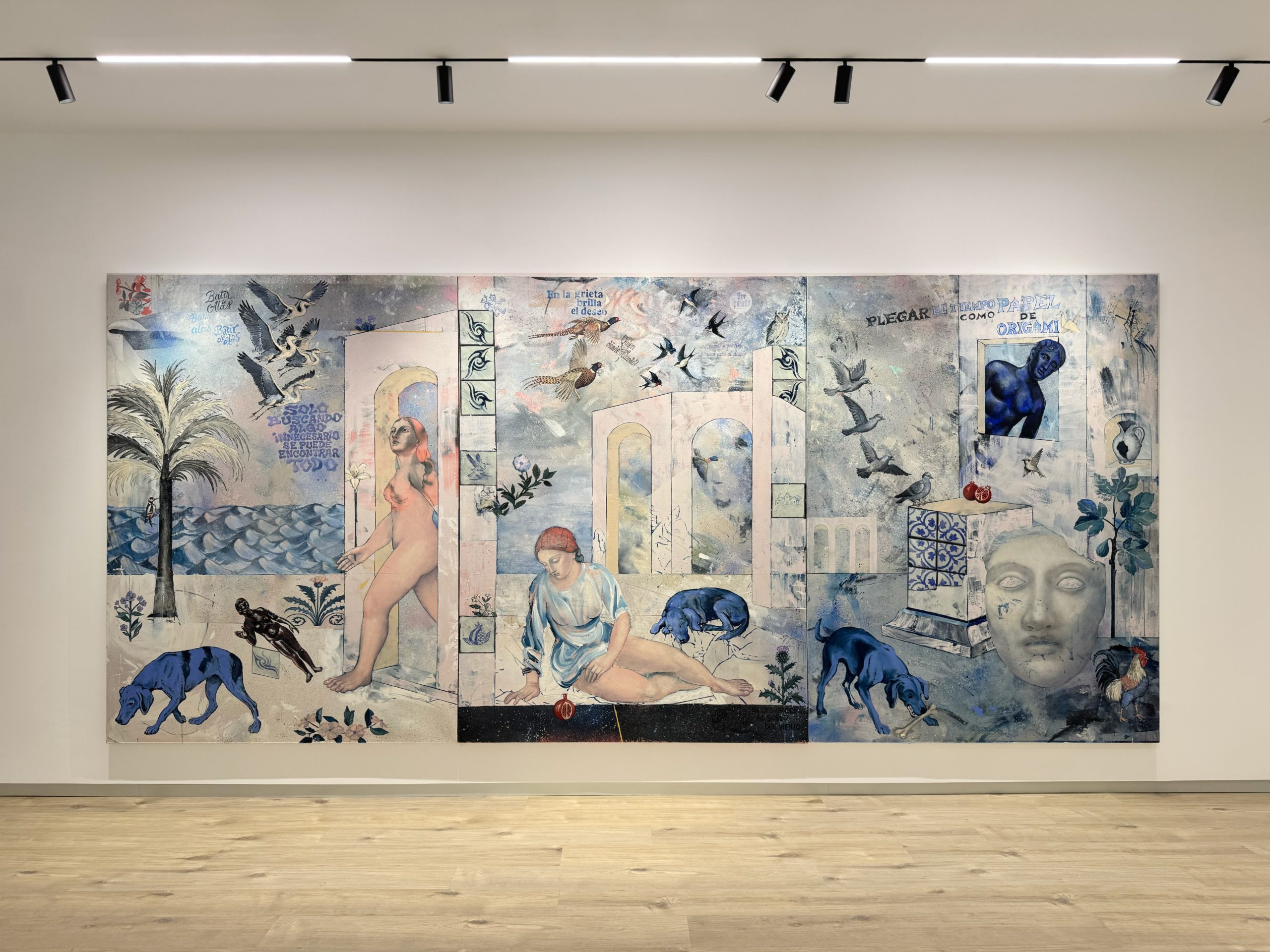
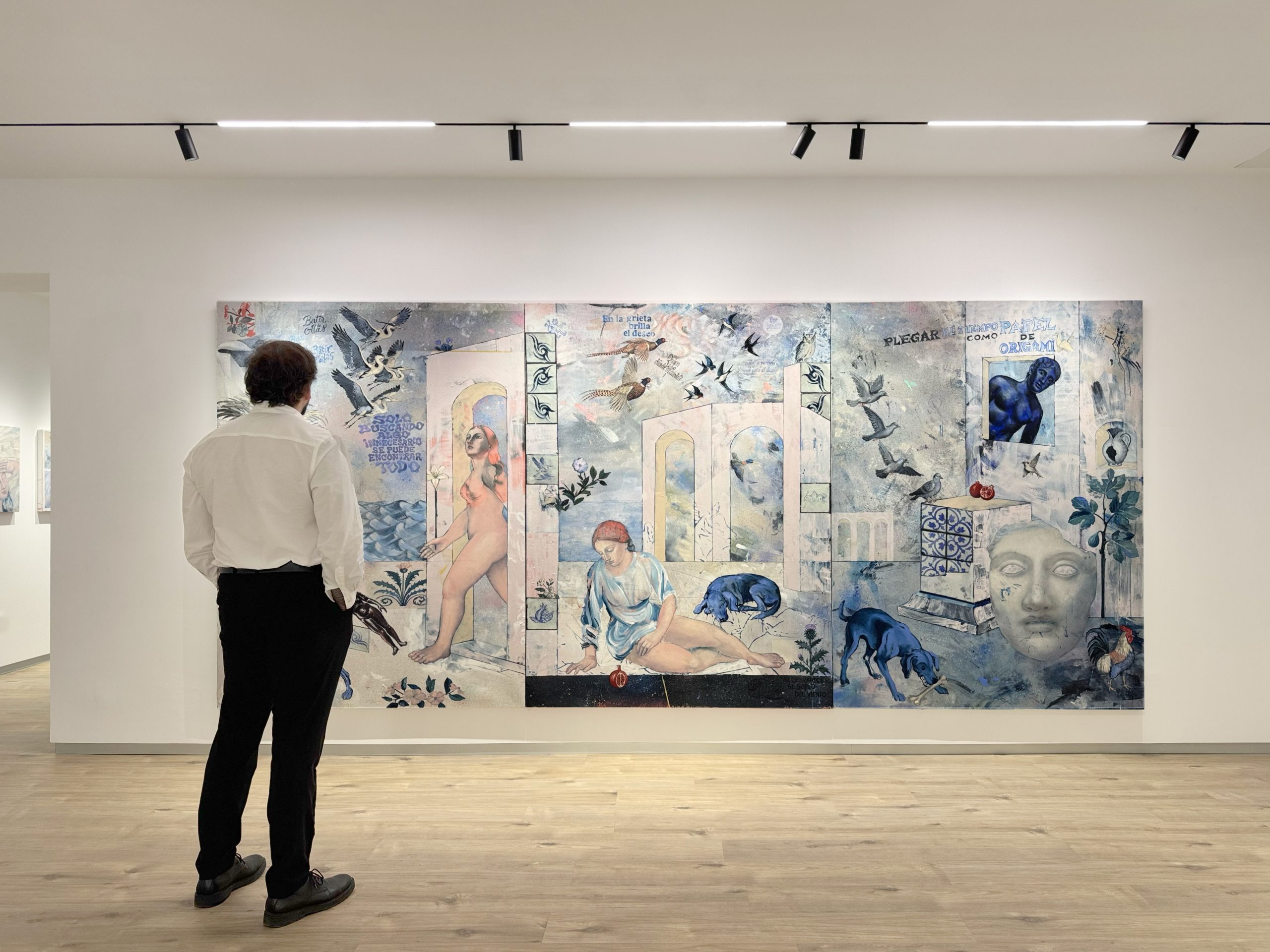
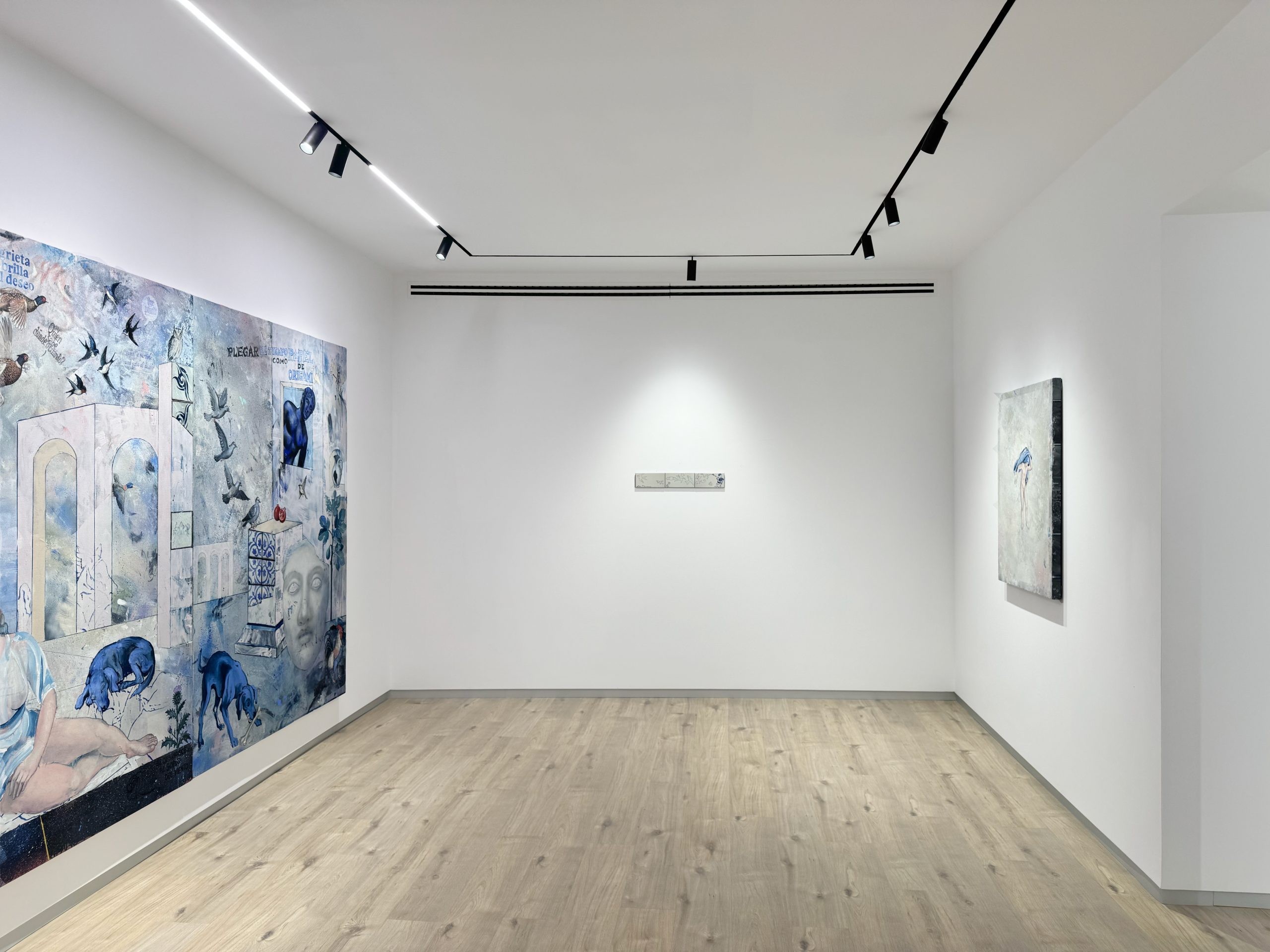
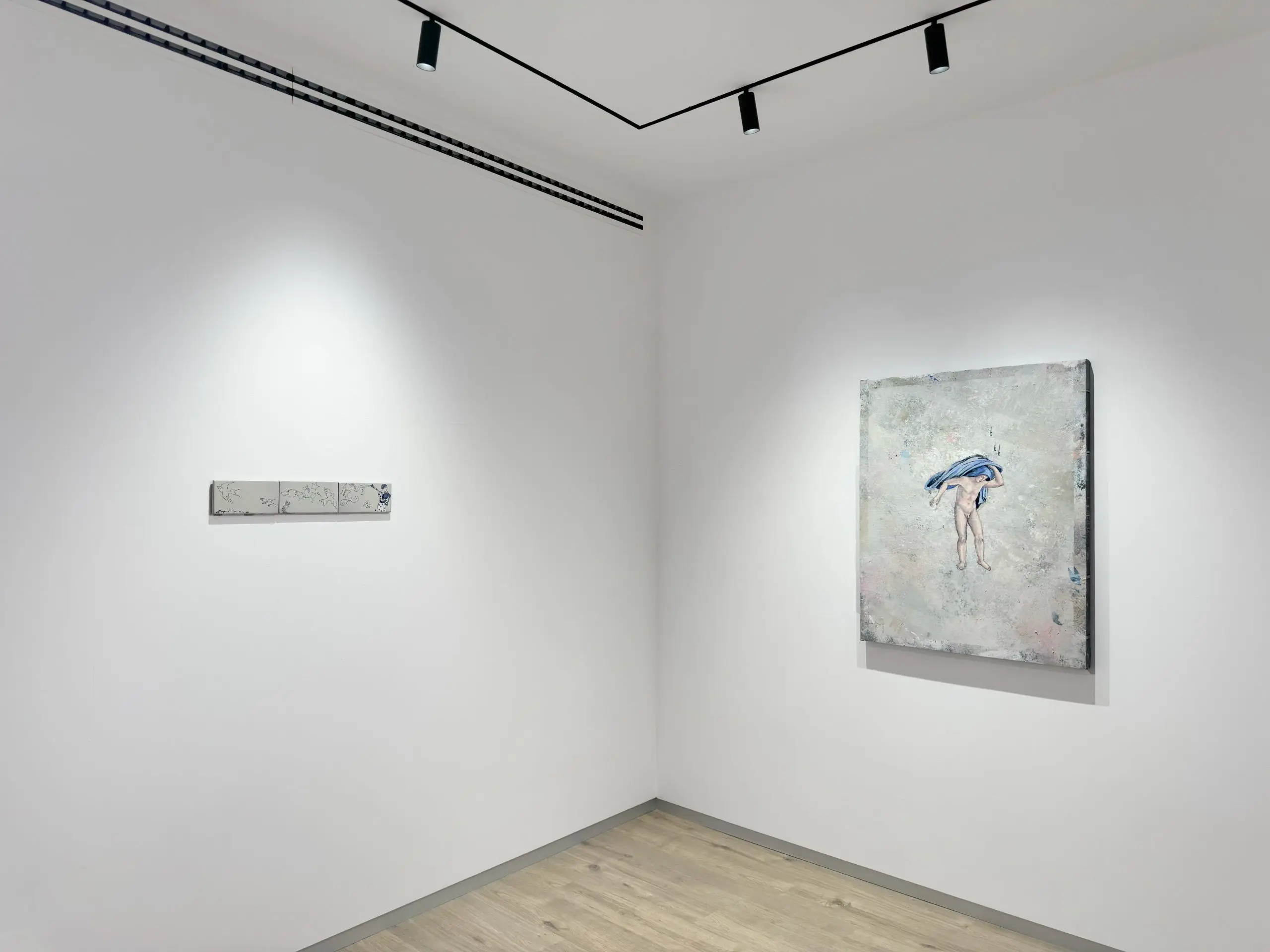
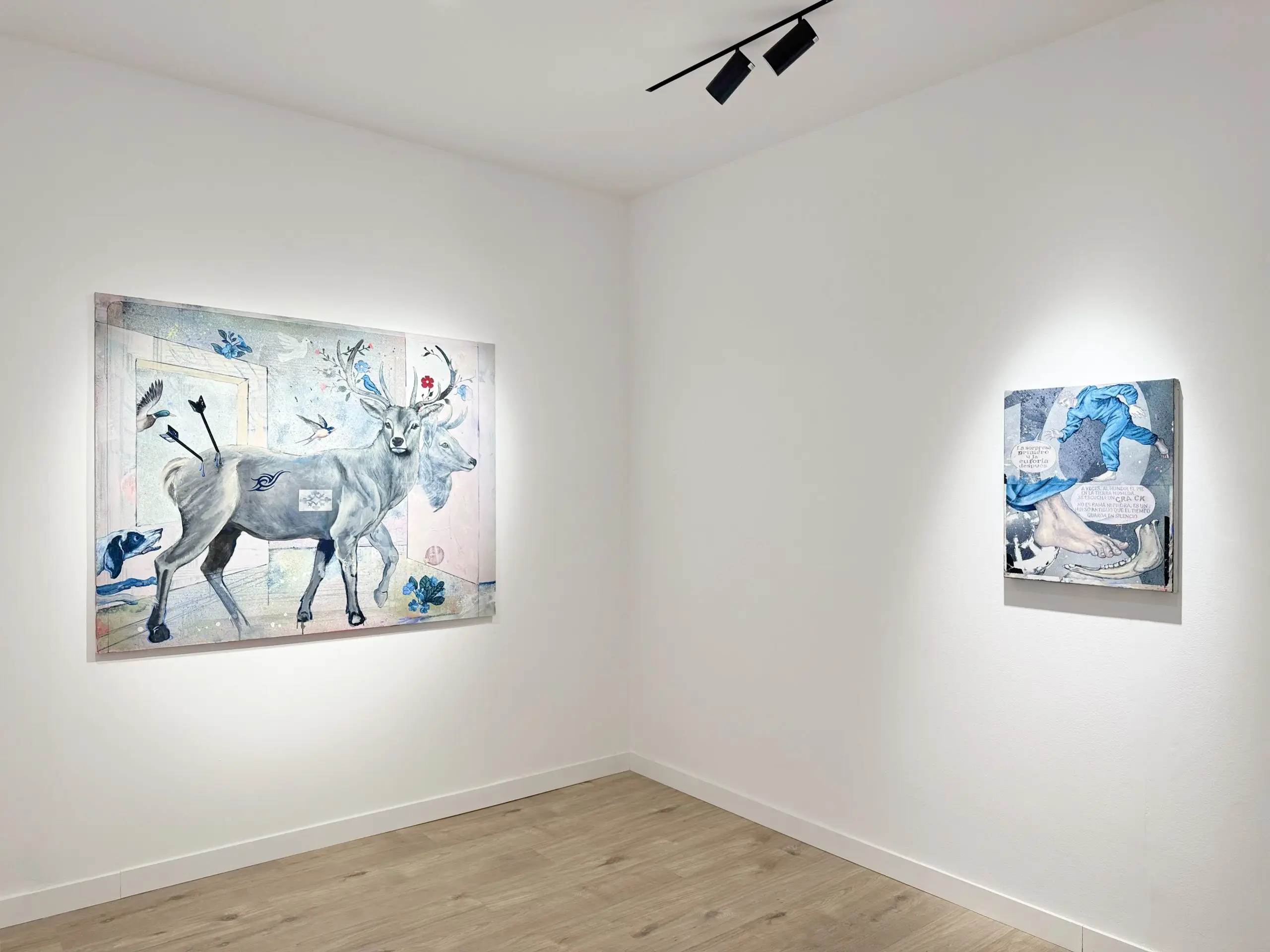
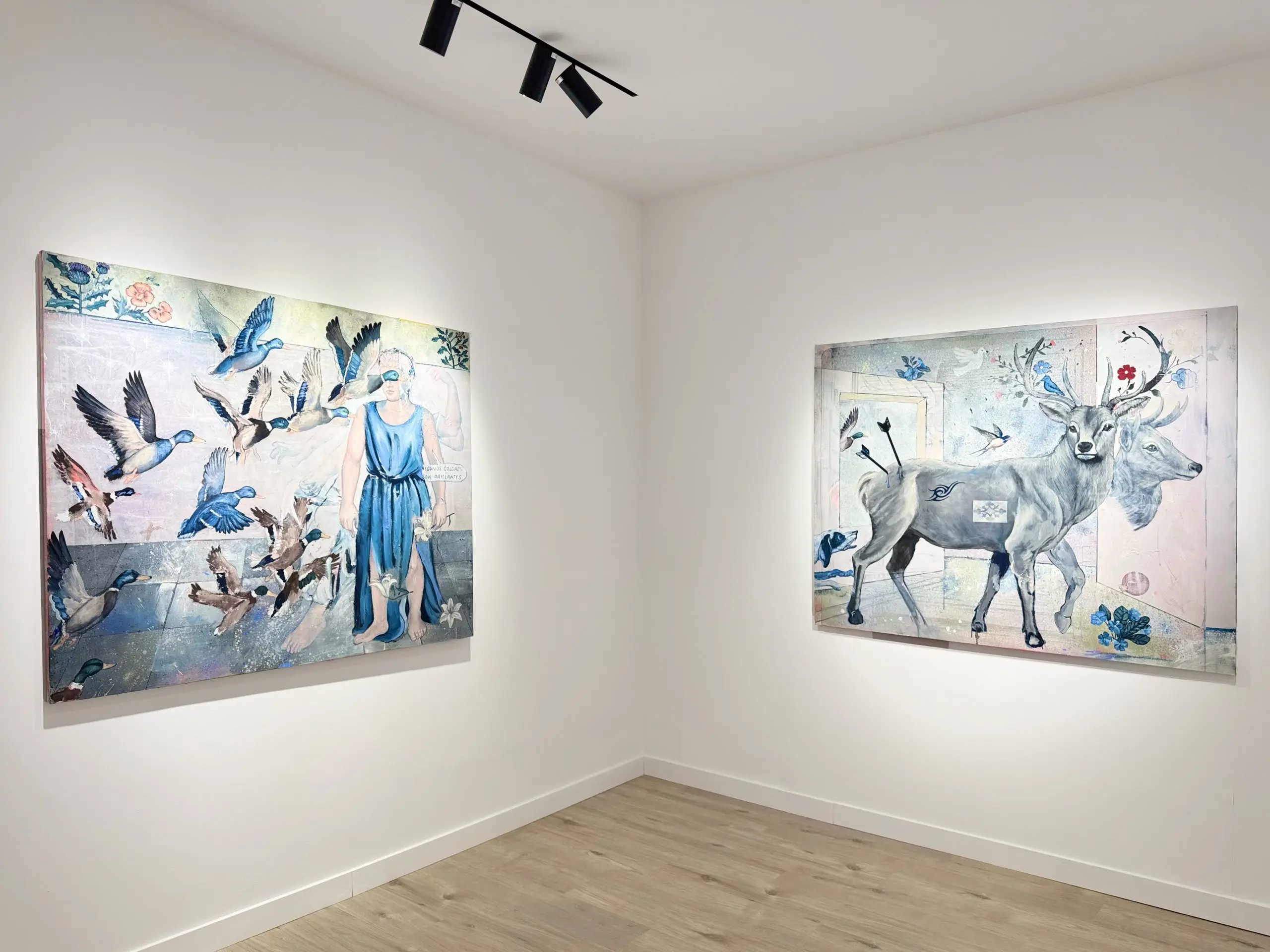
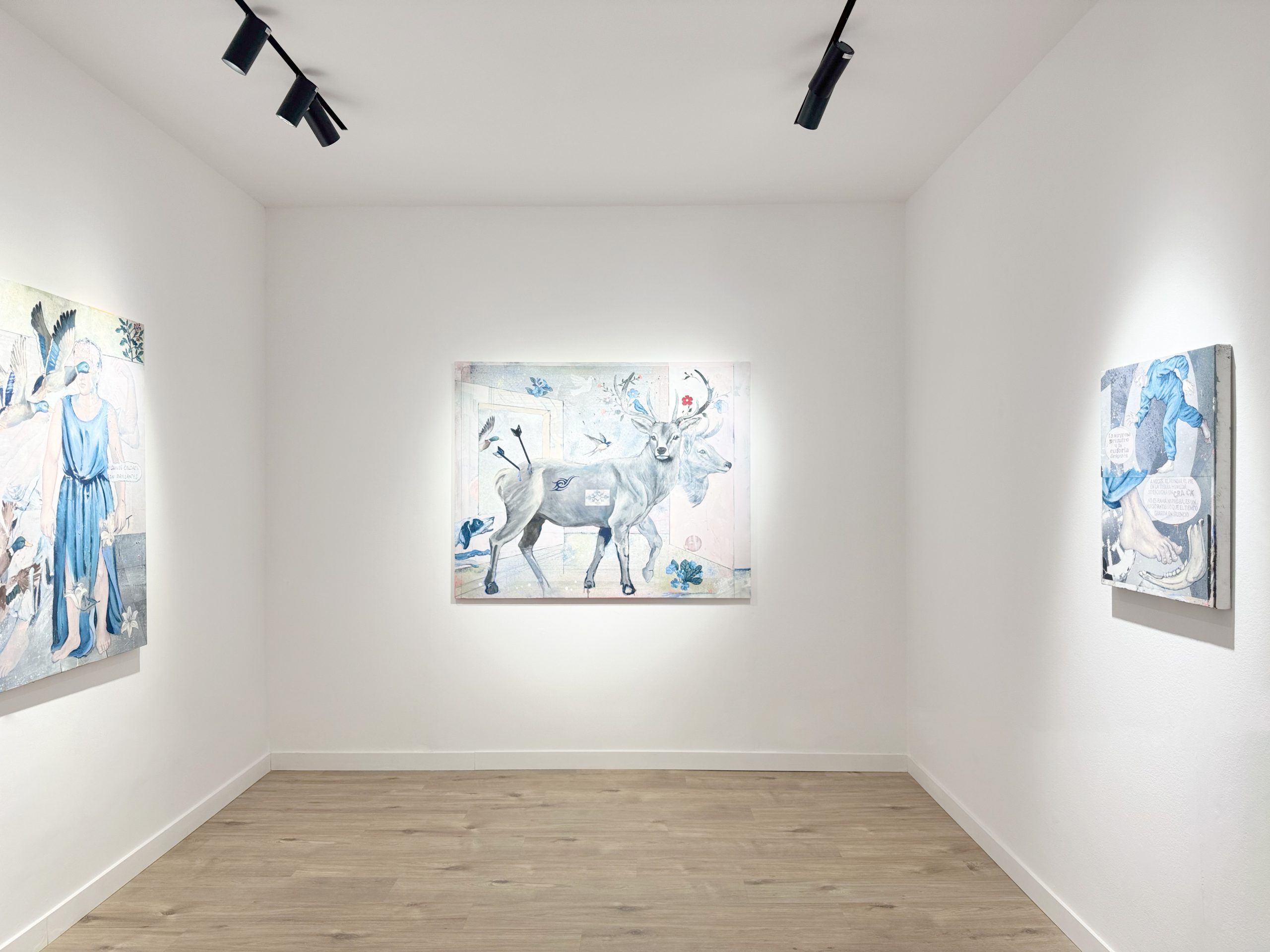
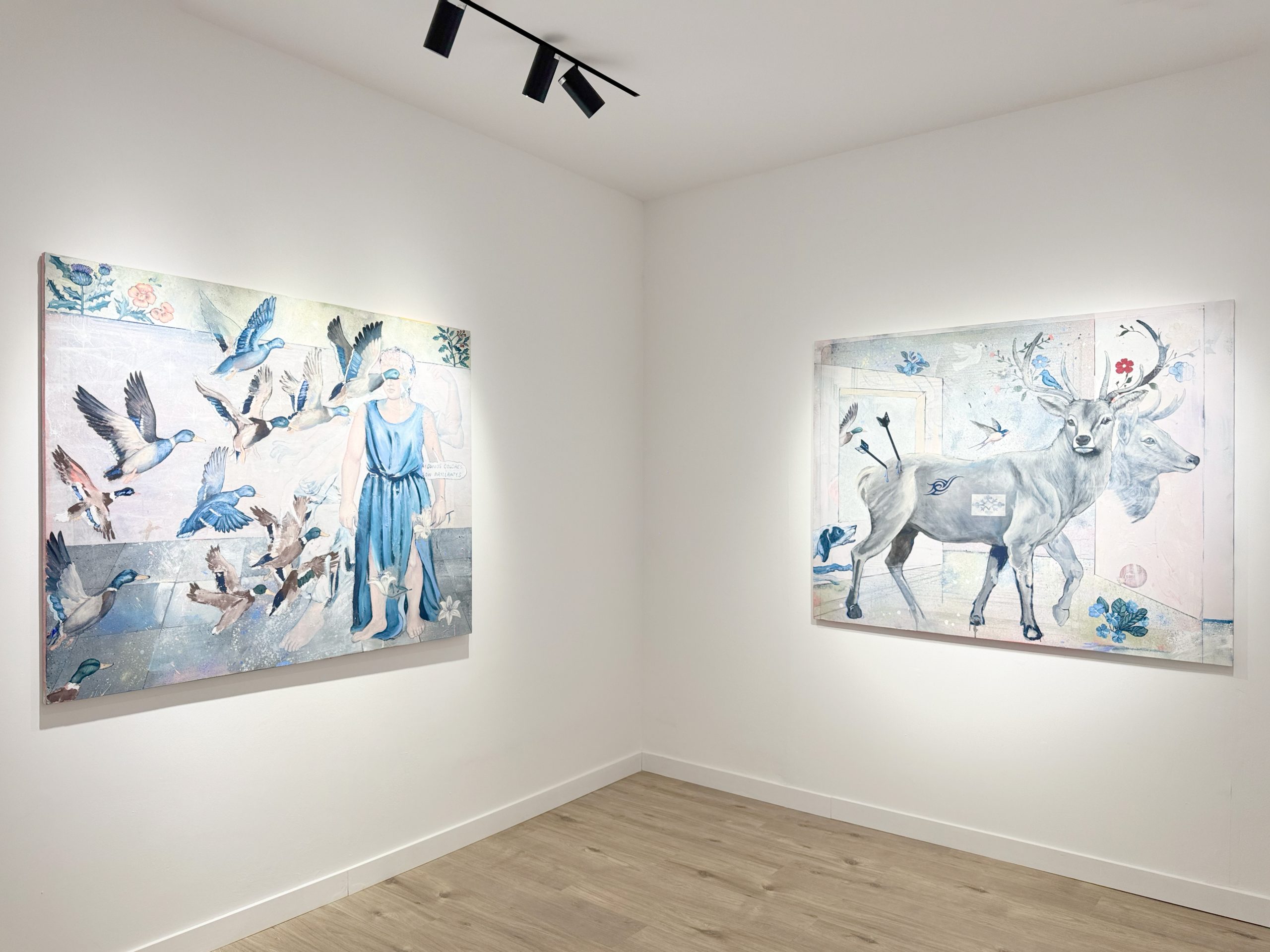
"Where the air is fresh and the flowers tremble" comprises the latest artistic production of Los Bravú and, with more than 20 pieces, will occupy the gallery's two exhibition spaces.

Since its beginnings, the artistic project of The Bravúa duo formed by Dea Gomez (Salamanca, 1989) and Diego Omil (Pontevedra, 1988), is a continuous invitation to the spectator to transit through the territory where the opposite elements of dichotomies touch and perhaps dissolve: high and low culture, academic art and avant-garde art, for example.

"Where the air is fresh and the flowers tremble." is a new opportunity for enjoy the visual thought of Los Bravú, which flows thanks to the fact that, in the heart of their artistic work, they scrutinize and interpret those forms of cultural expression that are continually cornered in the margins and are thus excluded from the canon of the creative practice of our days.

Throughout their career, Los Bravú have deployed the heritage elements of the imaginary alive today in their native lands: Galicia and Castilla. Not in vain, the exhibition is articulated in the form of a scenography where the archetypes of the collective unconscious resonate with contemporary echoes and mystery is revealed as a spiritual landscape.

Thanks to "Where the air is fresh and the flowers tremble" the artists outline both the popular traditions and the rich magical thinking from which it is nourished, in such a way that that whoever comes to El Apartamento will discover the unique identity beyond the About us that treasures its pictorial proposal.

Likewise, Los Bravú wanted their methodological approach and their artistic research to be evident in the exhibition. Therefore, the studio and/or laboratory, understood as a concept, will have a leading role in the exhibition.

The exhibition, which will close its doors on November 1, will be completed with the presentation of a booklet, numbered and signed by Los Bravú, which will take place on November 1. Thursday, October 23, at 19:30h. 

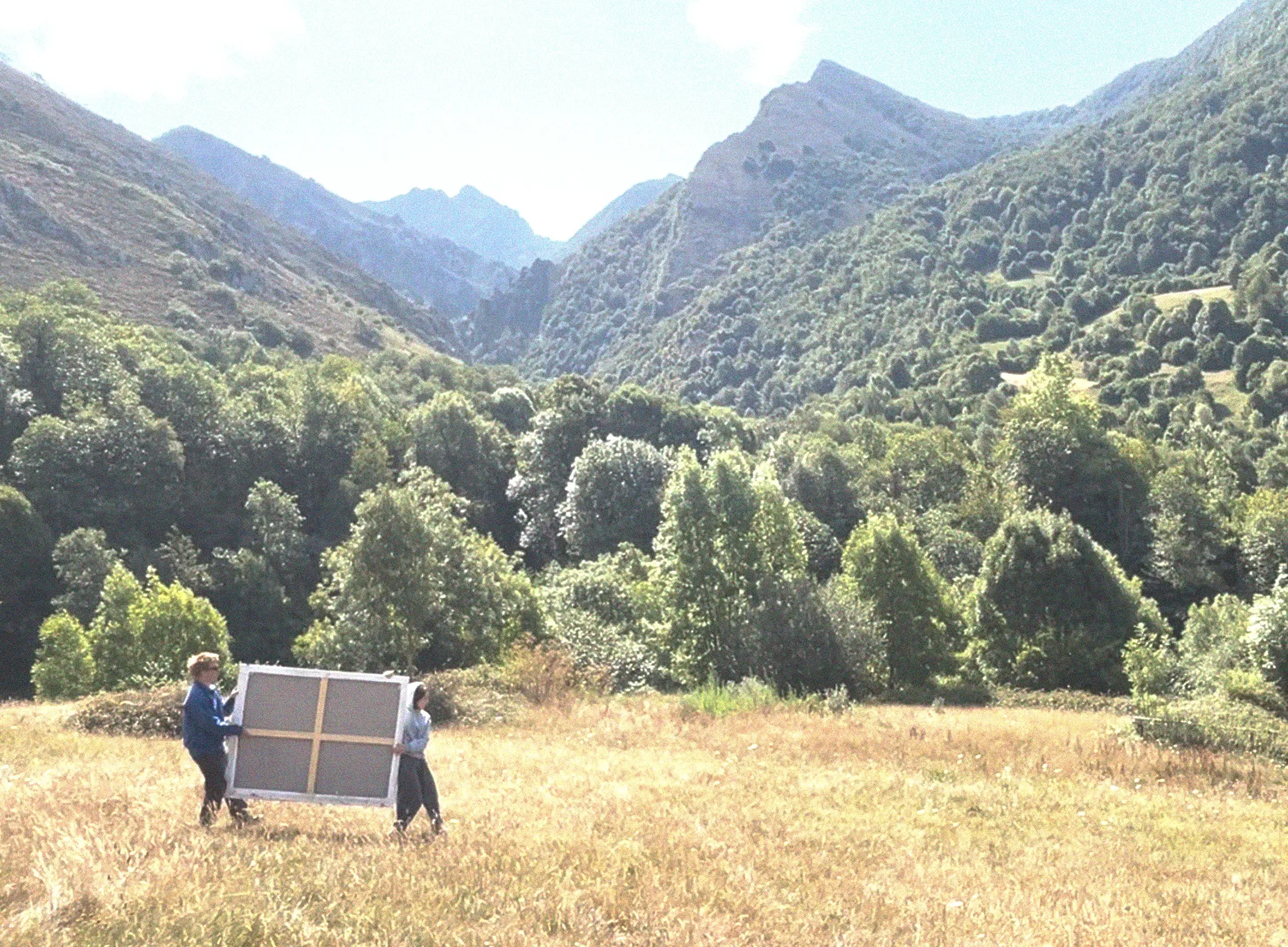
Los Bravú in their studio in Galicia (July 2025)

Los Bravú in their studio in Galicia (July 2025)

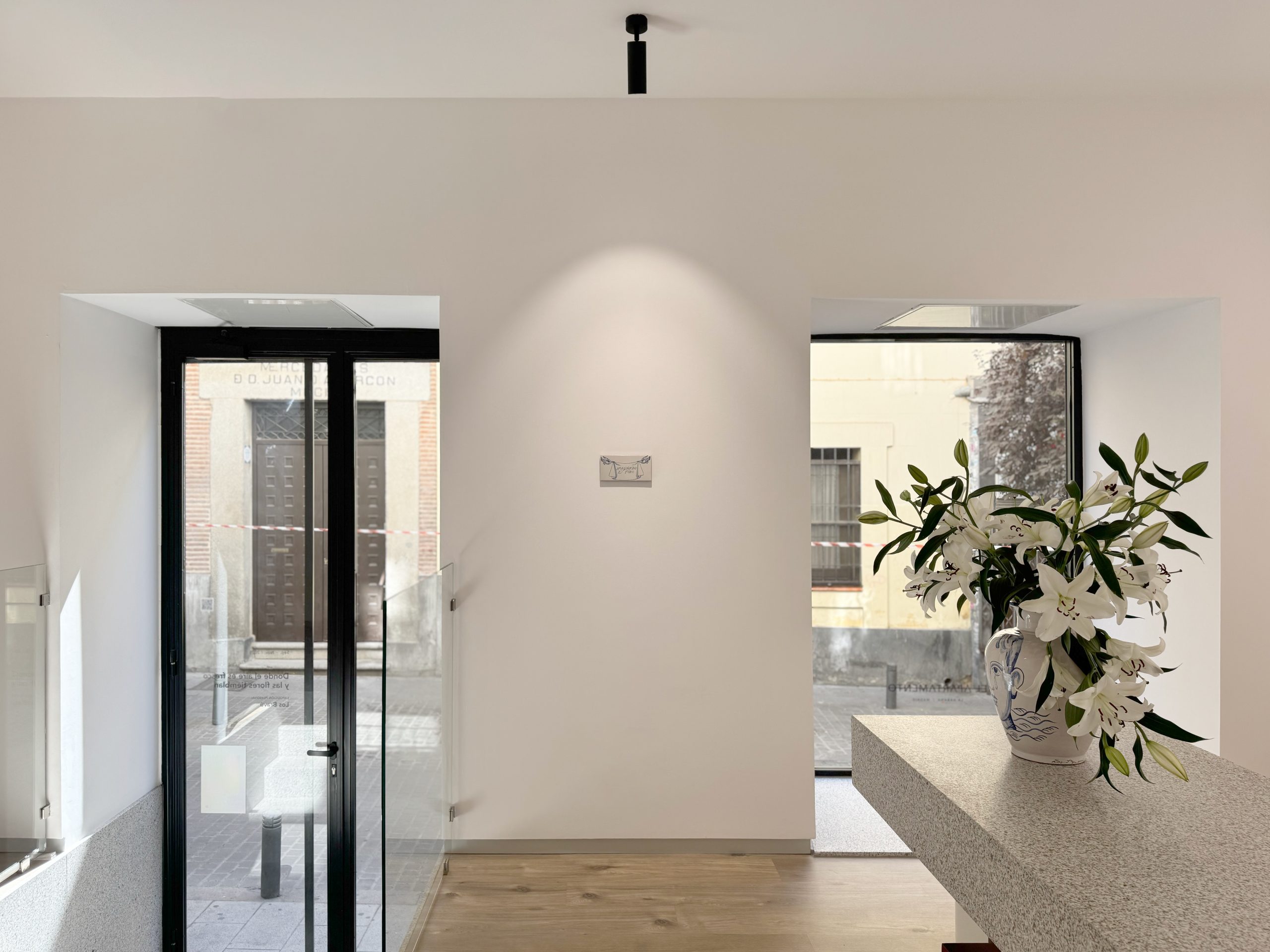
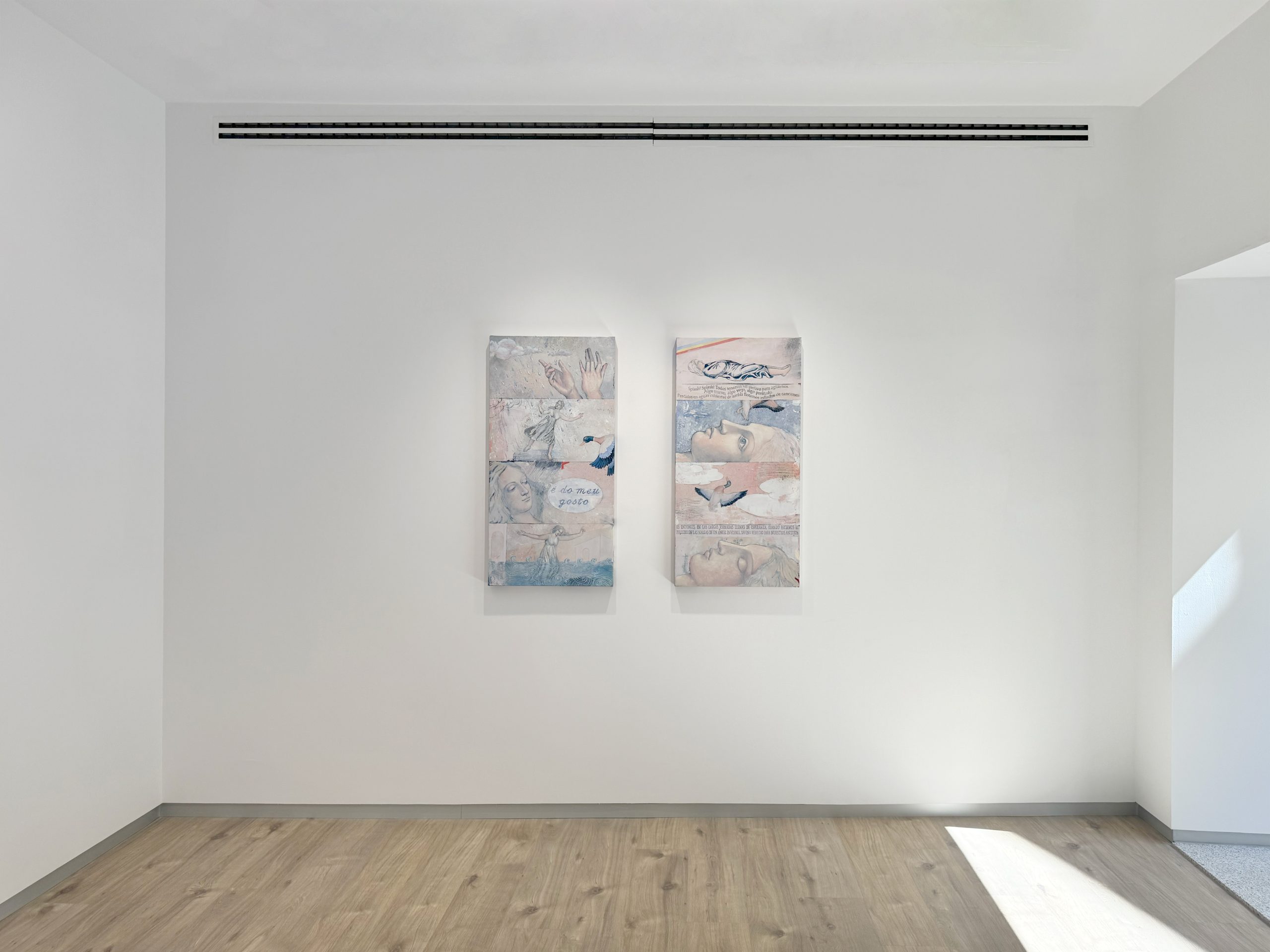
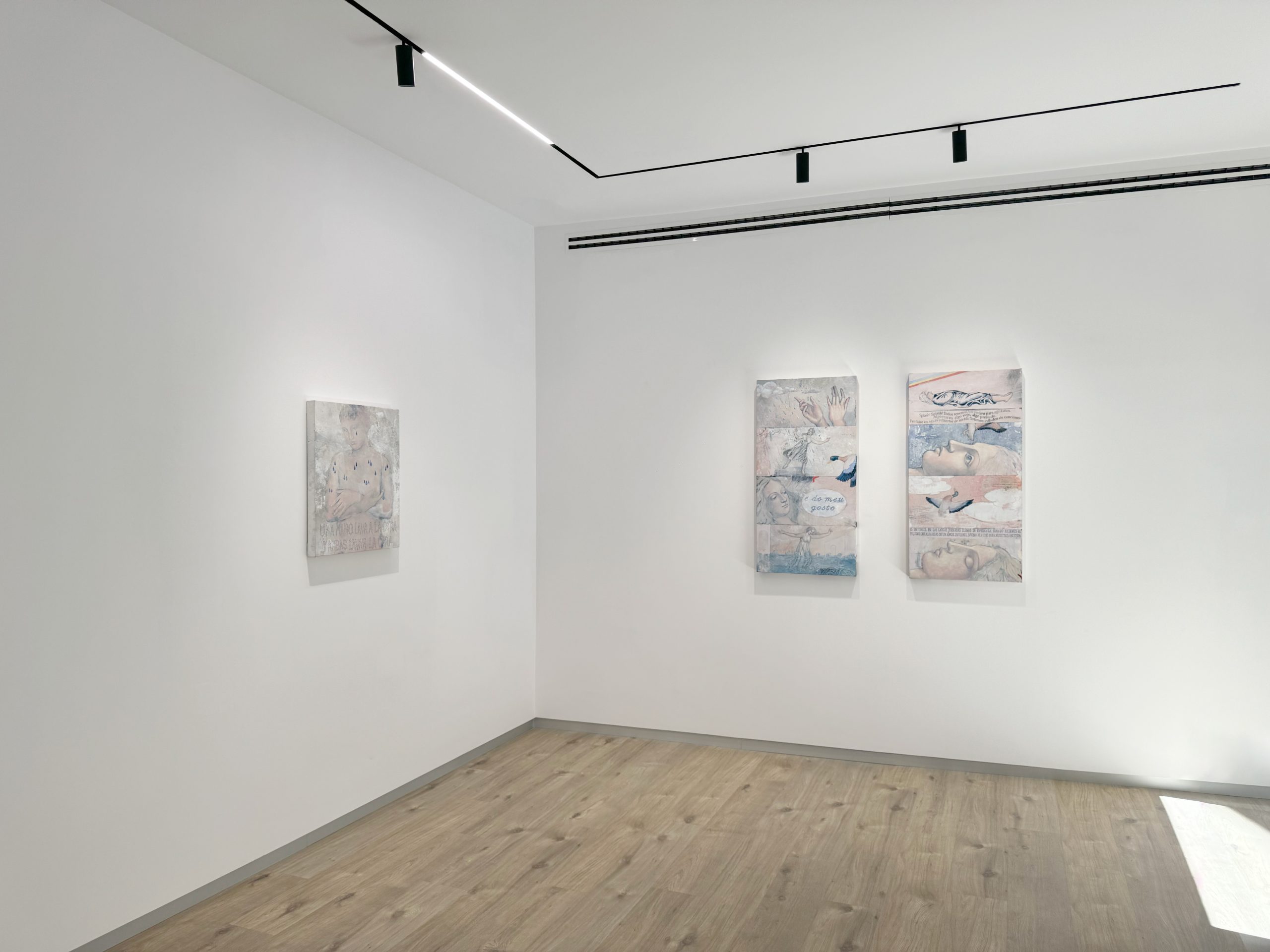
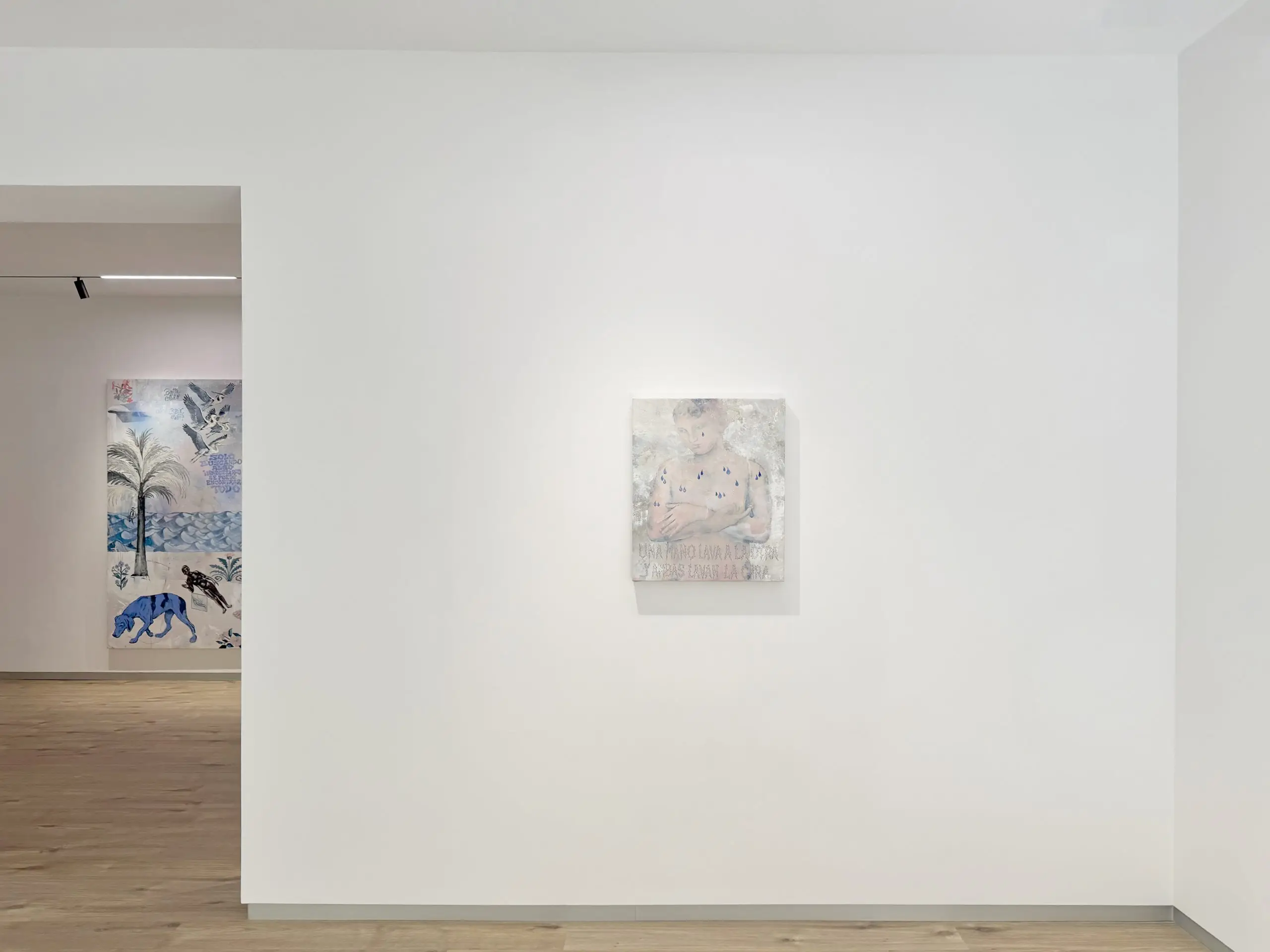
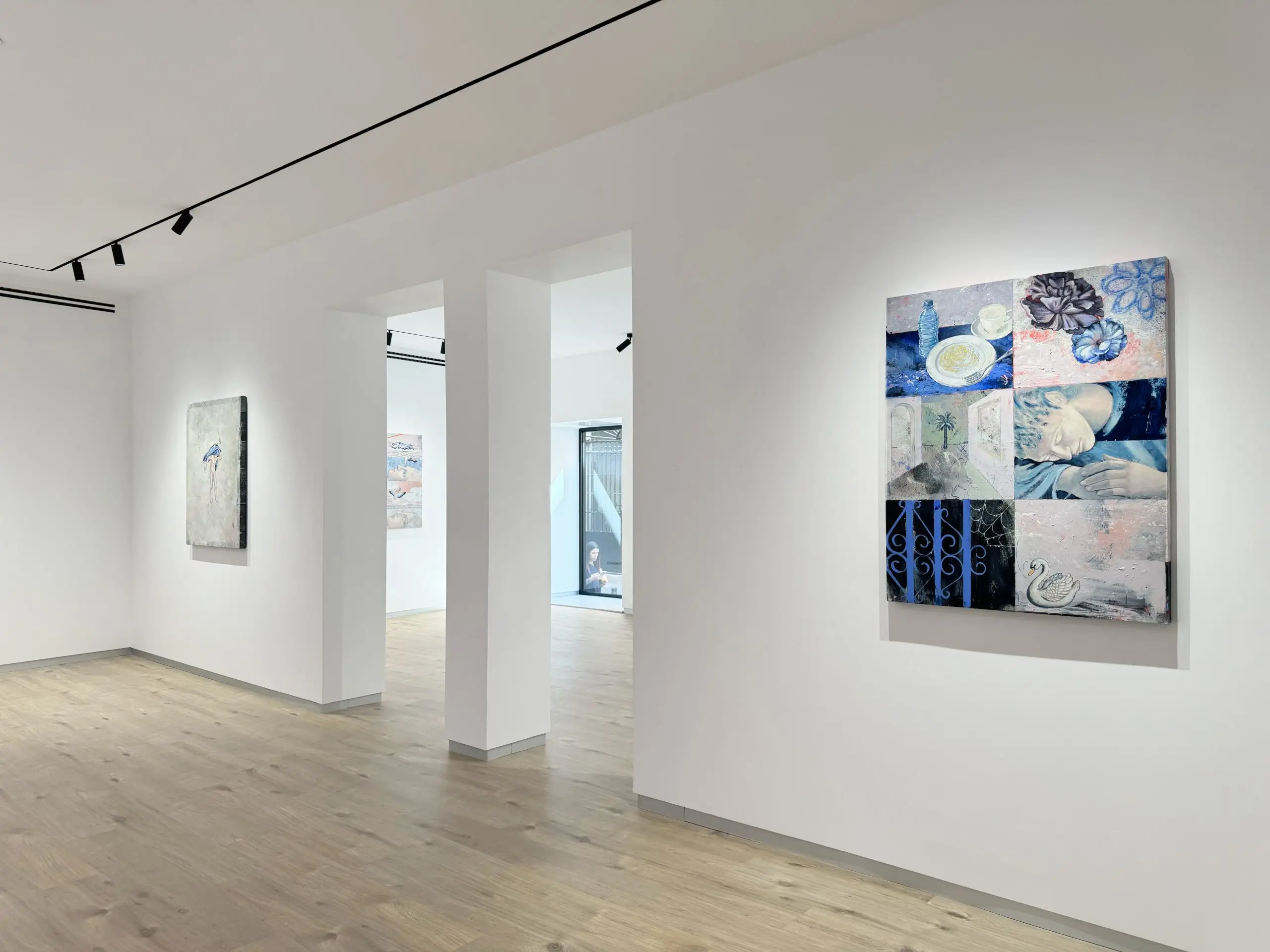
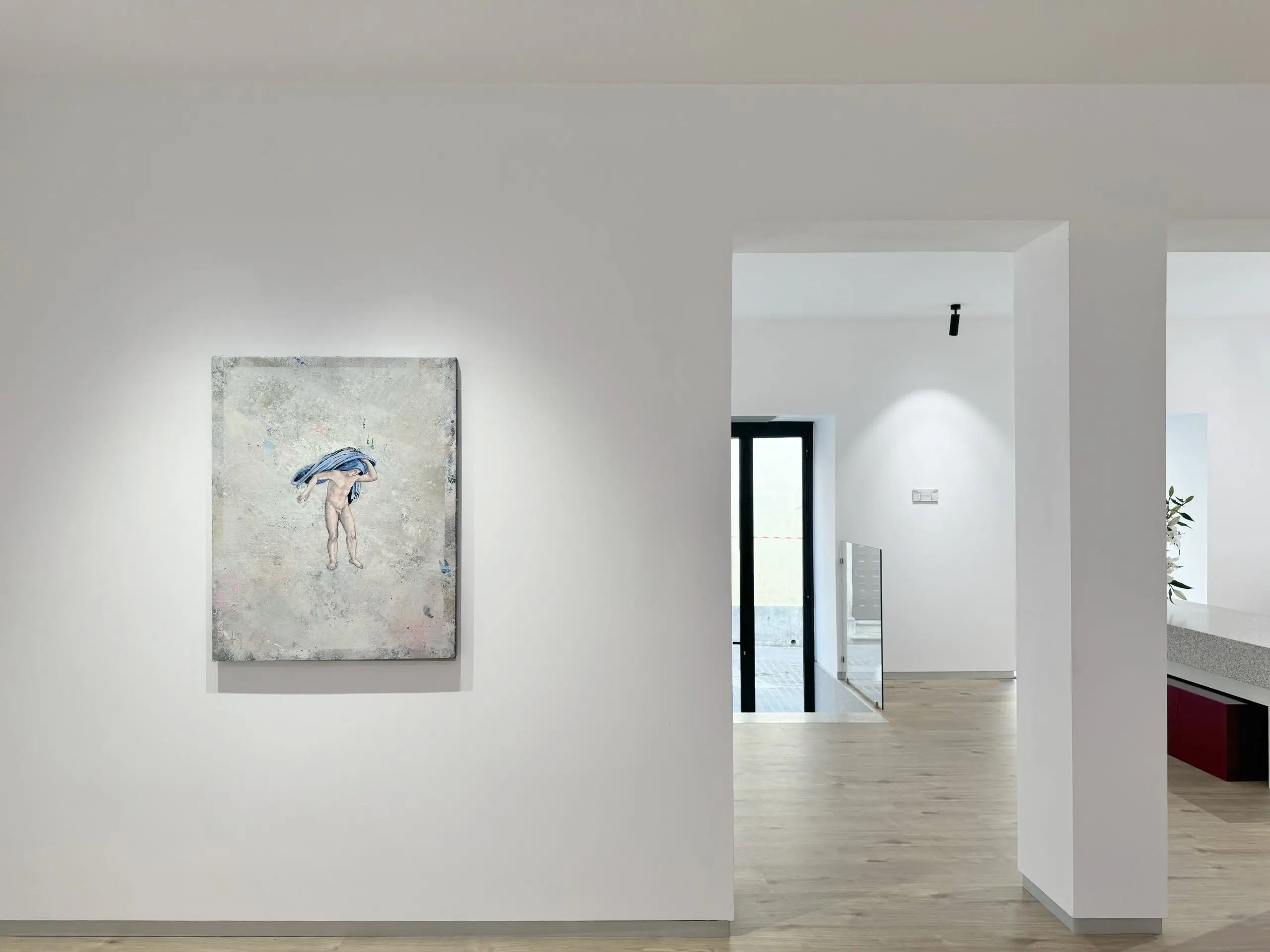
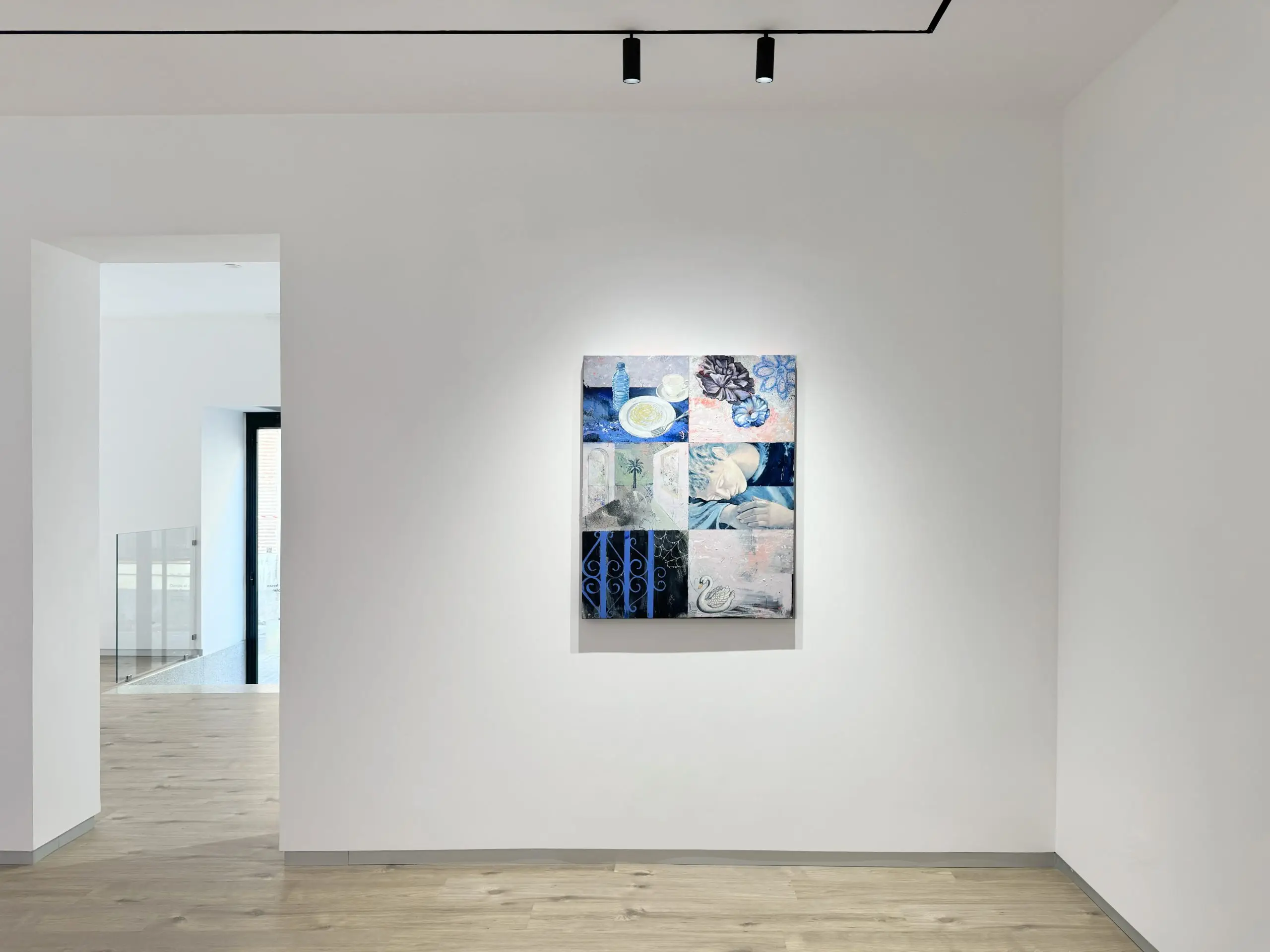
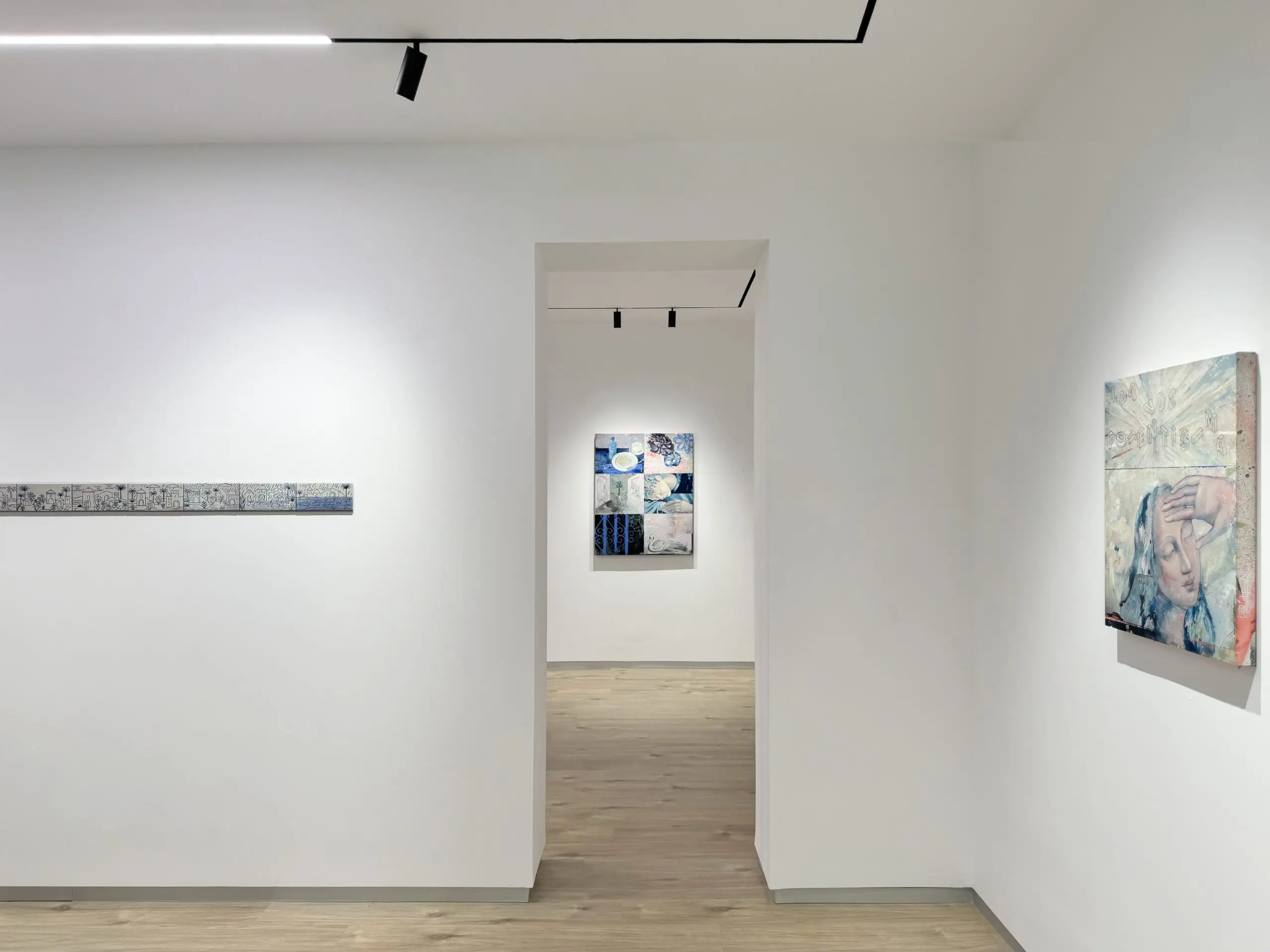
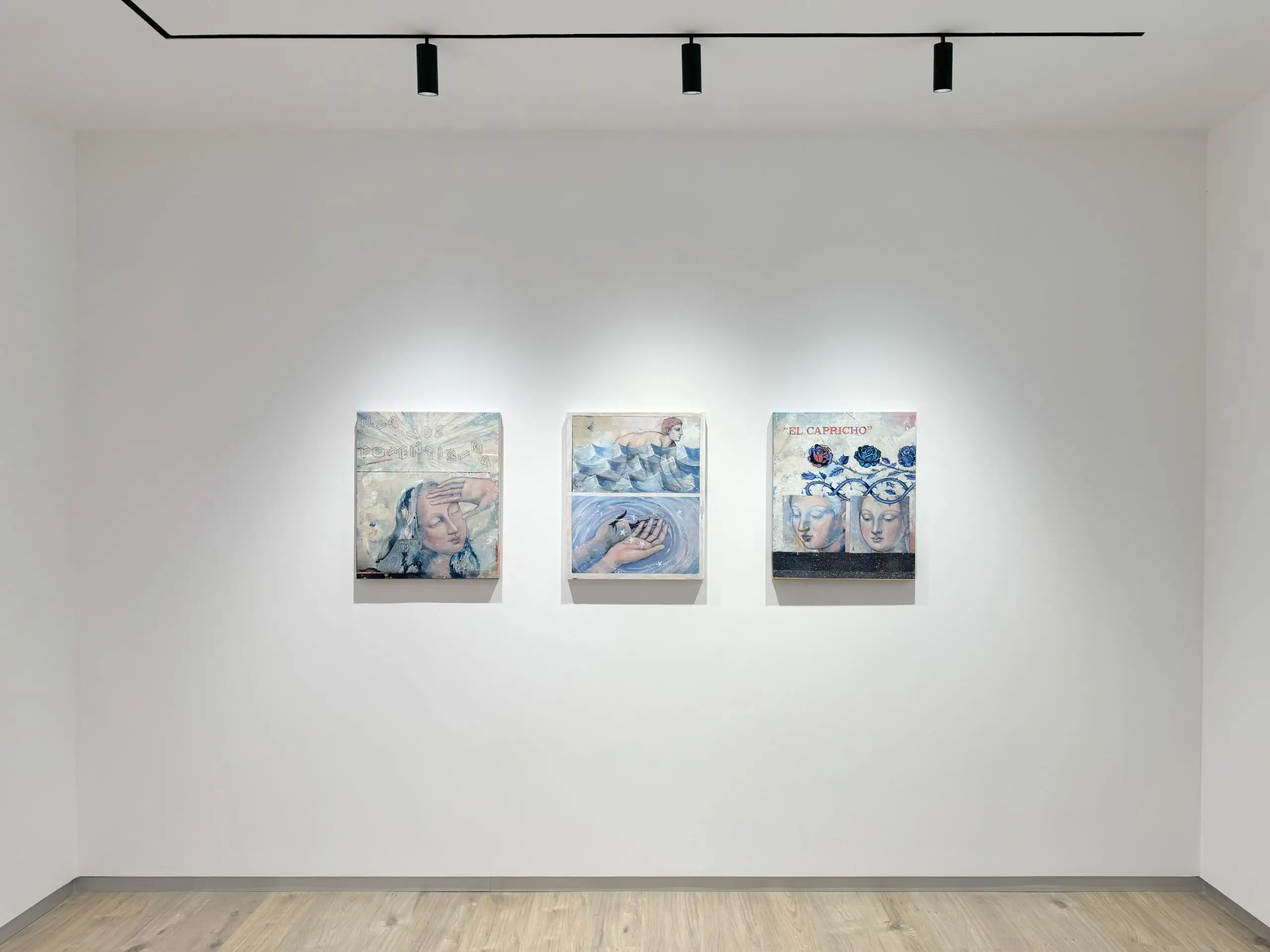
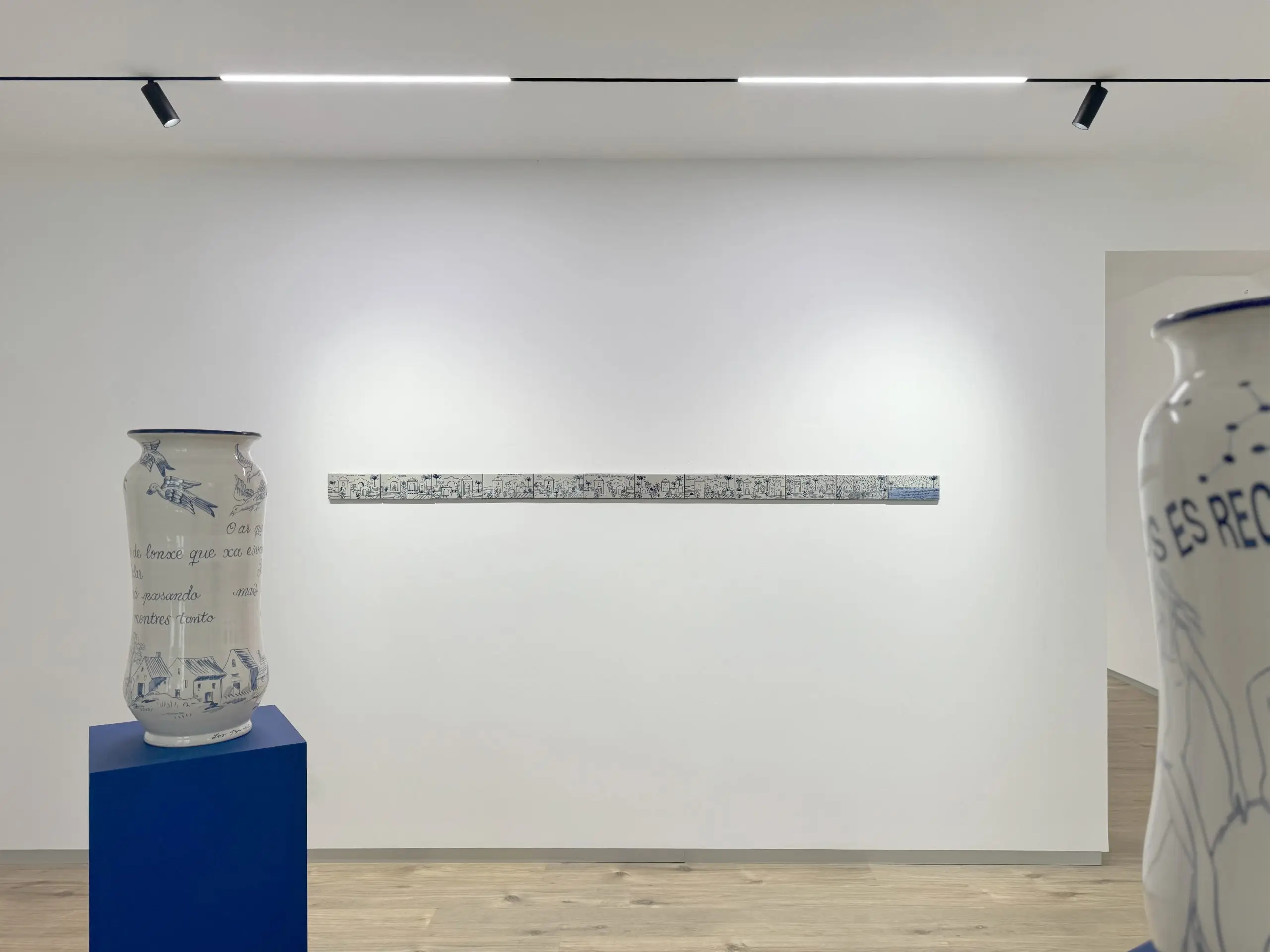
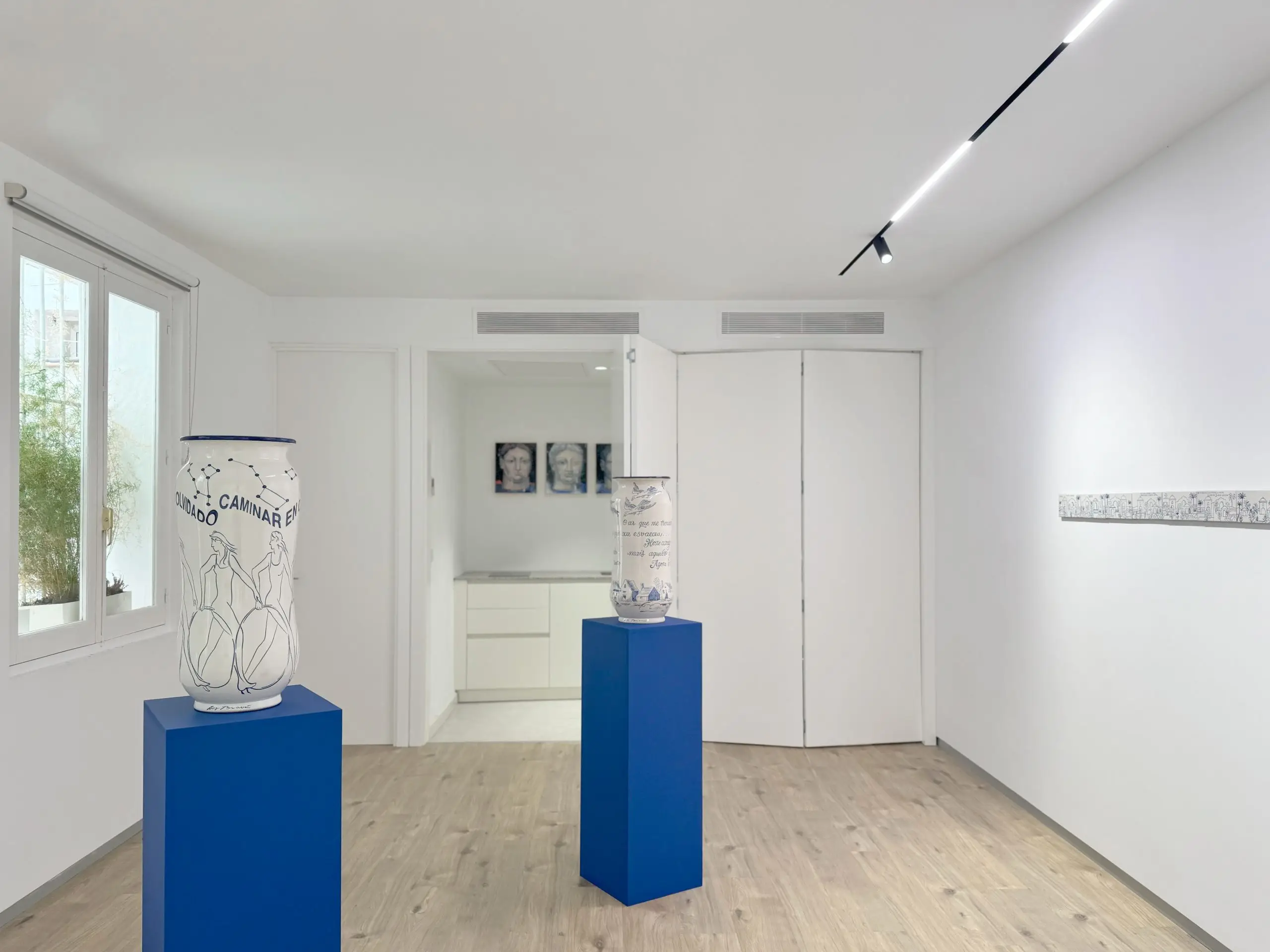
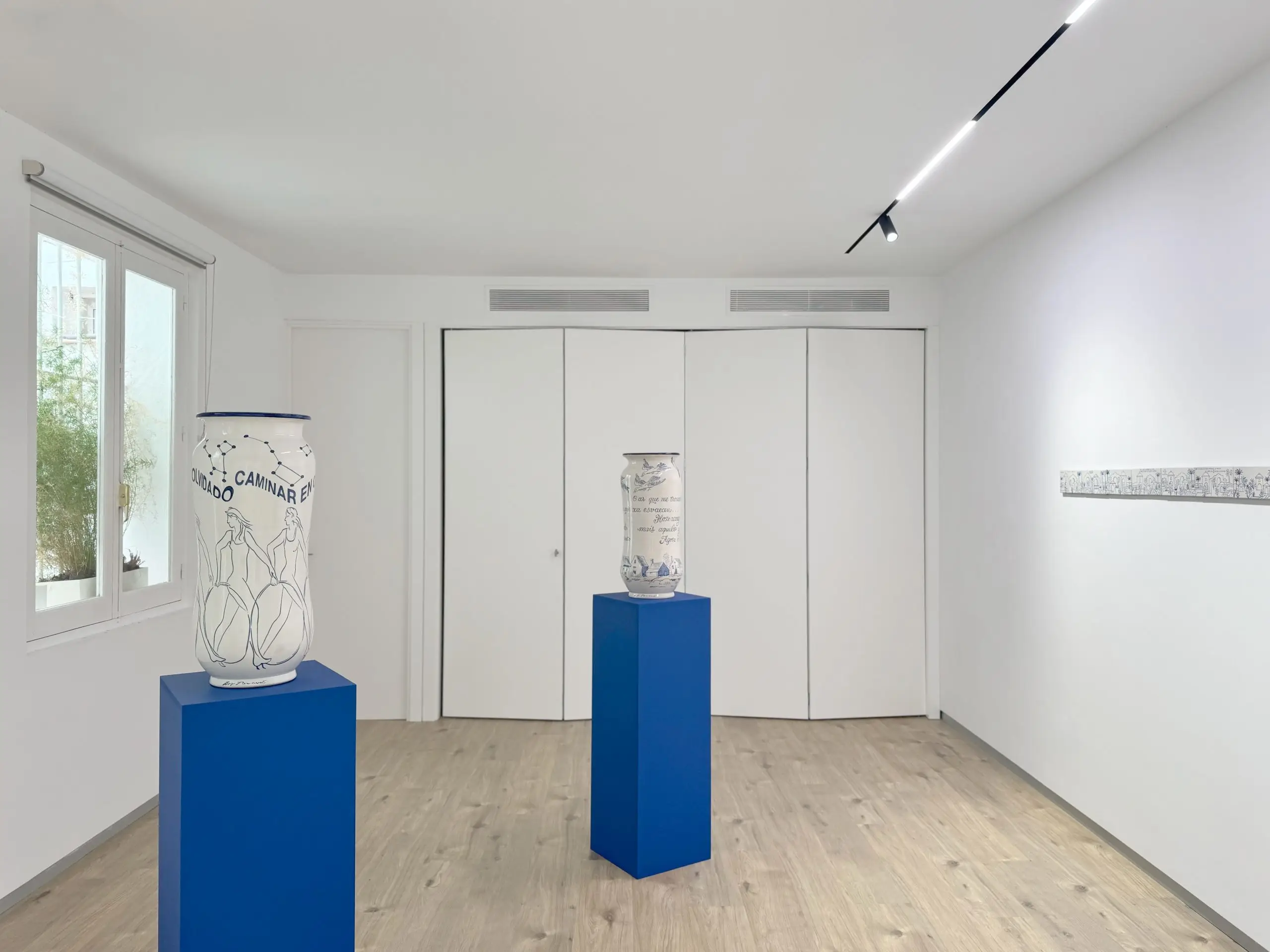
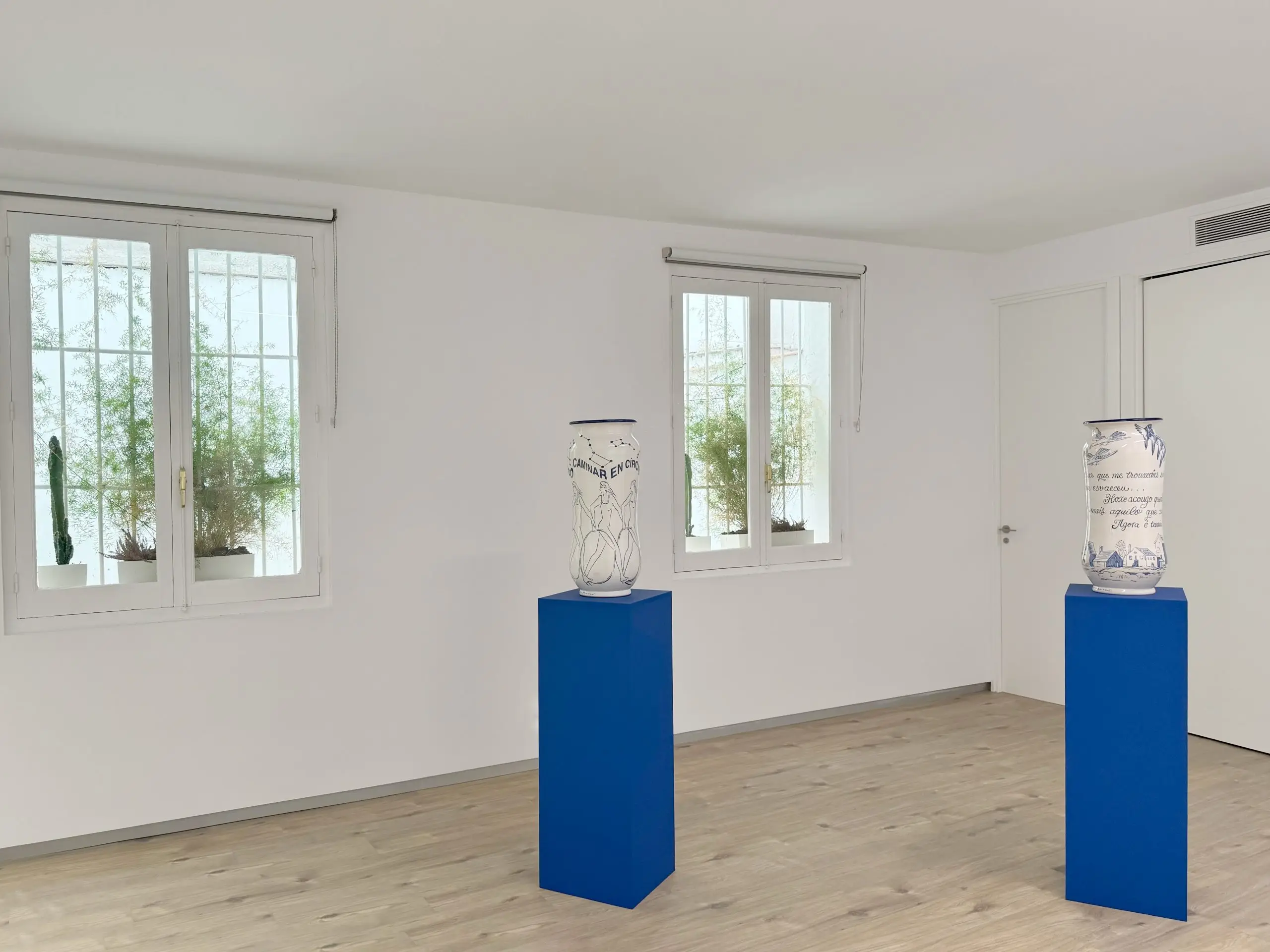
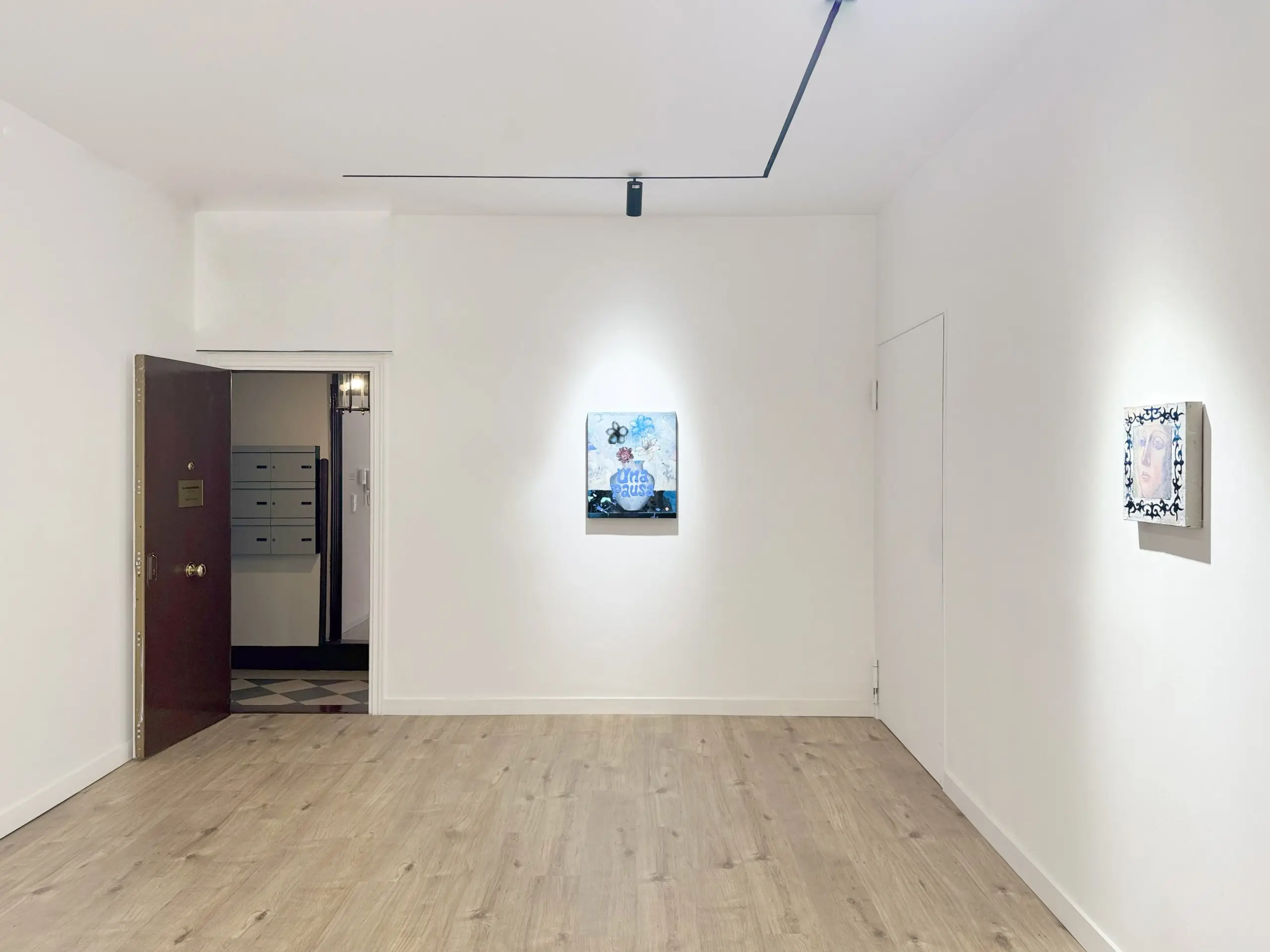
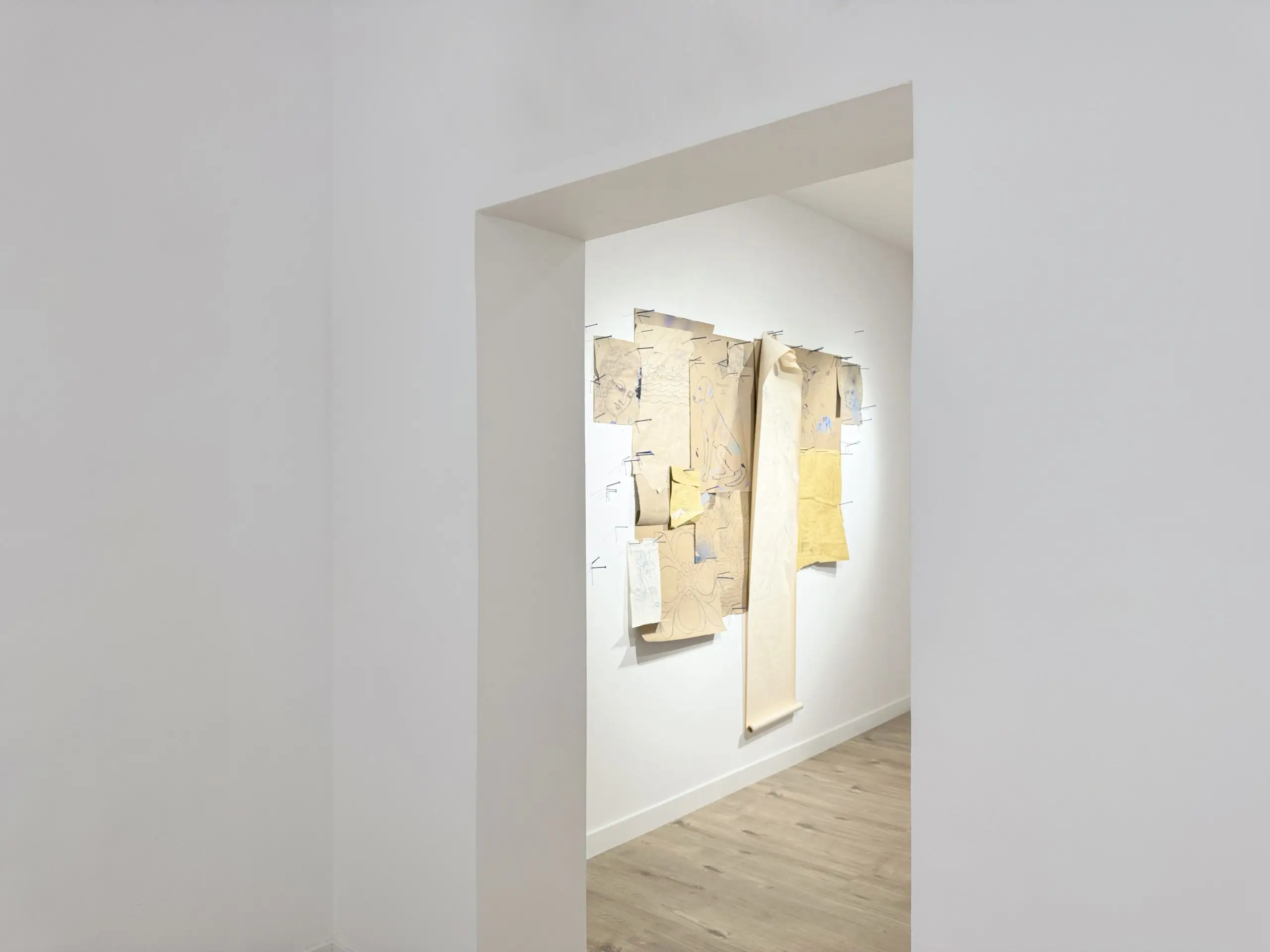
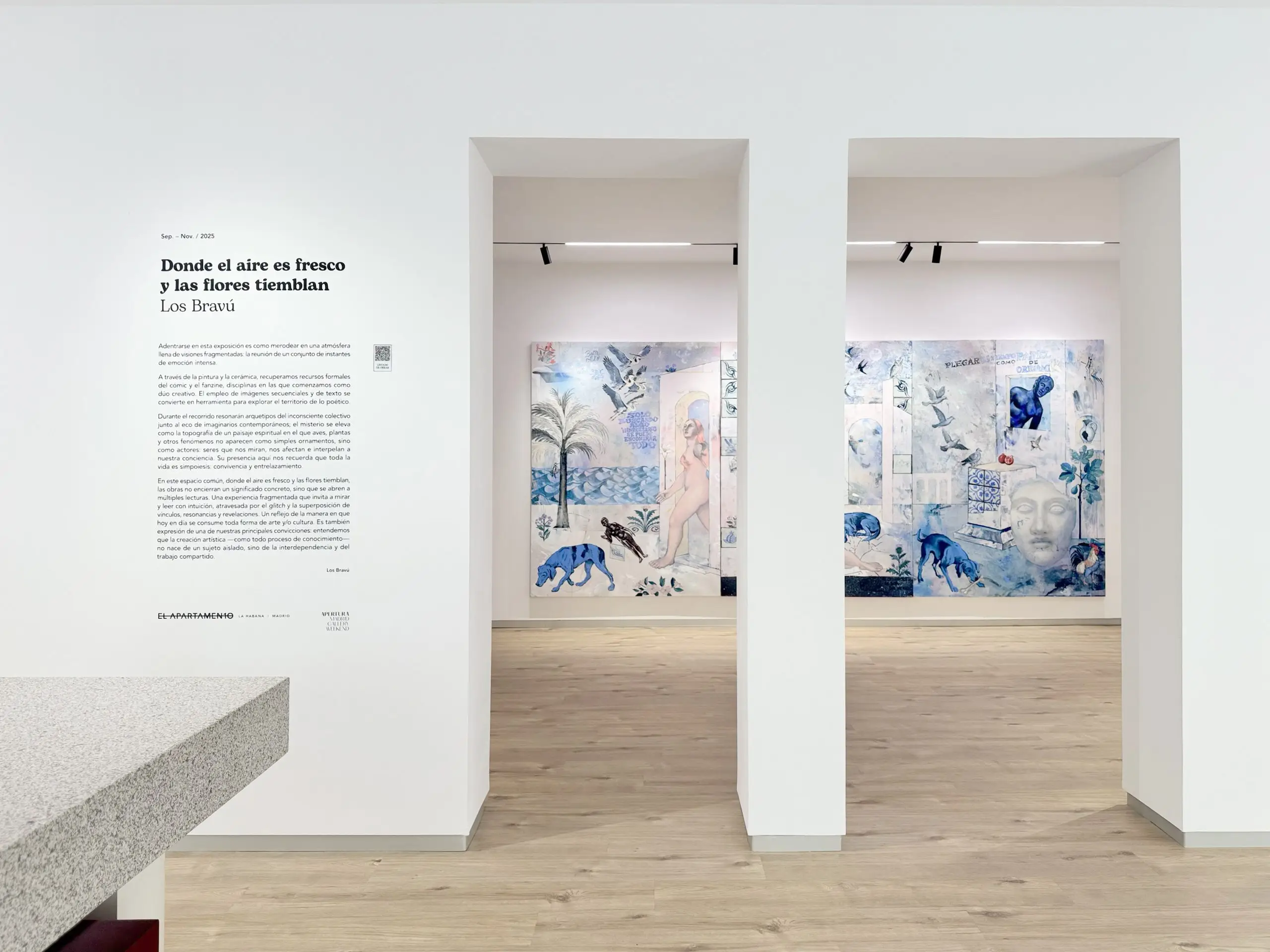
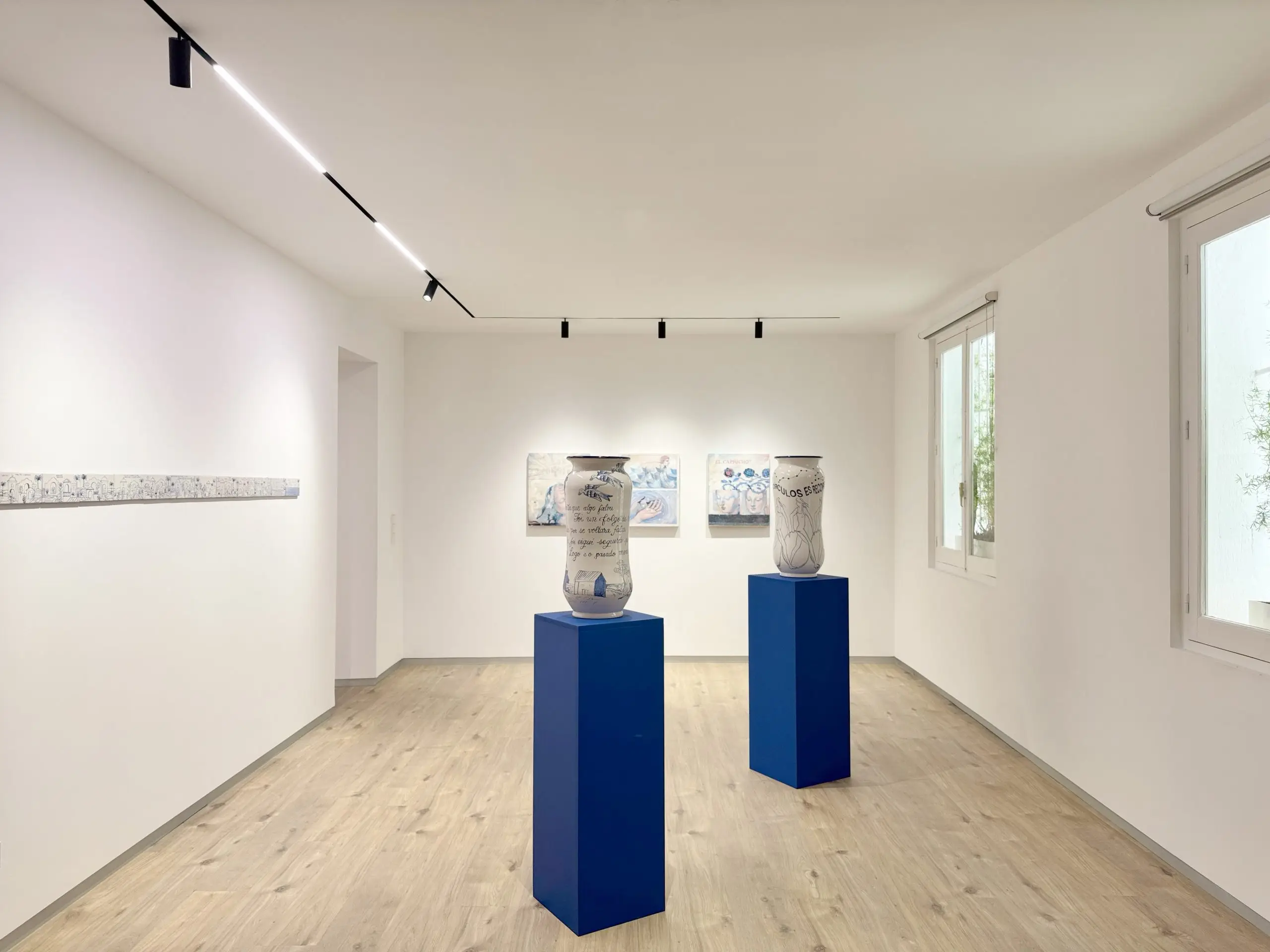
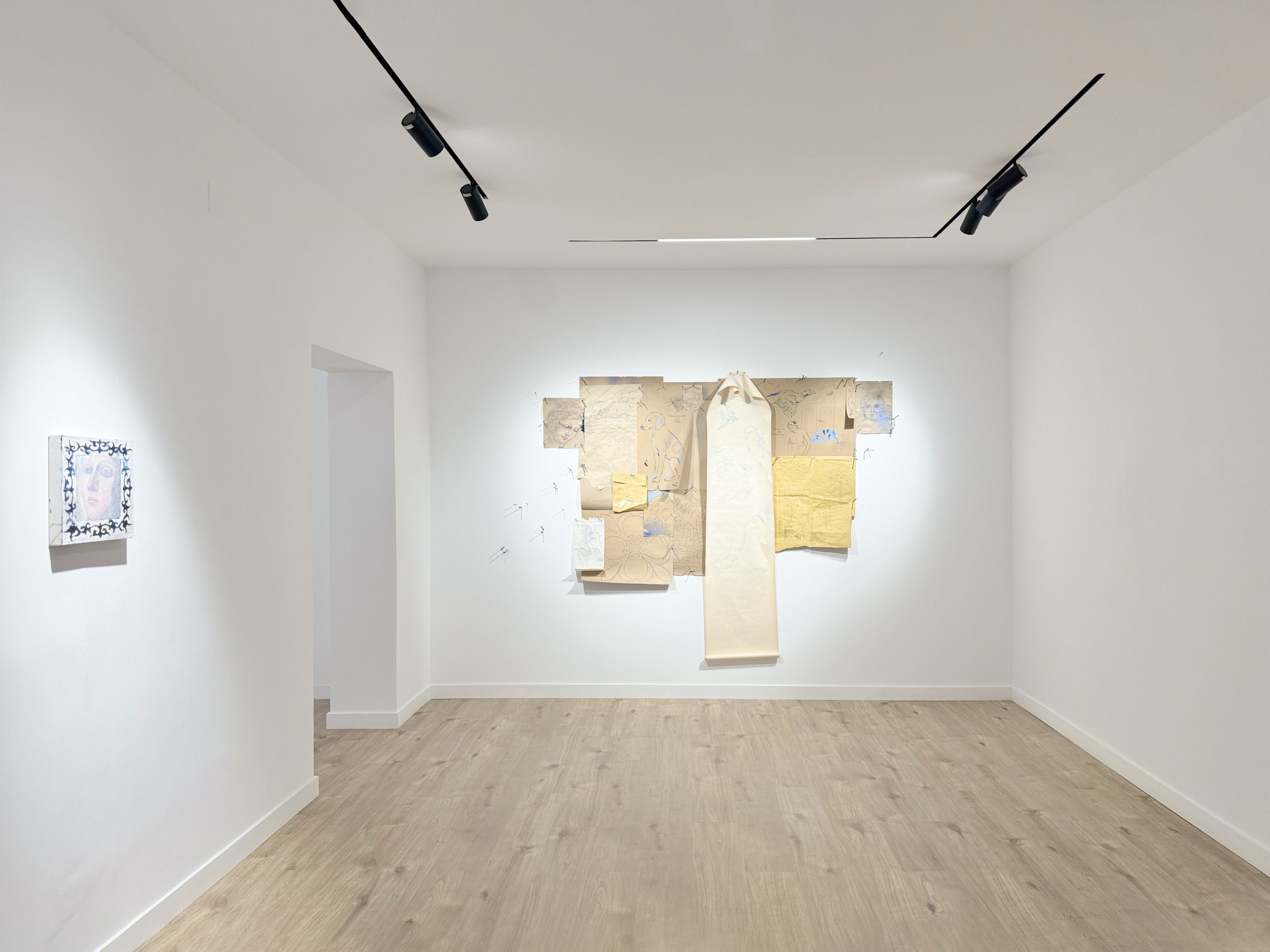
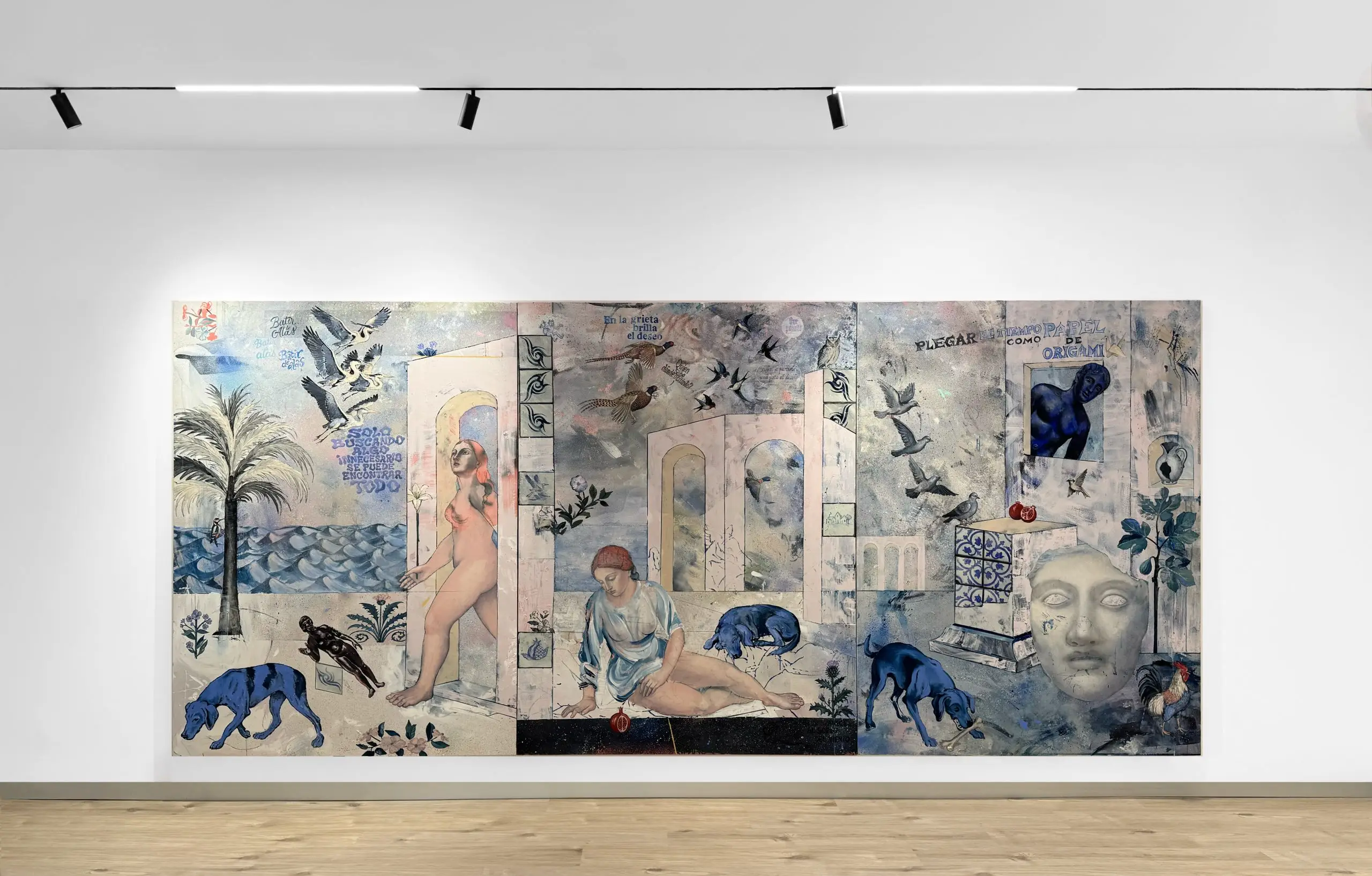
views of the exhibition

The Bravú

Everything human is subject to decadence

Los Bravú, a duo of Spanish artists born in 2012 from the collaboration between Dea Gómez (Salamanca, Spain, 1989) and Diego Omil (Pontevedra, Spain, 1988), embodies one of the most solid and successful artistic visions within the Spanish contemporary scene.

This statement may seem risky and somewhat presumptuous. But I subscribe to it with no intention of generating confrontation and with full awareness of my words, because few young artists today have achieved the virtuous ability to perceive the spirit of their time and turn it into a work of art that, structurally and conceptually, is as ambiguous, complex and diffuse as the cultural reality that surrounds us.

It has been five years since I had my first encounter with his works. My approach was simple and straightforward: each painting is a container where fragments of Western culture have been gathered, some pieces of the ruined building of its fundamental values, and bodies that perceive themselves alive, but that in reality inhabit the ethereal space of a -dissimulated- agony. Then I thought: this is an extraordinarily accurate analysis of the concept of beauty that we millennials handle. And I remained calm; until today.

This exhibition is a reminder that everything human is subject to decay... except imagination; it is an anthropological review of three key concepts: painting, code and mystery.

Dea and Diego come from the publishing world; their artistic research originates in the fields of philology and linguistics. They are avid readers and, always fascinated by iconography, possess a vast visual culture. This is the substantial basis of their painting: an obscene, stark, unprejudiced, decontaminated gaze. They appropriate the repertoire of classical forms and the entire Western Christian tradition without fear of submitting to the yoke of a type of beauty that today may seem distant. They also focus on bringing to light and dignifying the aesthetic remnants of the visual culture of the 90's, today owned by millennials who proudly claim to have enjoyed the last traces of the analog image. And they venture to connect with an artistic trend marked by visual hybridity and the critical reformulation of the pictorial tradition; by the coexistence and, often, the clash between the figurative -with an accent on narrative and autobiographical- and the abstract -impregnated with gestures, expansive colors and digital references-. A type of painting that no longer questions its place in the world as a language, but rather, it is dressed as a space of friction between the material image and the overabundance of virtual images.

Those who know them more closely might think that the phrase "Where the air is fresh and the flowers tremble" is a direct reference to their new studio in Orlé, in the Nalón Valley, where they have retired this past season to paint. In recent years they have made an effort to analyze, dignify and preserve the cultural imaginaries of northern Spain, that region of knowledge often located on the cultural margins. But it seems to me that these coordinates, in the quixotic style of "En un lugar de la Mancha, de cuyo nombre no quiero acordarme", refer to a place far beyond the physical plane, located in the depths of the human soul. "Where the air is fresh and the flowers tremble", with great probability, launches us down the path that leads to the chaotic meadows of the unconscious.

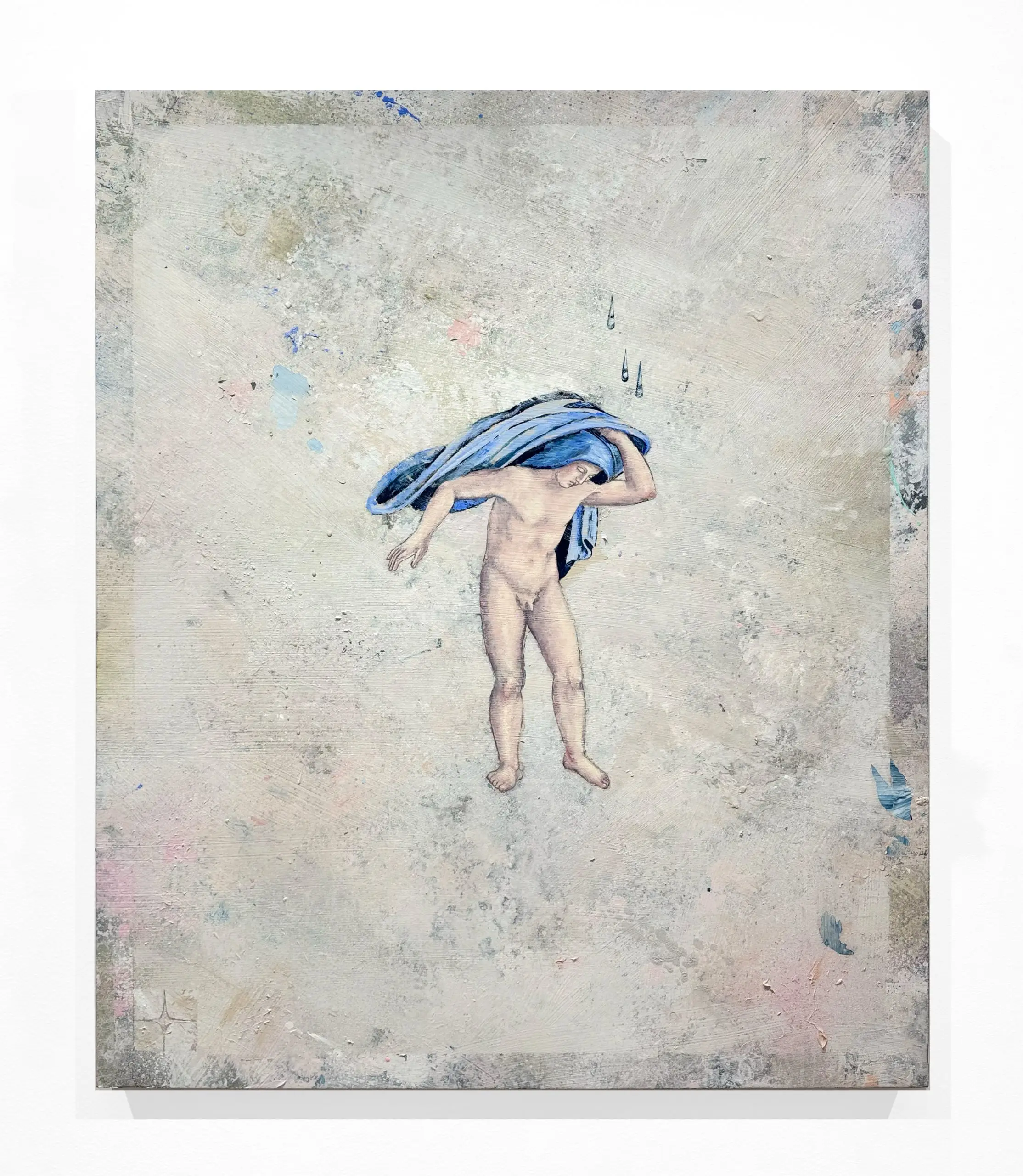
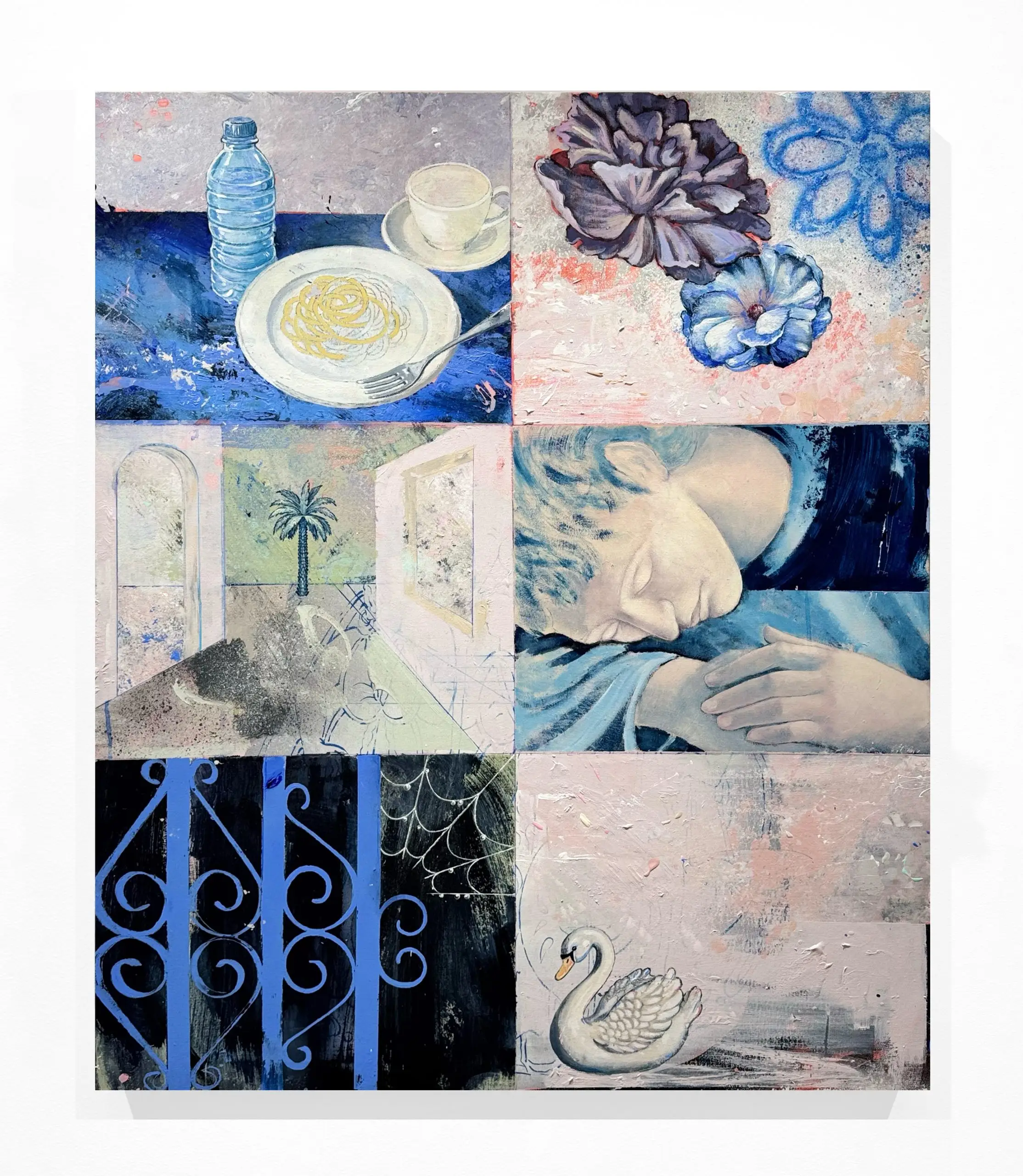
The peculiar way in which the artists have configured this disjointed place is striking. The exhibition, at first glance, is the environment of a dream that has been paused at its juiciest and most convoluted moment. Here, text and symbols do not compete, they intertwine. There is no order or rules regarding time: past, present and future have collided. The codes of two different types of language have also collided: poetics and painting. And in between, there is a code that supports this deflagration: the language of scripting. In short, they have recreated in the gallery, through a set of detailed sprites, the dense and chaotic scenario of a video game.

The well-worn resource of the Dadaist exquisite corpse has been replaced here by a much more innovative one: the glitch. This term comes from the field of programming and is used to designate a language error that, since it does not negatively affect the performance, playability or stability of the program or videogame in question, cannot be considered a bug, but rather an unforeseen feature that can be exploited by players. Glitches arise due to badly coded or damaged files, which when read form figures or images outside the norm. One of the most widely known cases is the so-called Glitch City.

In this way, the canvas becomes a page, an inscription surface, a screen. Text and image do not compete, they contaminate each other. The visual tradition -from the Renaissance to the nineties- dialogues with the logics of the metaverse. The work is thus configured as a space of friction: a laboratory where the analog and the digital, the collective and the intimate, the sacred and the banal rub up against each other all the time.

The diegesis of these works conceals a movement of consciousness reminiscent of a quantum leap. It is neither a linear evolution nor a progressive narrative, but a collapse in which temporal and symbolic planes intertwine without hierarchy. The past is not behind nor the future in front: both are here, embedded in the present. It is in that fold where Los Bravú situate their characters, their scenarios, their texts and symbols: in the fertile chaos of a collective unconscious that has not yet found the way to narrate itself.

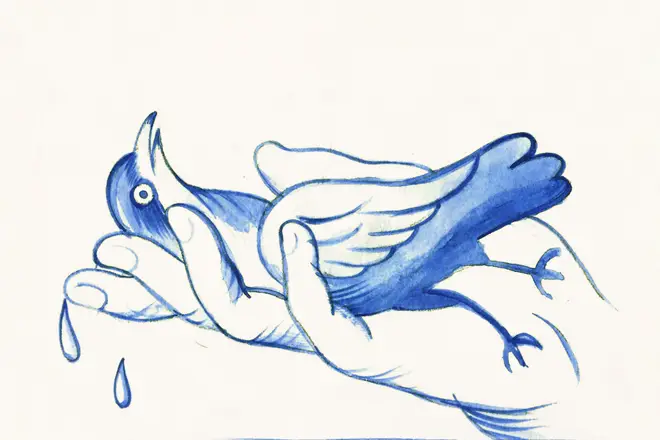
The color blue, omnipresent in this exhibition, accentuates this threshold character. Few shades have had a historical destiny so charged with meaning: from the ultramarine of lapis lazuli, more costly than gold and reserved in the Renaissance and Baroque periods for divinity, to its contemporary version, associated with the cold brightness of electronic screens. In the paintings of Los Bravú, blue oscillates between the mystical and the digital: it is, at the same time, prayer and glitch, sacred sky and lit monitor. In contrast to the ostentatious materiality of gold, blue is pure vibration, a sign of the intangible. The artists turn it into matter and symbol of a new collective imaginary: a blue that no longer points only to the beyond, but also to the invisible architectures of our virtual present.

At first glance, Los Bravú's painting could be read as figurative: bodies, landscapes, recognizable symbols, human gestures that seem to dialogue with the Western tradition. But to look only at the obvious would be to miss the essence of his work. Painting, in his hands, is not an end in itself; it is a means. A means to reveal, investigate and share the codes by which culture is communicated, consumed and transmitted today. Each stroke, each fragment of text, each composition is the result of a meticulous and prolonged analysis of how meanings are constructed, how imaginaries circulate and how social archetypes are perpetuated in a hyper-connected and digitalized context.

In Los Bravú, painting functions as a laboratory. Their canvases immortalize the findings of extensive research, combining iconography, linguistics, technology and collective memory. They are maps where the connections between image and text, between analog and digital, between pictorial tradition and contemporary signs are observed. Figuration serves, in this sense, as a gateway: a visual pretext that leads the viewer into a web of codes, signs and references that explain how culture is produced, interpreted and circulates today.

This strategy connects them with a line of post-conceptual artists who have investigated language and cultural systems as the raw material of the work of art. Think, for example, of Thomas Struth, who analyzes how museums and urban environments produce and reproduce cultural discourses; Tacita Dean, who works with images and media to explore memory and perception; or Mark Dion, who dissects and reconstructs systems of natural and cultural knowledge. Like them, Los Bravú are not content to show, but seek to understand, catalog and share the hidden rules that govern our experience of contemporary culture.

Where the air is fresh and the flowers tremble is, finally, an invitation to cross the blue, to lose oneself in the meadows of the unconscious, to accept that, although everything is crumbling, the inexhaustible power of the imagination still remains.


-Luis Sicre


The Bravú

works

The Bravú
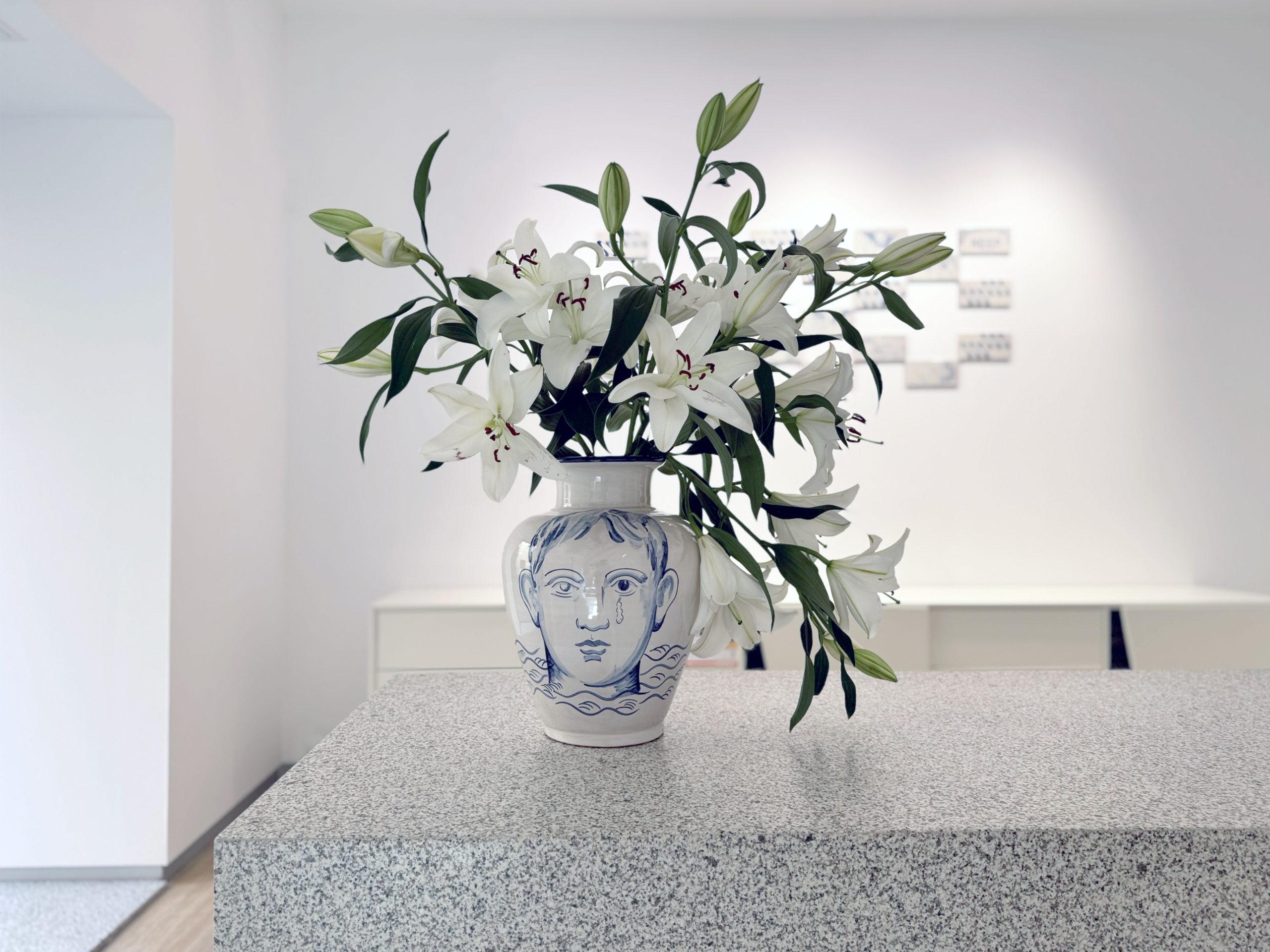
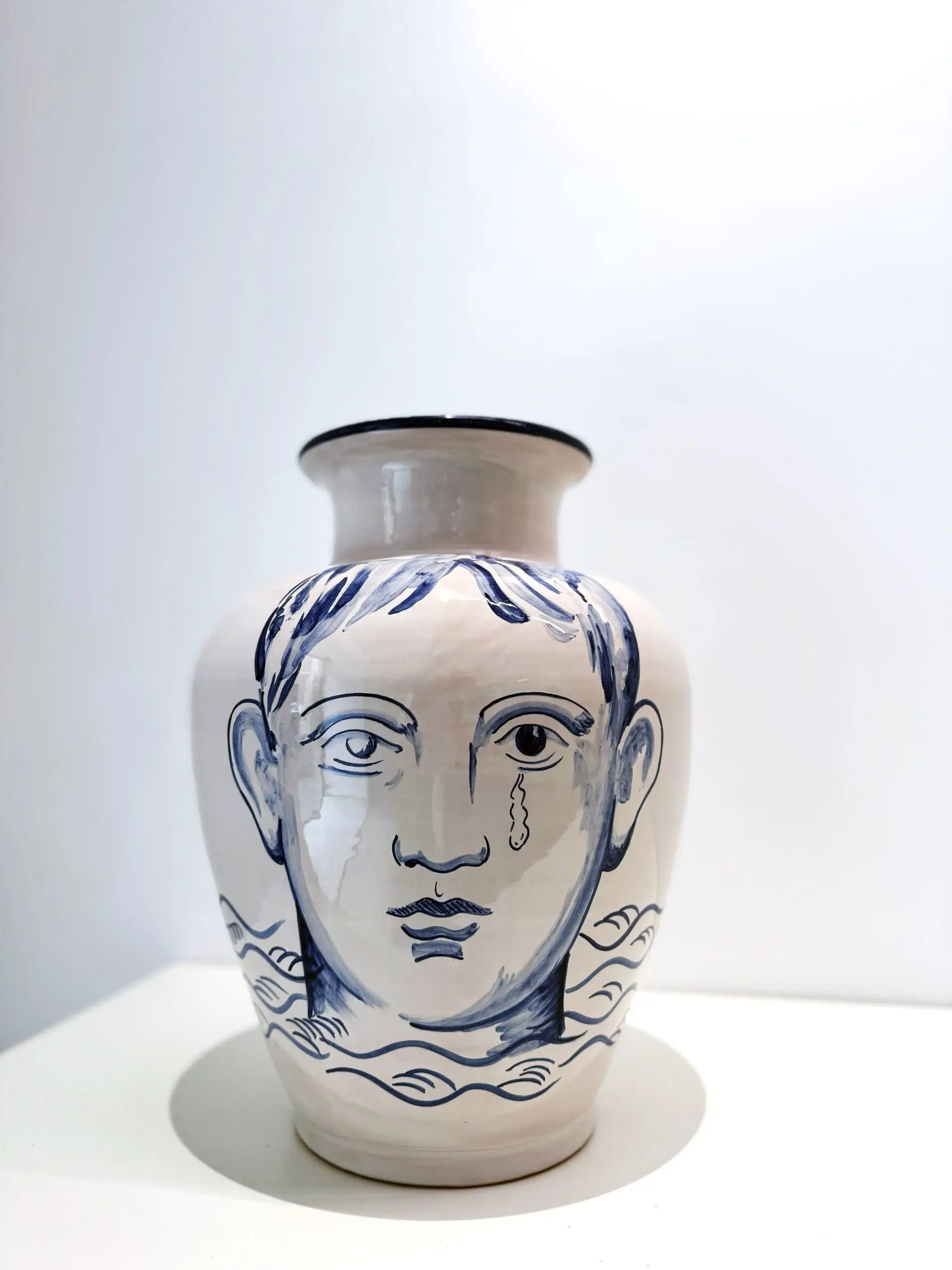
The youngest aurora, 2025
Handmade vase in glazed ceramic with cobalt blue finish.
39 x Ø 30 cm (15.3 x Ø 11.8 in)/ Single piece
The Bravú
The youngest aurora, 2025
Handmade vase in glazed ceramic with cobalt blue finish.
39 x Ø 30 cm (15.3 x Ø 11.8 in)/ Single piece
The Bravú
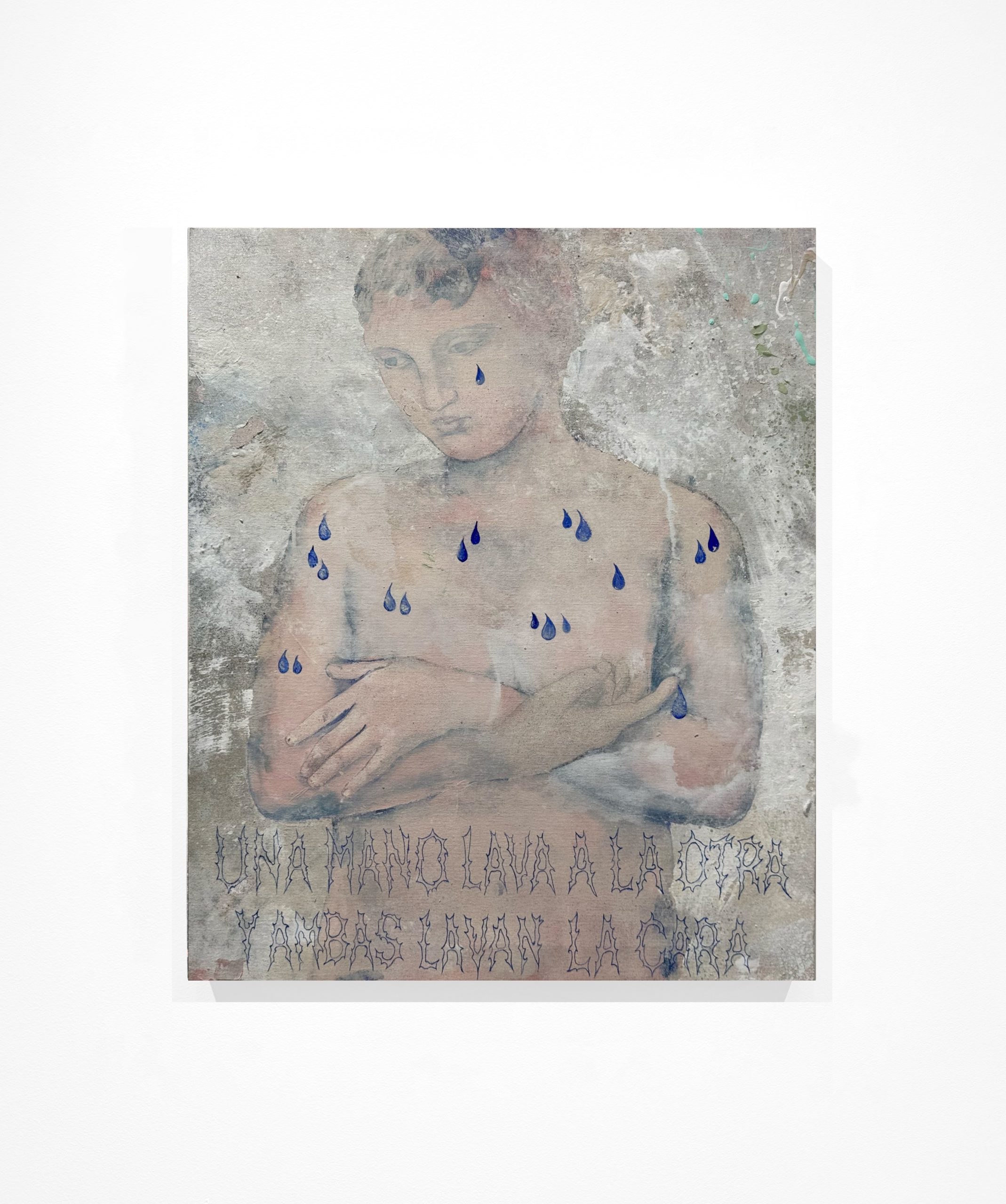
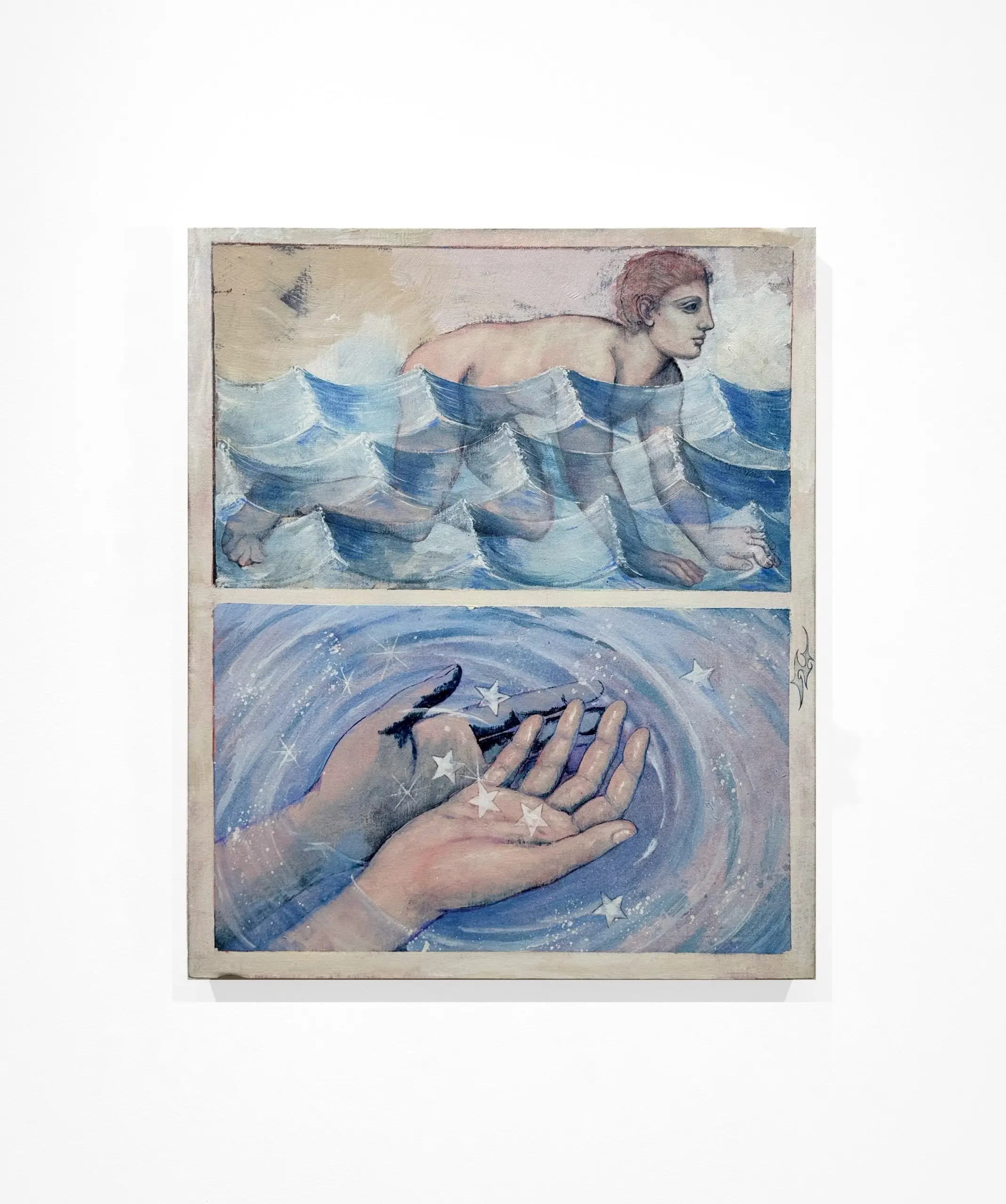
One hand washes the other and both wash the face, 2025
Acrylic on canvas
60 x 50 cm (23.6 x 19.6 in)
The Bravú
One hand washes the other and both wash the face, 2025
Acrylic on canvas
60 x 50 cm (23.6 x 19.6 in)
The Bravú
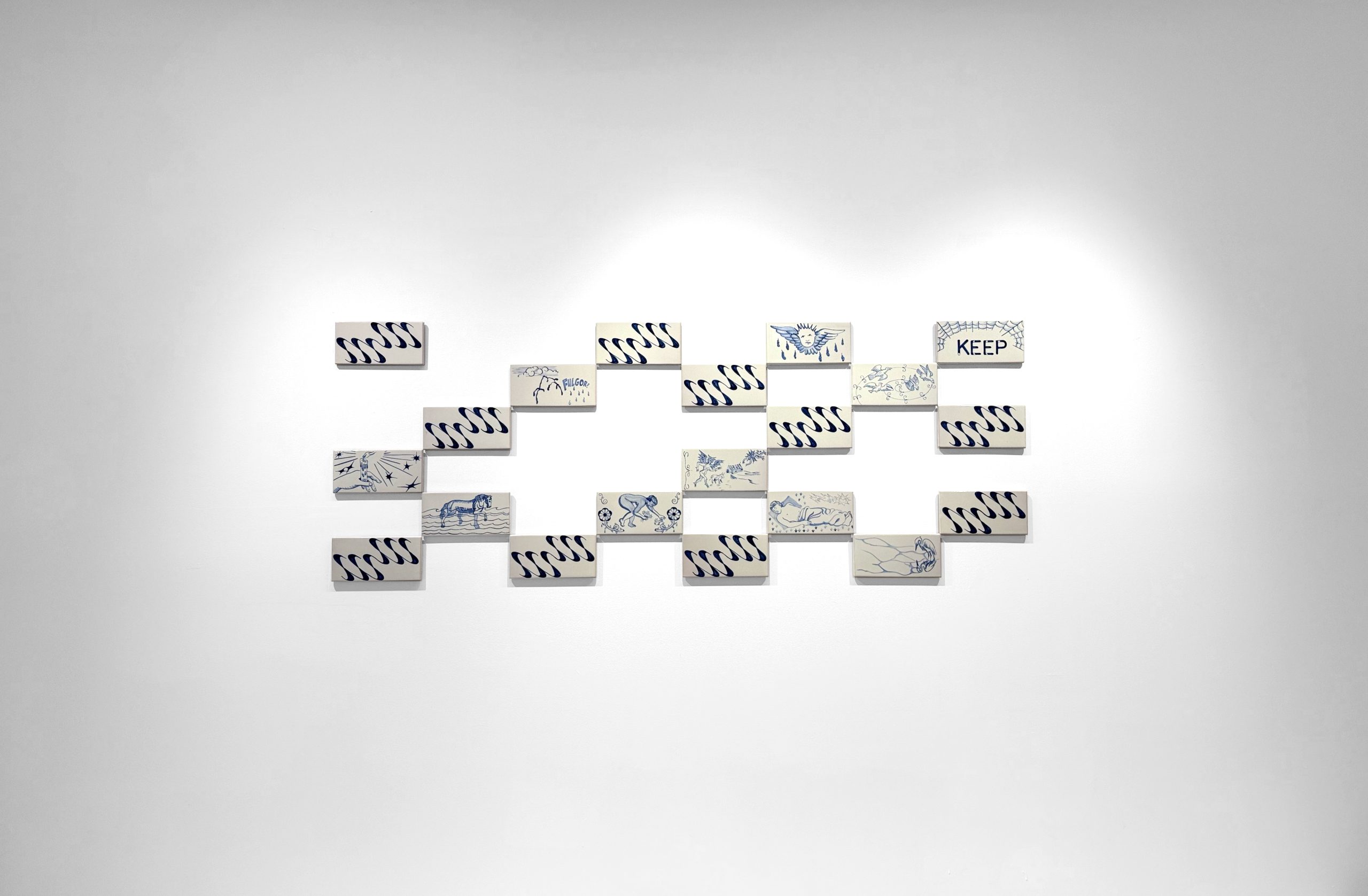
Fulgor, 2025
Mosaic composed of 20 pieces of tile, handmade in glazed ceramic with cobalt blue finish.
60 x 160 cm (23.6 x 62.9 in) / Single piece
The Bravú
Fulgor, 2025
Mosaic composed of 20 pieces of tile, handmade in glazed ceramic with cobalt blue finish.
60 x 160 cm (23.6 x 62.9 in) / Single piece
The Bravú
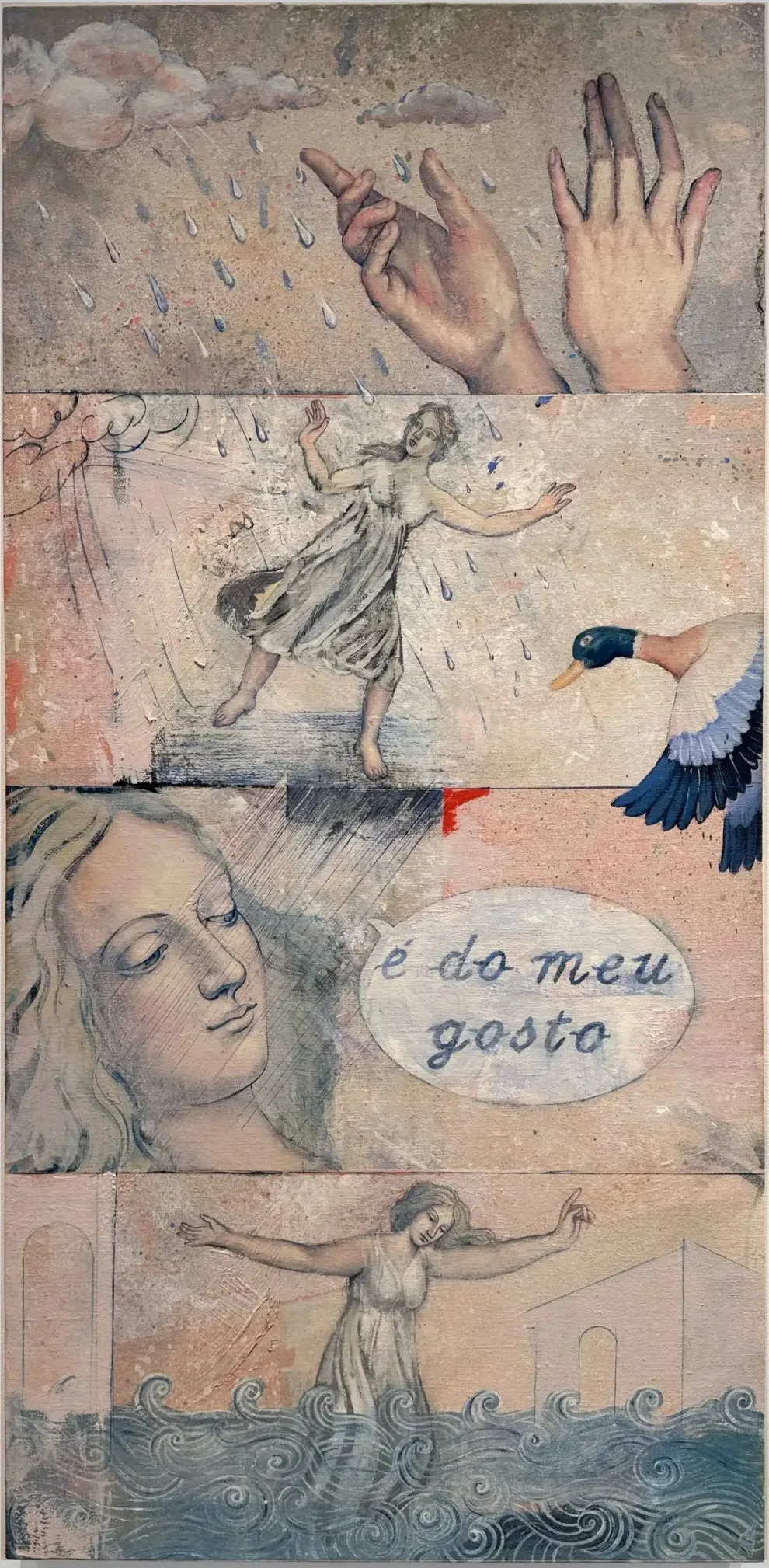
E do meu gusto, 2025
Acrylic on canvas
100 x 50 cm (39.3 x 19.6 in)
The Bravú
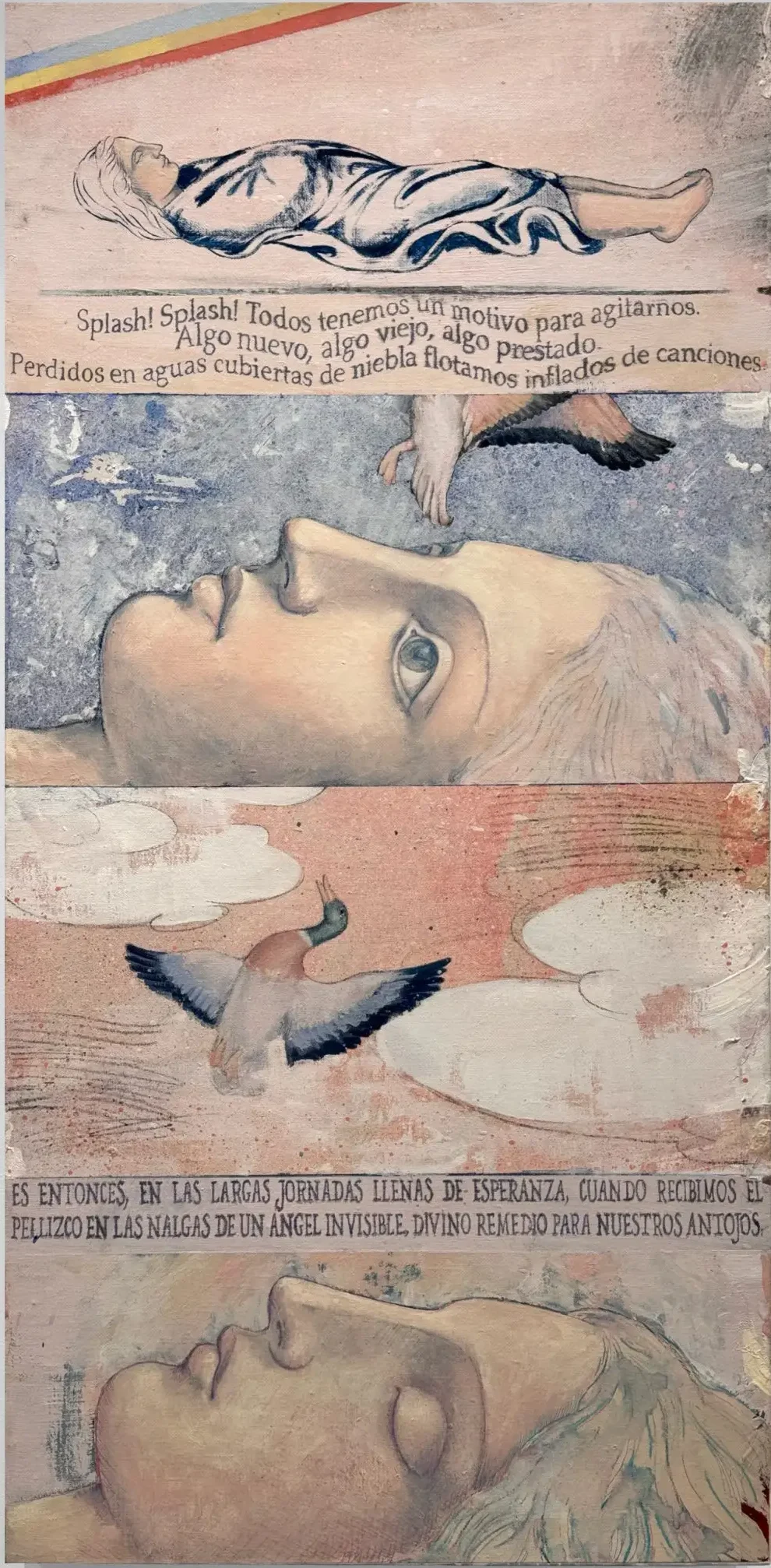
Splash, 2025 Acrylic on canvas 100 x 50 cm (39.3 x 19.6 in)
The Bravú
E do meu gusto, 2025
Acrylic on canvas
100 x 50 cm (39.3 x 19.6 in)
The Bravú
Splash, 2025
Acrylic on canvas
100 x 50 cm (39.3 x 19.6 in)
The Bravú
Beat of wings, 2025
Acrylic on canvas
200 x 150 cm (78.7 x 59 in)
The Bravú
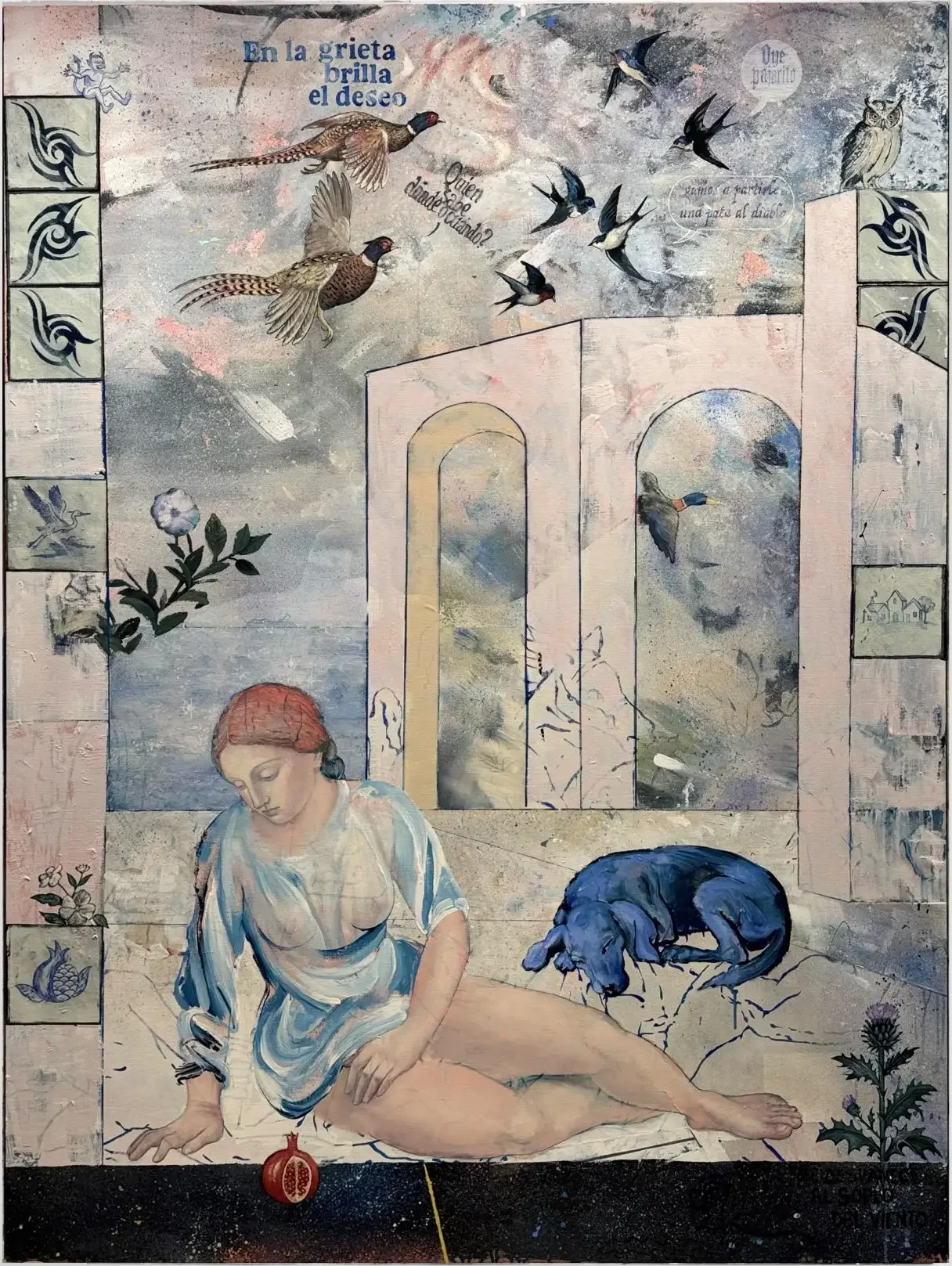
Desire shines in the crack, 2025 Acrylic on canvas
200 x 150 cm (78.7 x 59 in)
The Bravú
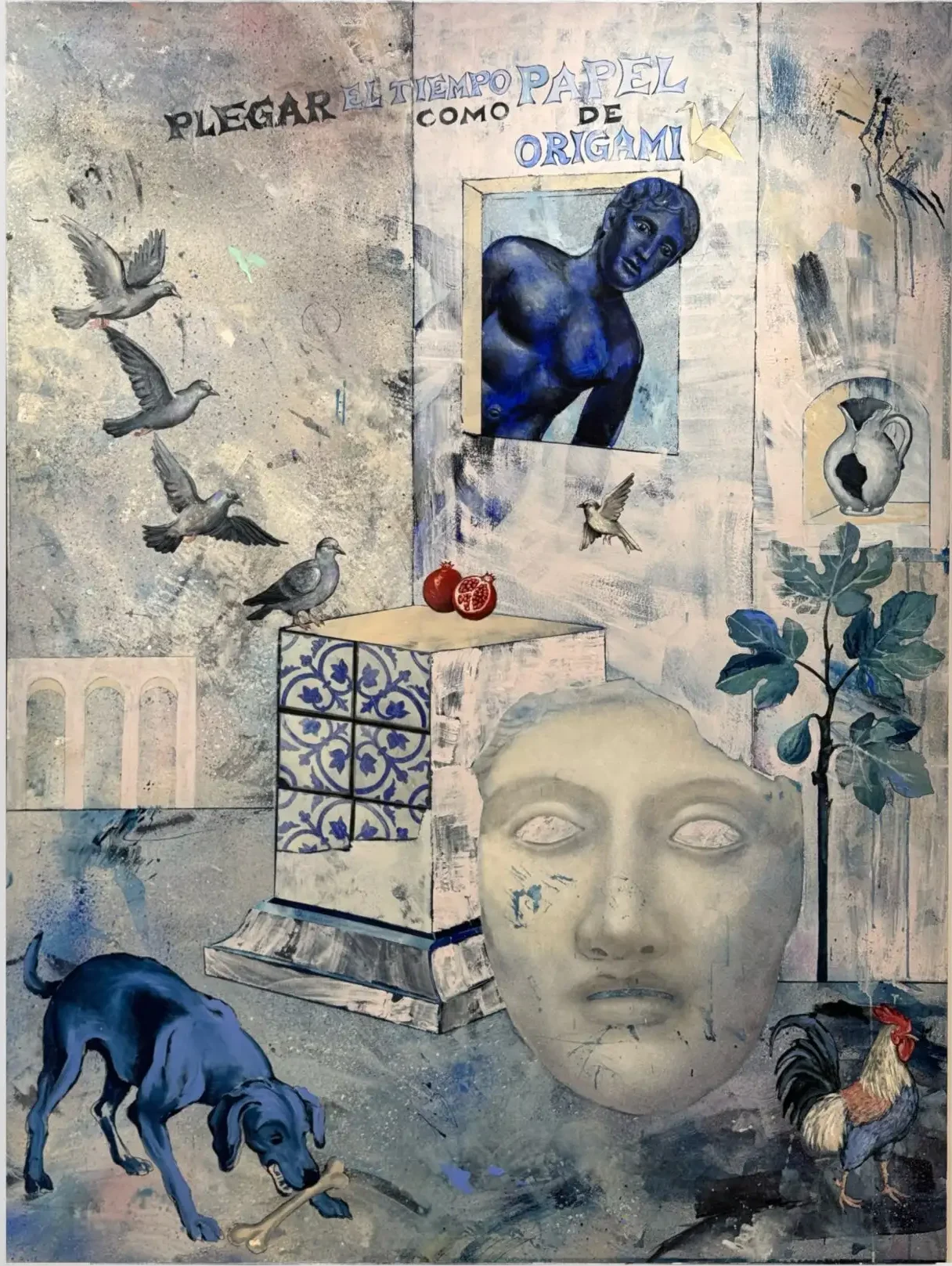
Folding time like origami paper, 2025
Acrylic on canvas
200 x 150 cm (78.7 x 59 in)
The Bravú
Beat of wings, 2025
Acrylic on canvas
200 x 150 cm (78.7 x 59 in)
The Bravú
Desire shines in the crack, 2025 Acrylic on canvas
200 x 150 cm (78.7 x 59 in)
The Bravú
Folding time like origami paper, 2025
Acrylic on canvas
200 x 150 cm (78.7 x 59 in)
The Bravú
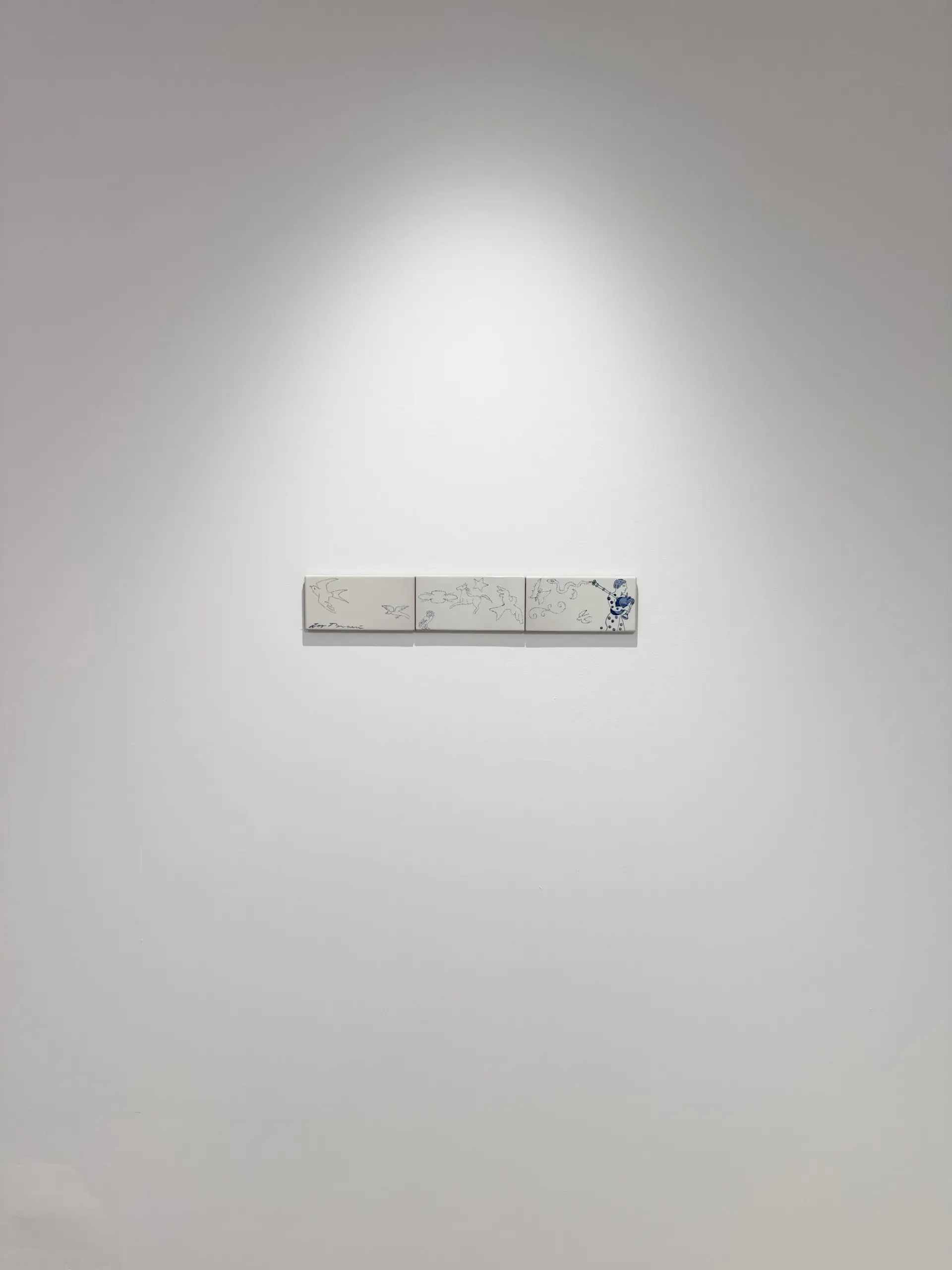
Verbena, 2025
Mosaic composed of 3 pieces of tile, handmade in glazed ceramic with cobalt blue finish.
10 x 60 cm (0.4 x 19.6 in)/ Single piece
The Bravú
Verbena, 2025
Mosaic composed of 3 pieces of tile, handmade in glazed ceramic with cobalt blue finish.
10 x 60 cm (0.4 x 19.6 in)/ Single piece
The Bravú
間 (Ma), 2025
Acrylic on canvas
100 x 80 cm (39.7 x 31.4 in)
The Bravú
Song between two shores, 2025
Acrylic on canvas
100 x 80 cm (39.4 x 31.4 in)
The Bravú
間 (Ma), 2025
Acrylic on canvas
100 x 80 cm (39.7 x 31.4 in)
The Bravú
Splash, 2025
Acrylic on canvas
100 x 50 cm (39.3 x 19.6 in)
The Bravú
Song between two shores, 2025
Acrylic on canvas
100 x 80 cm (39.4 x 31.4 in)
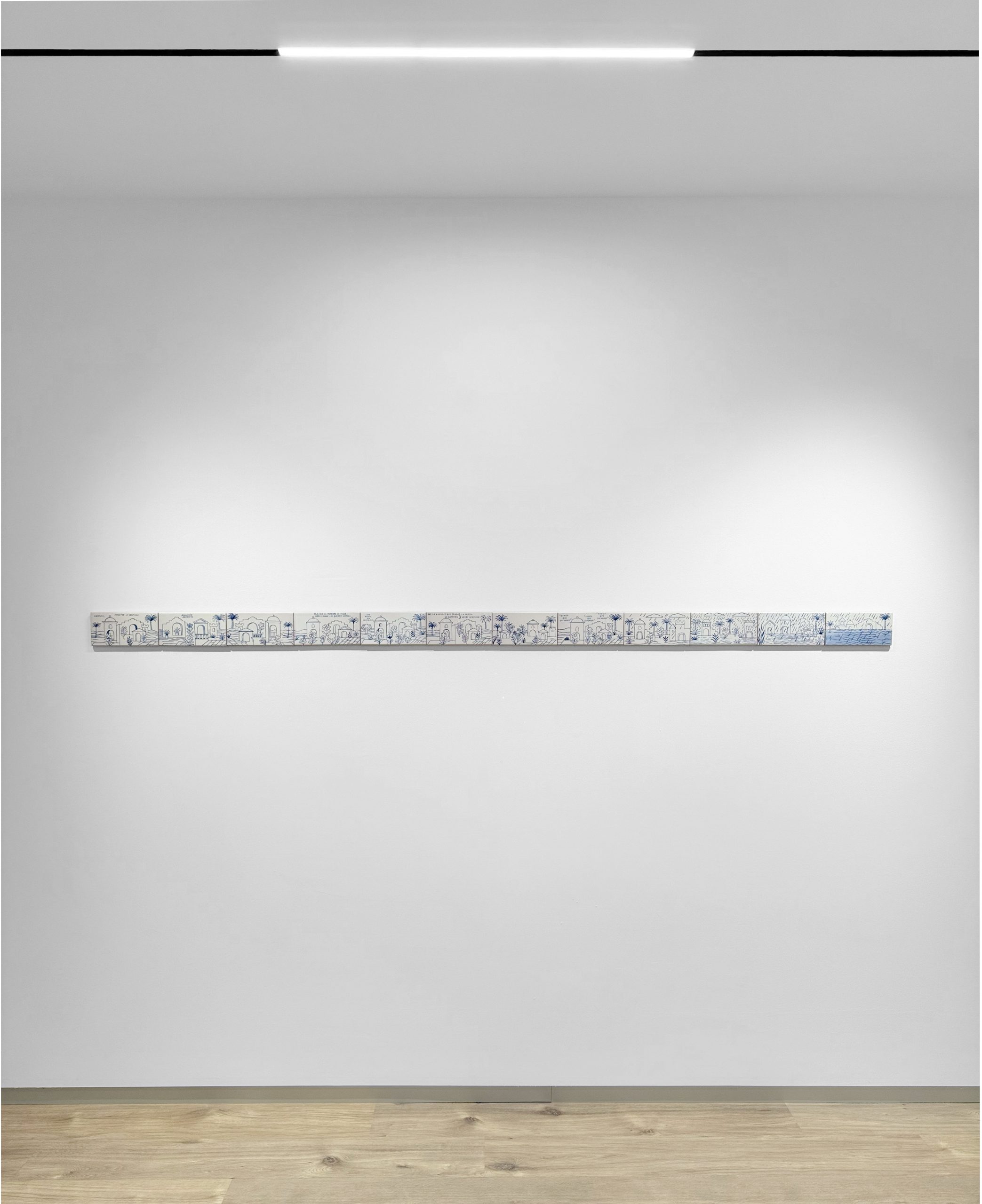
The Bravú
Absolute attention, 2025
Mosaic composed of 12 pieces of tile, handmade in glazed ceramic with cobalt blue finish.
10 x 240 cm (0.4 x 94.4 in)/ Single piece
The Bravú
Absolute attention, 2025
Mosaic composed of 12 pieces of tile, handmade in glazed ceramic with cobalt blue finish.
10 x 240 cm (0.4 x 94.4 in)/ Single piece
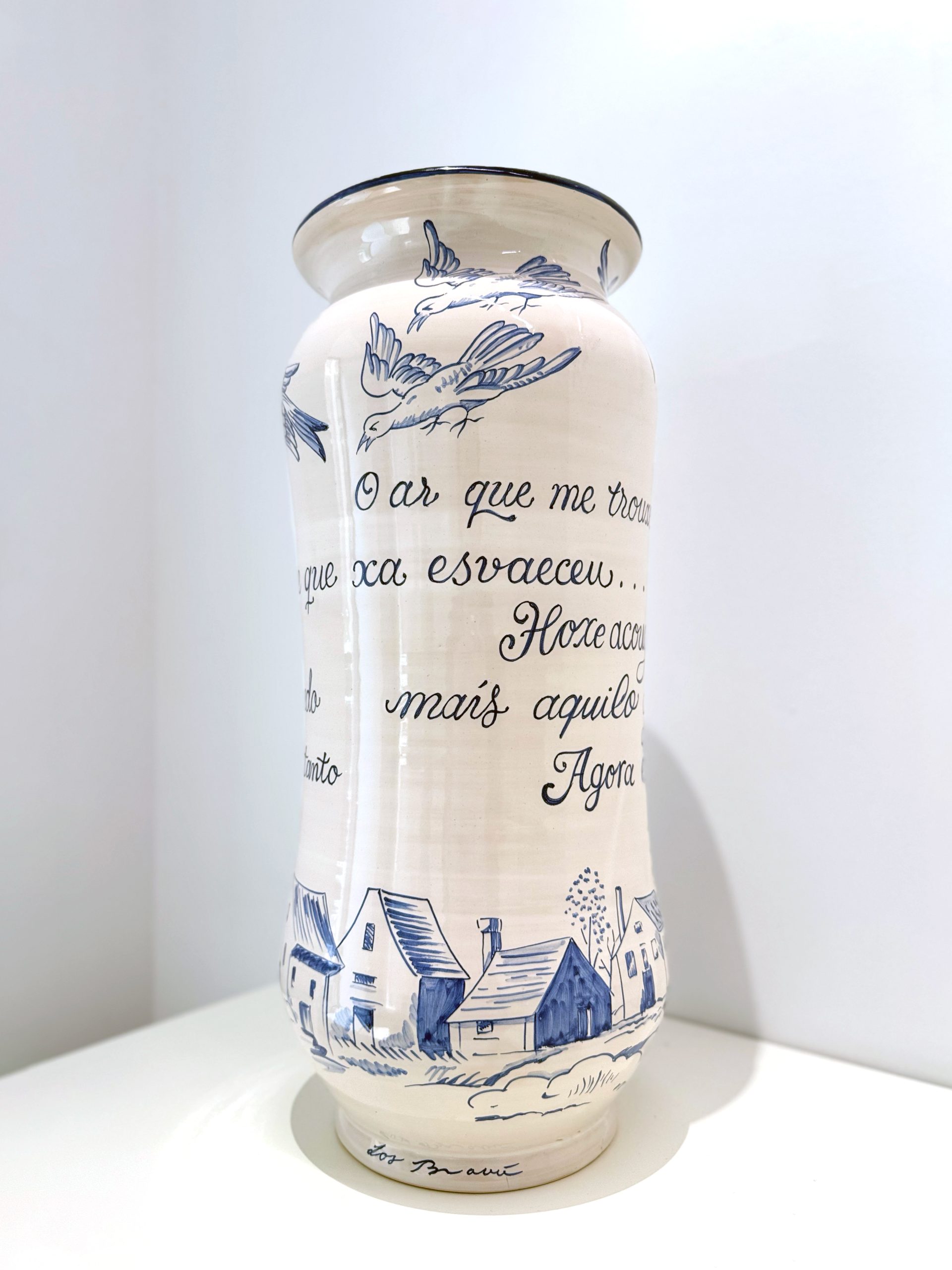
The Bravú
O ar que me trouxeches (The air you brought me), 2025
Handmade vase in glazed ceramic with cobalt blue finish.
56 x Ø 25.4 cm (22 x Ø 9.8 in) / Single piece
The Bravú
O ar que me trouxeches (The air you brought me), 2025
Handmade vase in glazed ceramic with cobalt blue finish.
56 x Ø 25.4 cm (22 x Ø 9.8 in) / Single piece
The Bravú
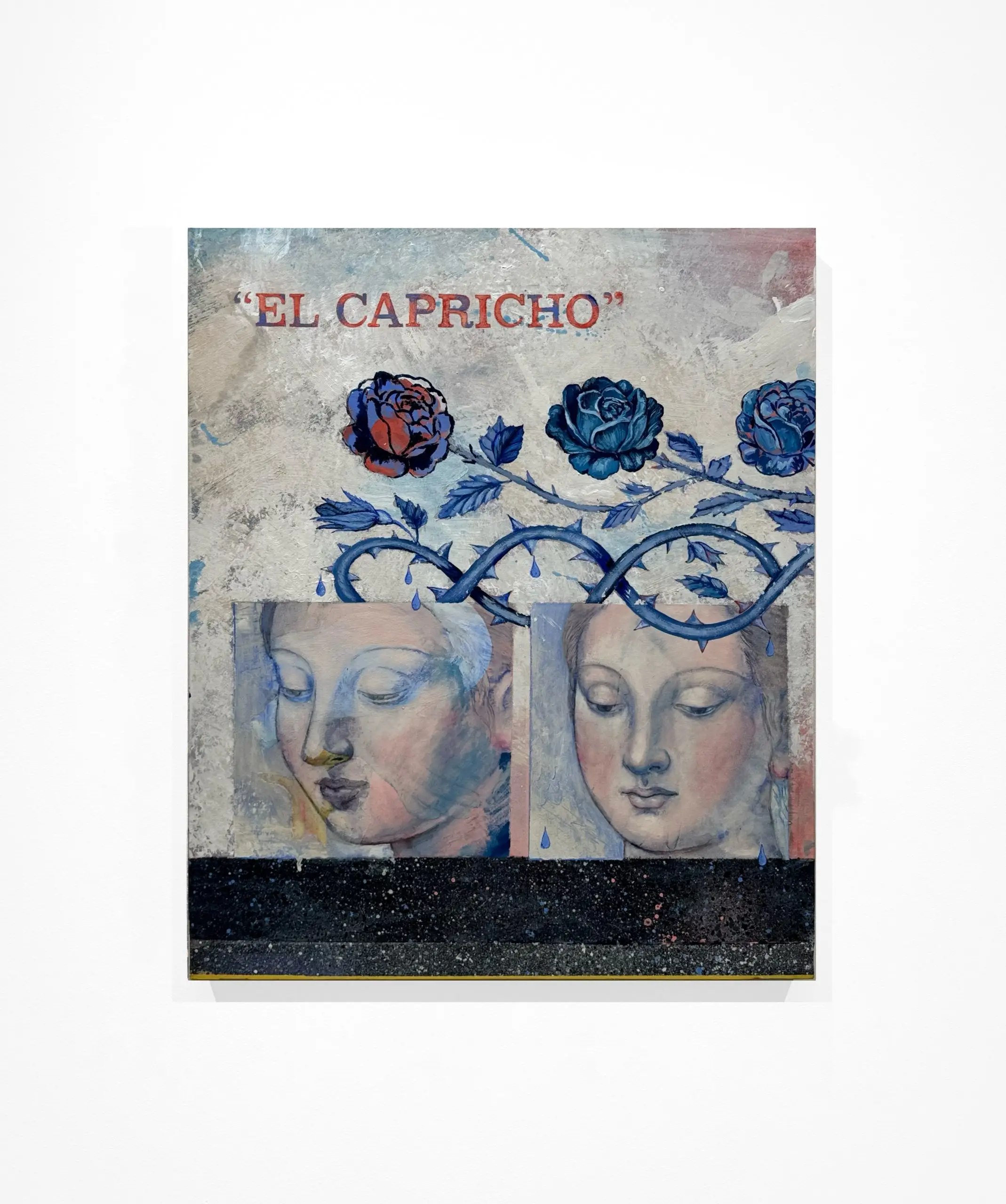
The whim, 2025
Acrylic on canvas
60 x 50 cm (23.6 x 19.6 in)
The Bravú
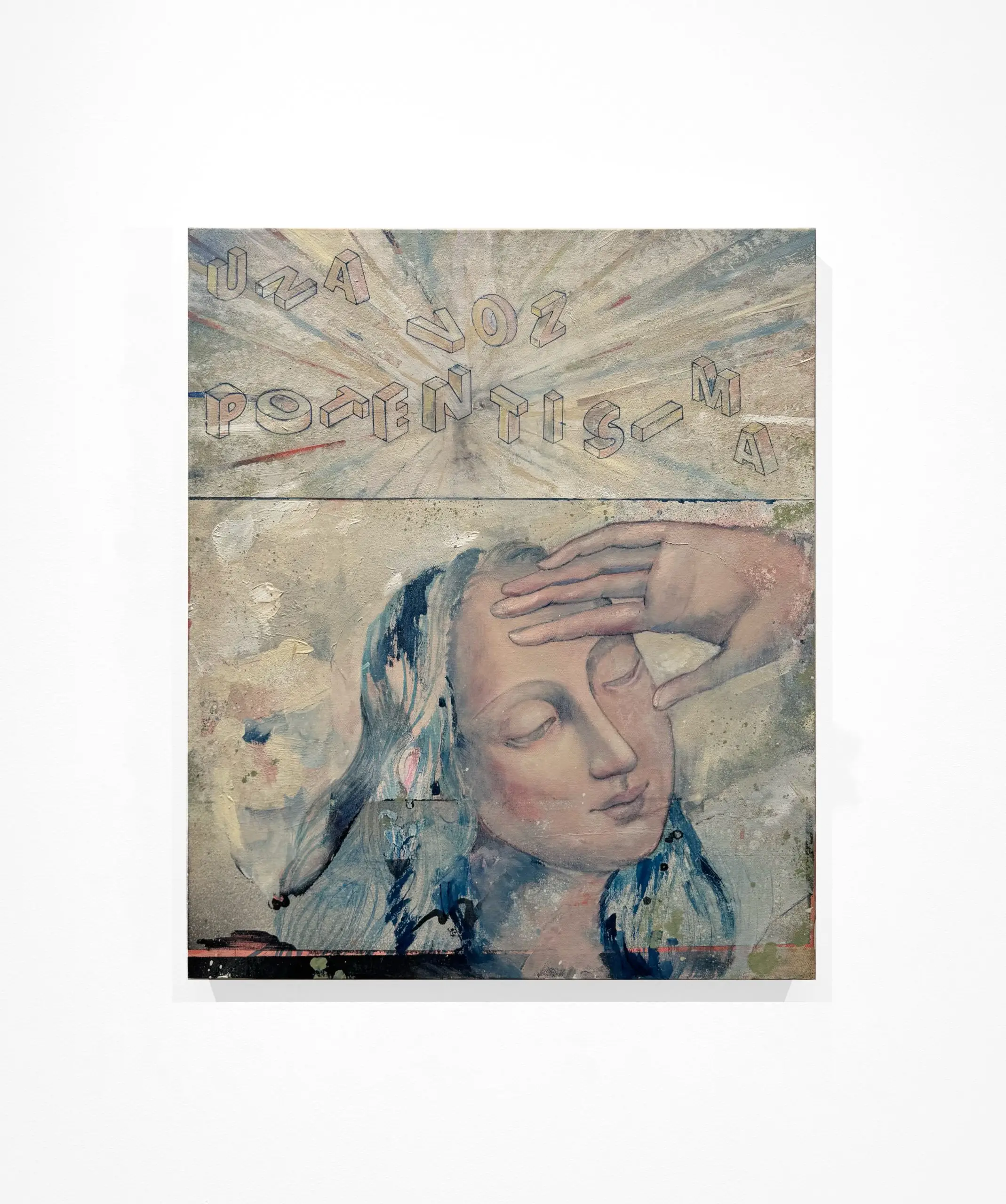
A very powerful voice, 2025 Acrylic on canvas
60 x 50 cm (23.6 x 19.6 in)
The Bravú
Minute fragmented instants, 2025
Acrylic on canvas
60 x 50 cm (23.6 x 19.6 in)
The Bravú
The whim, 2025
Acrylic on canvas
60 x 50 cm (23.6 x 19.6 in)
The Bravú
A very powerful voice, 2025 Acrylic on canvas
60 x 50 cm (23.6 x 19.6 in)
The Bravú
Minute fragmented instants, 2025
Acrylic on canvas
60 x 50 cm (23.6 x 19.6 in)
The Bravú
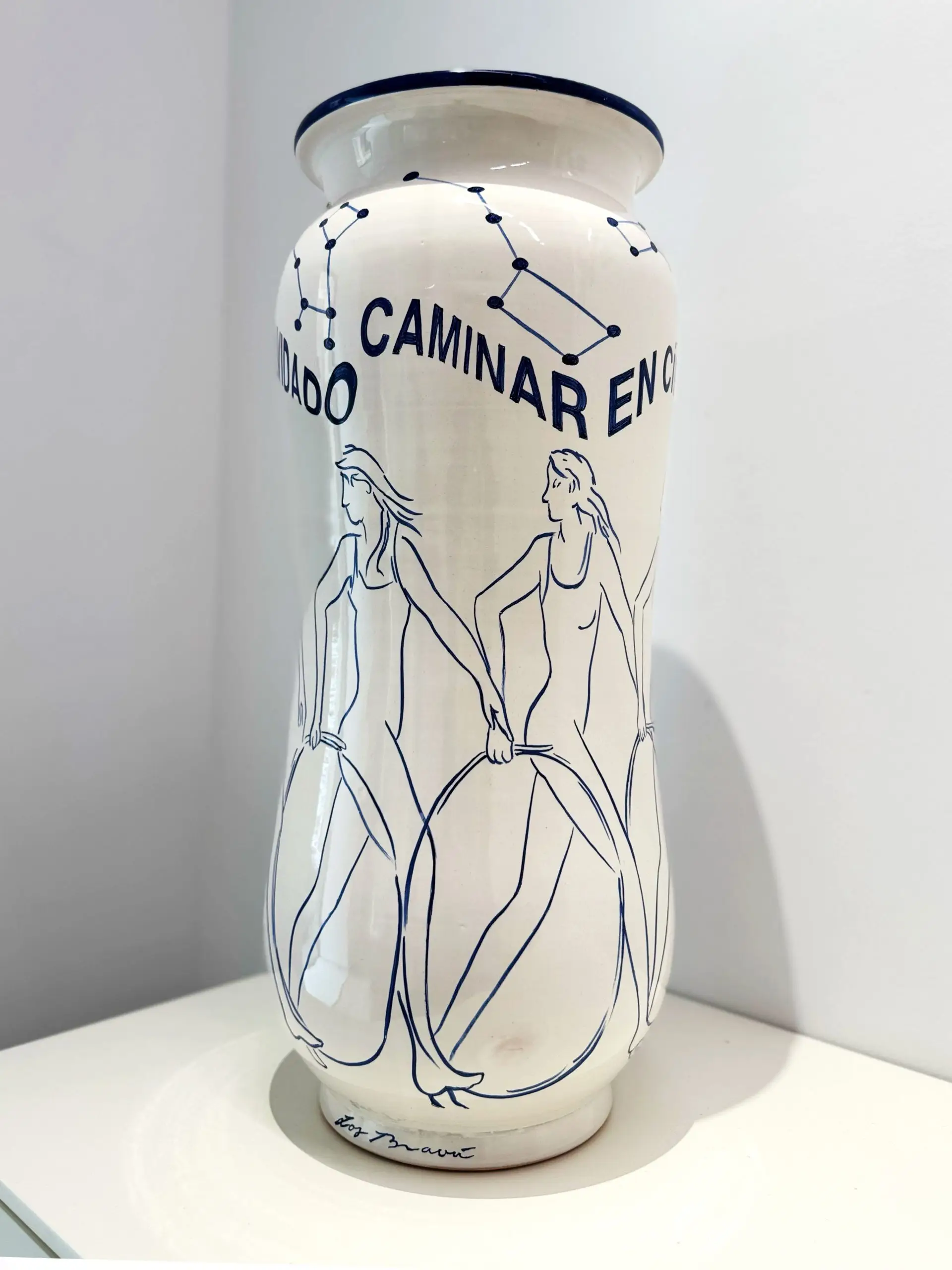
Walking in circles in remembering the forgotten, 2025
Handmade vase in glazed ceramic with cobalt blue finish.
62 x Ø 27 cm (24.4 x Ø 10.6 in) / Single piece
The Bravú
Walking in circles in remembering the forgotten, 2025
Handmade vase in glazed ceramic with cobalt blue finish.
62 x Ø 27 cm (24.4 x Ø 10.6 in) / Single piece
The Bravú
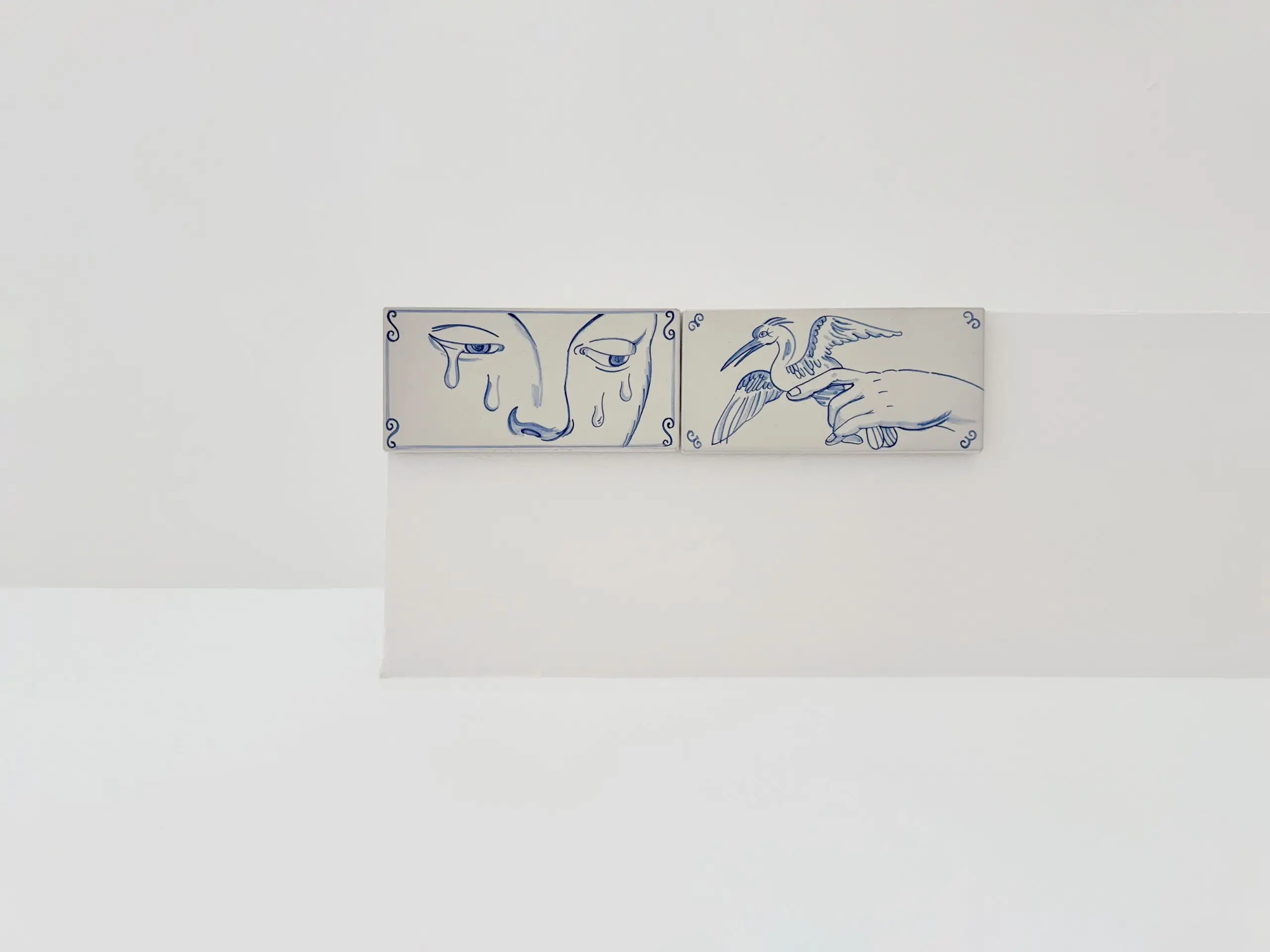
My prayer in your eyes, 2025
Mosaic composed of 2 pieces of tile, handmade in glazed ceramic with cobalt blue finish.
10 x 40 cm (0.4 x 15.7 in) / Single piece
The Bravú
My prayer in your eyes, 2025
Mosaic composed of 2 pieces of tile, handmade in glazed ceramic with cobalt blue finish.
10 x 40 cm (0.4 x 15.7 in) / Single piece
The Bravú
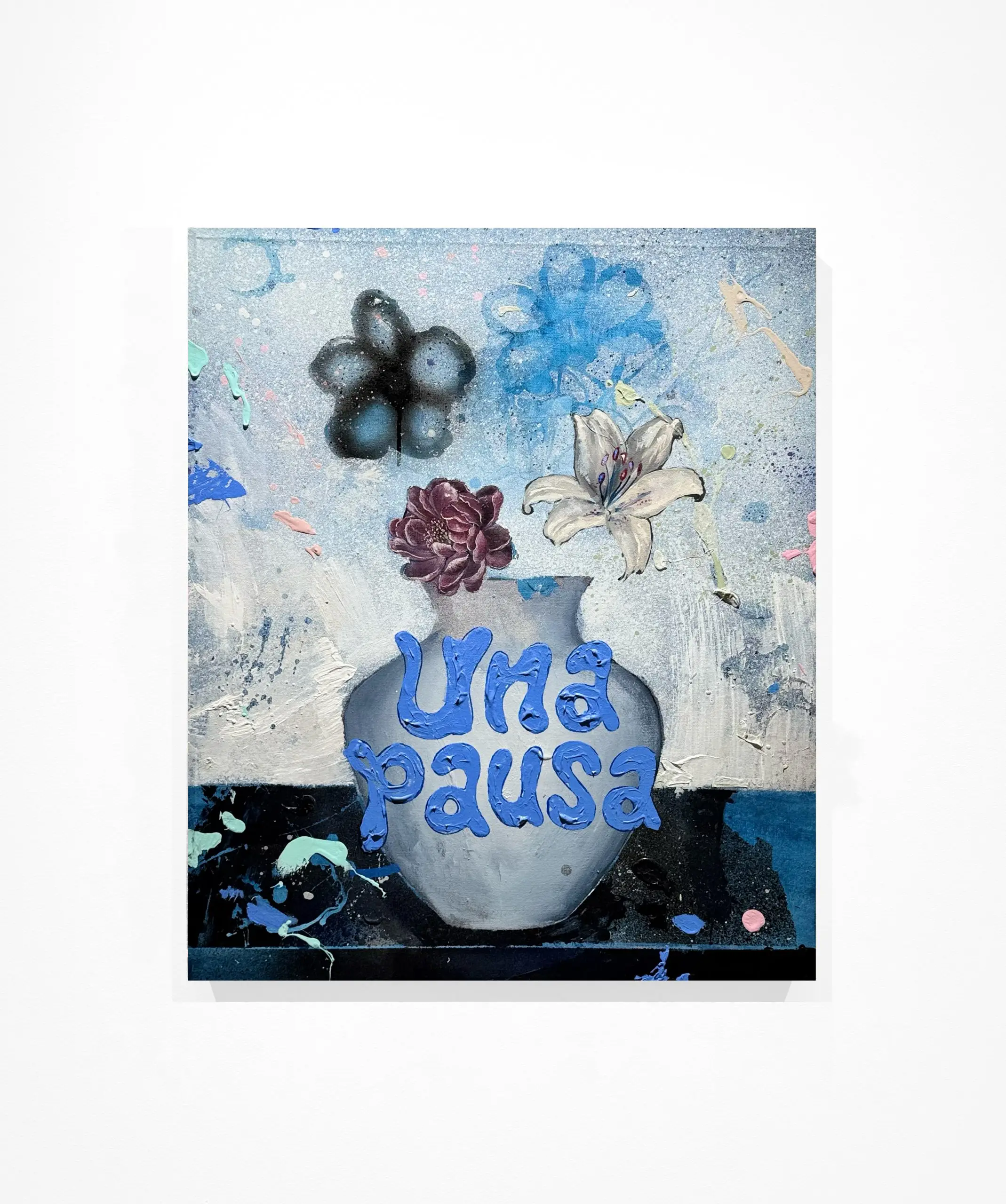
A pause, 2025
Acrylic on canvas
60 x 50 cm (23.6 x 19.6 in)
The Bravú
A pause, 2025
Acrylic on canvas
60 x 50 cm (23.6 x 19.6 in)
The Bravú
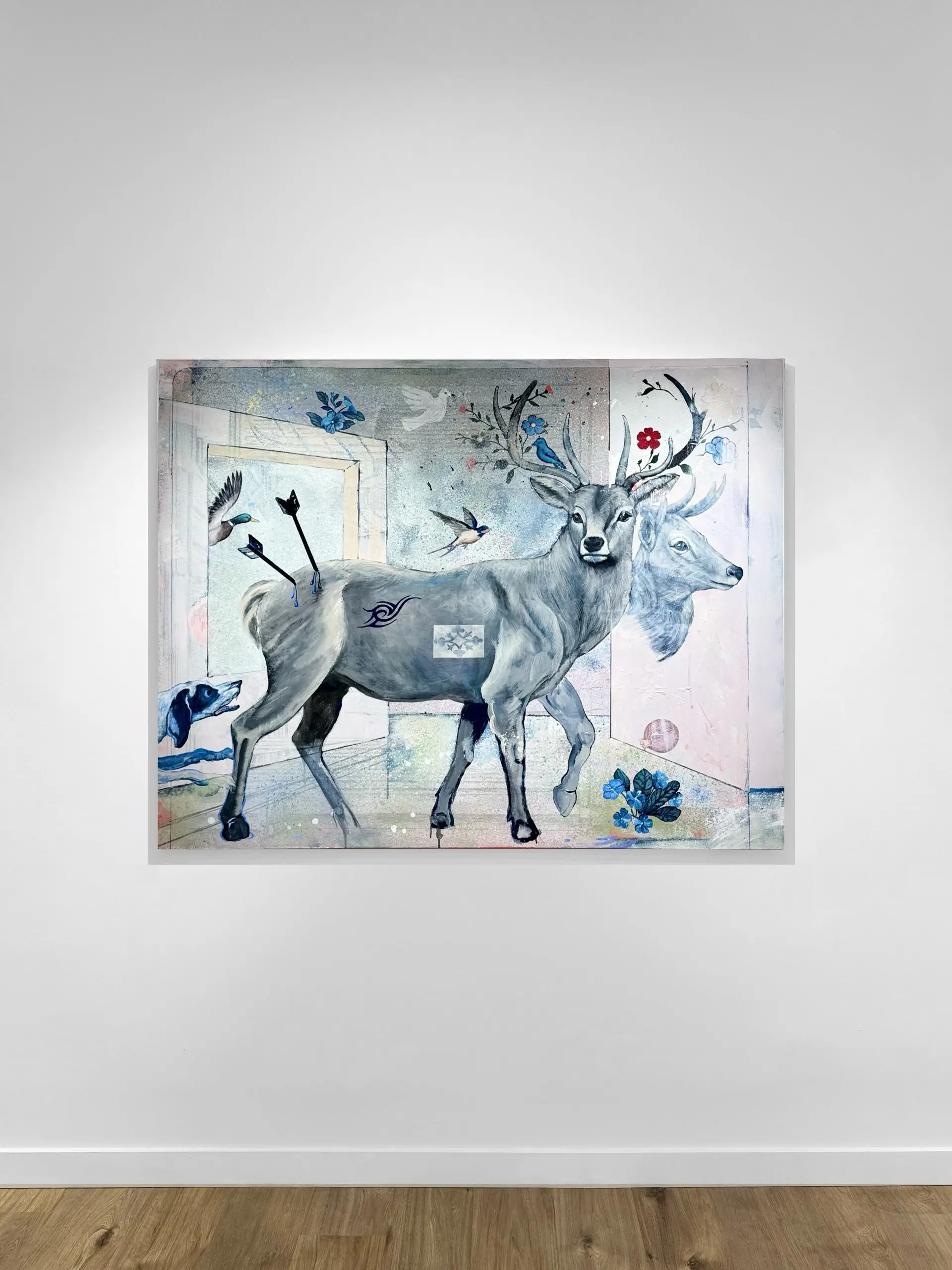
The walk of the last inhabitant, 2025
Acrylic on canvas
120 x 160 cm (47.2 x 62.9 in)
The Bravú
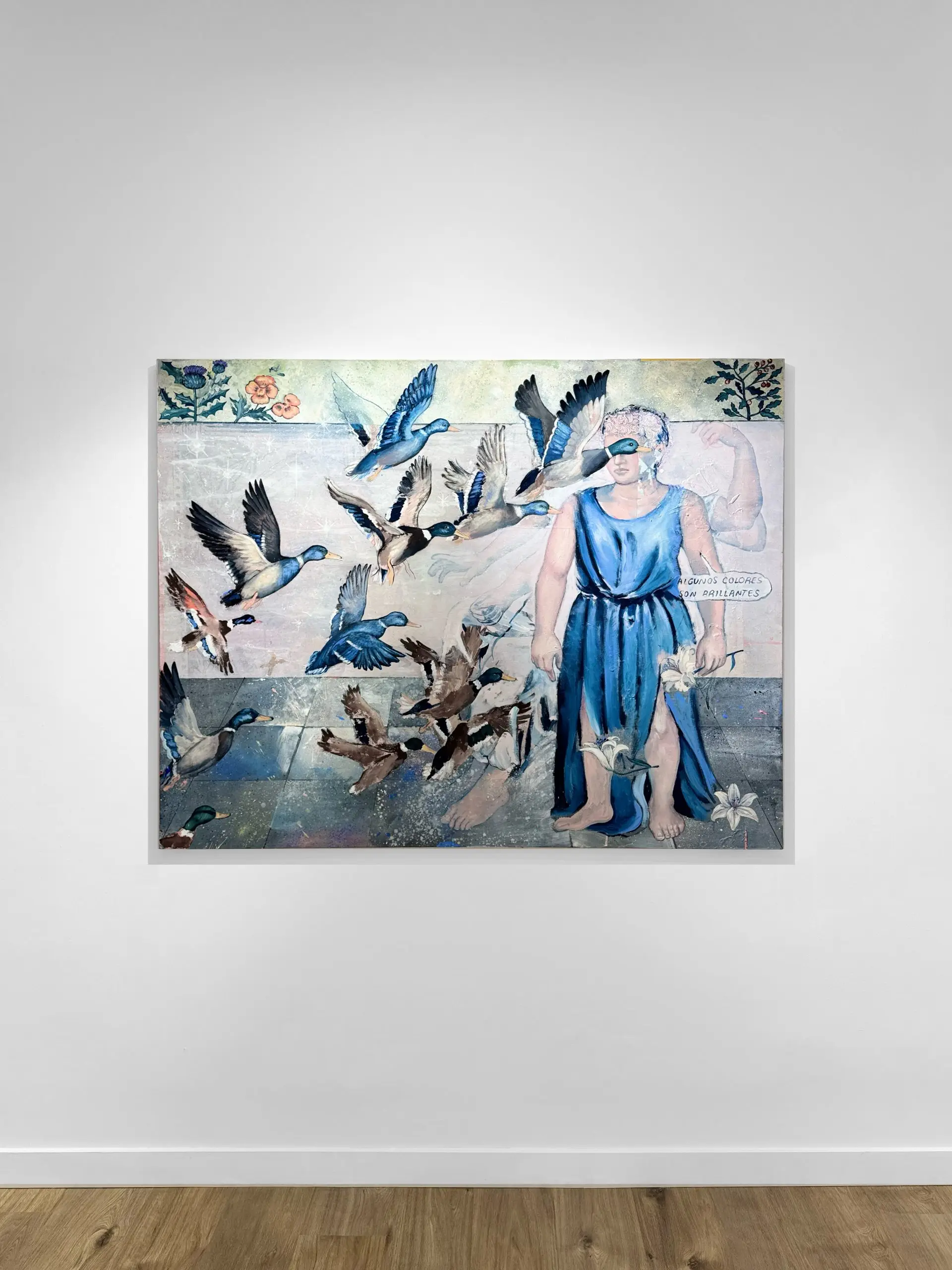
Some colors are brighter, 2025
Acrylic on canvas
120 x 160 cm (47.2 x 62.9 in)
The Bravú
The walk of the last inhabitant, 2025
Acrylic on canvas
120 x 160 cm (47.2 x 62.9 in)
The Bravú
Some colors are brighter, 2025
Acrylic on canvas
120 x 160 cm (47.2 x 62.9 in)
The Bravú
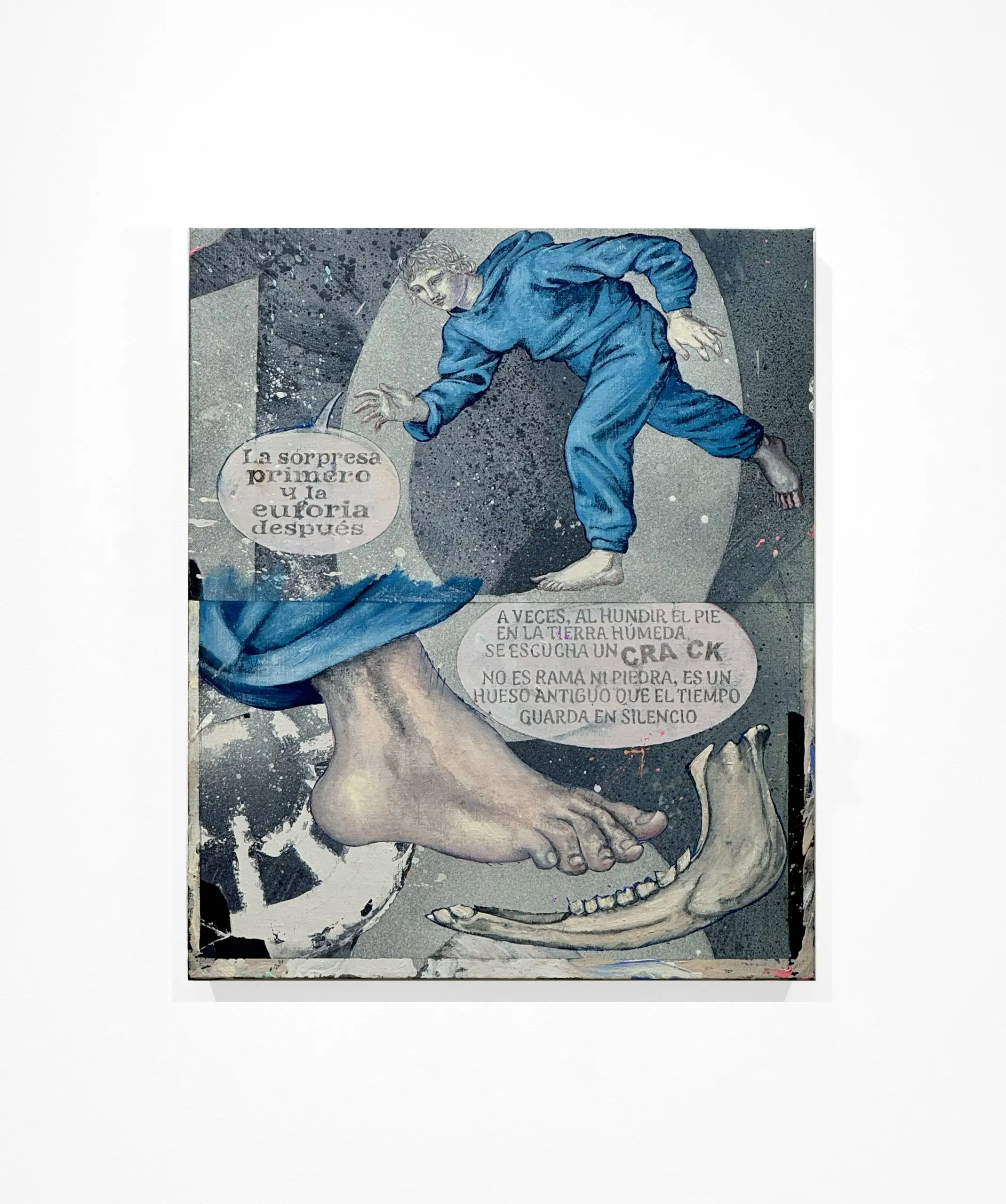
First surprise and then euphoria, 2025
Acrylic on canvas
60 x 50 cm (23.6 x 19.6 in)
The Bravú
First surprise and then euphoria, 2025
Acrylic on canvas
60 x 50 cm (23.6 x 19.6 in)
The Bravú
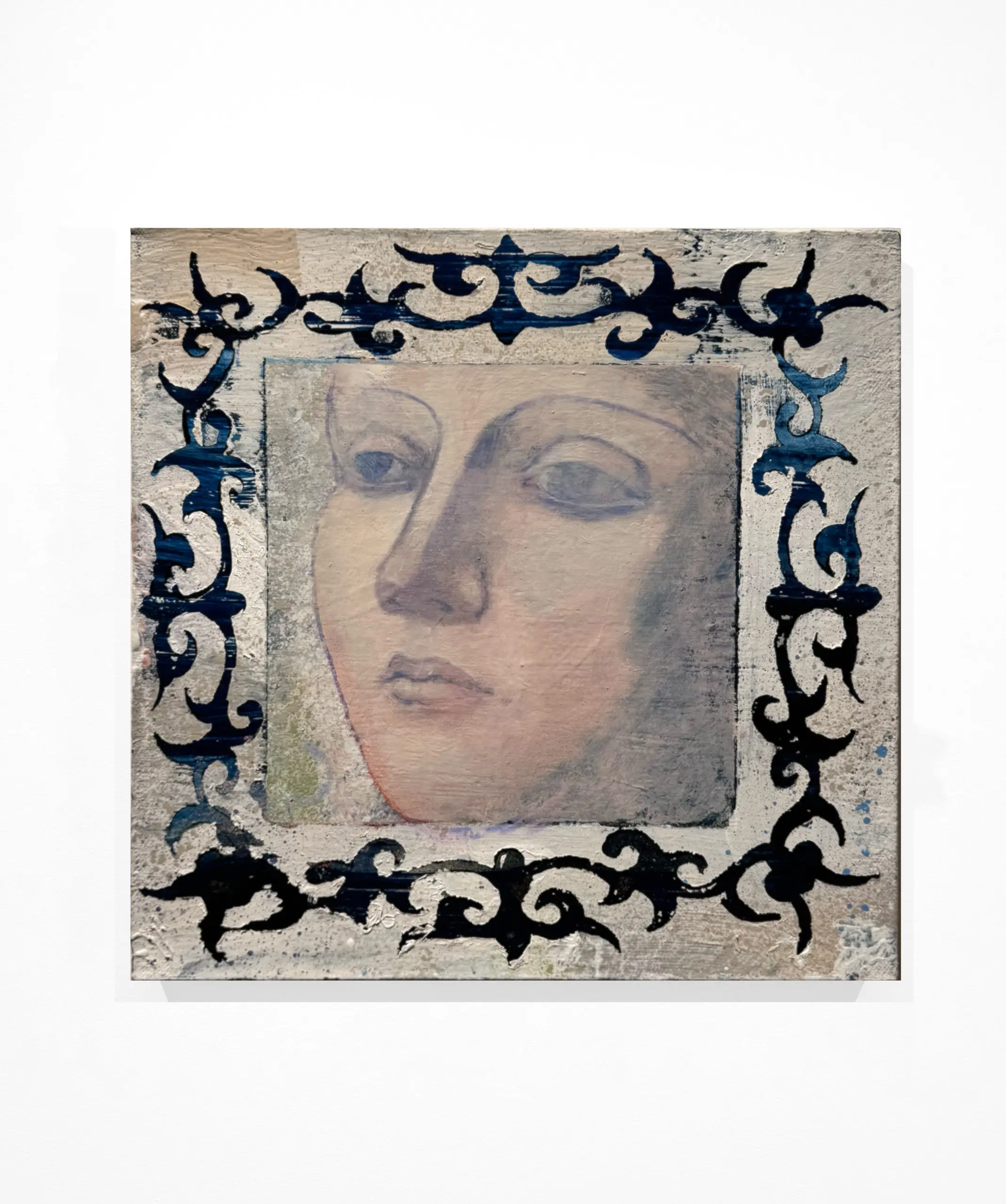
Frenzy, 2025
Acrylic on canvas
30 x 30 cm (11.8 x 11.8 in)
The Bravú
Frenzy, 2025
Acrylic on canvas
30 x 30 cm (11.8 x 11.8 in)
The Bravú
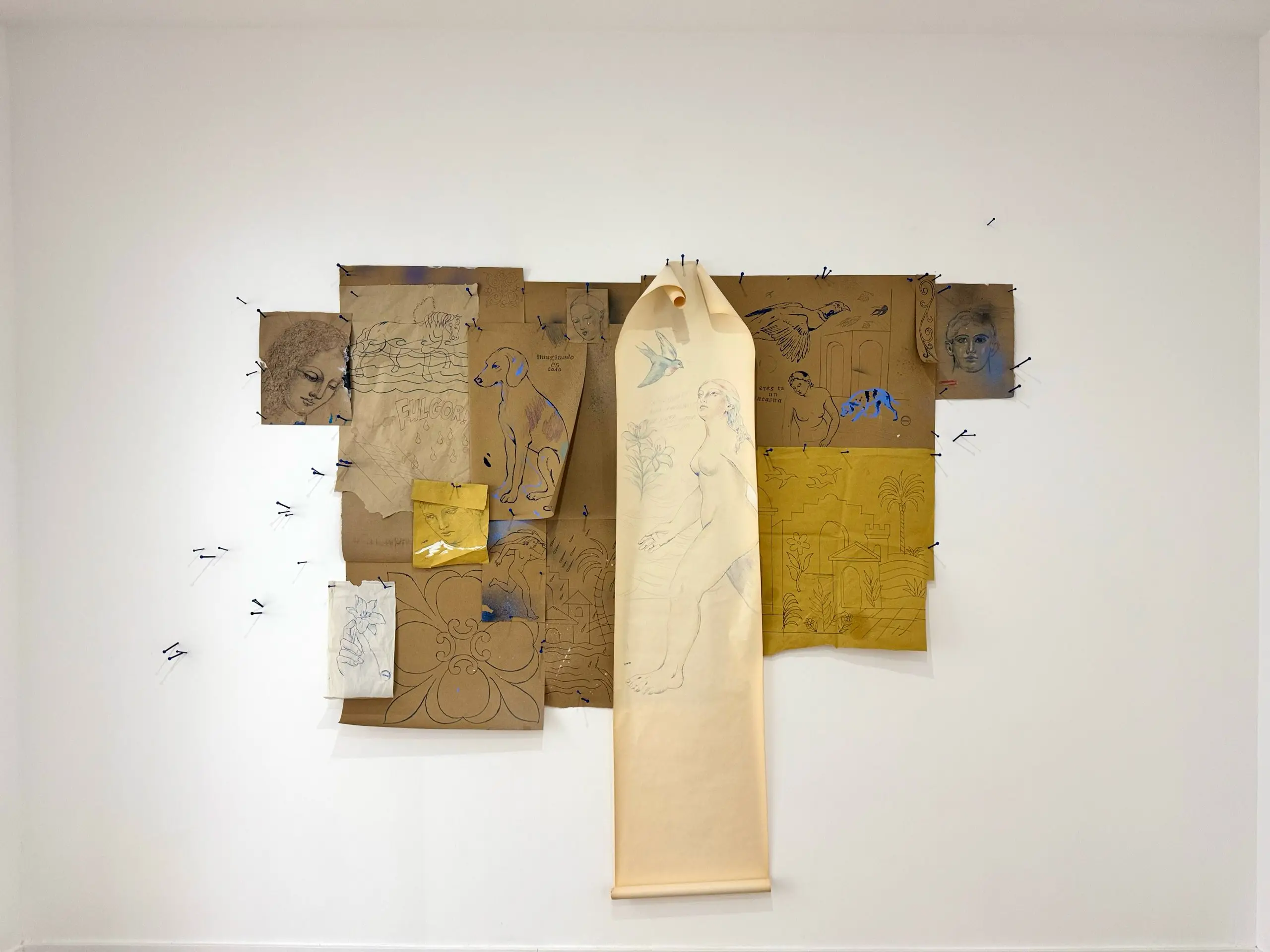
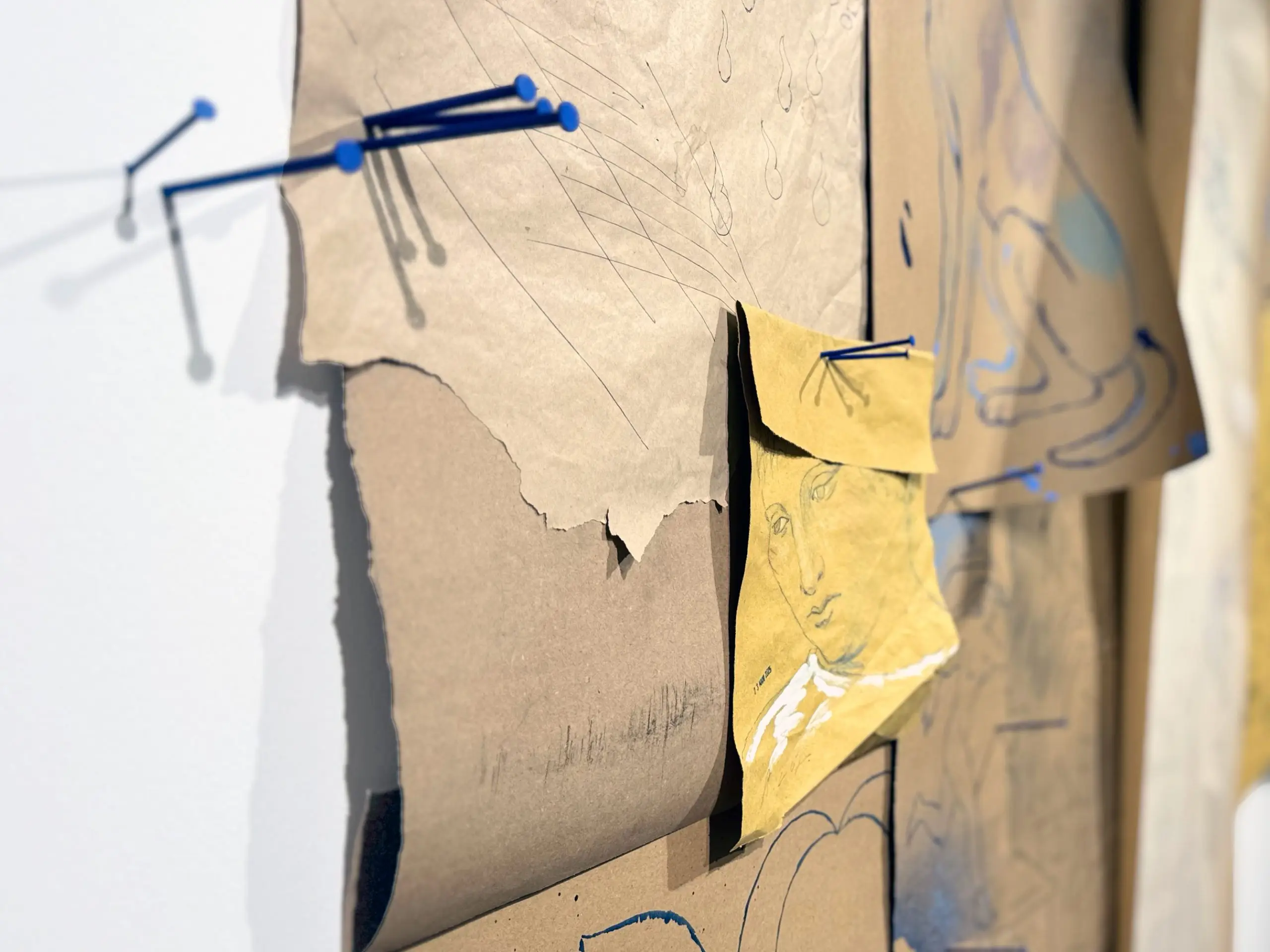
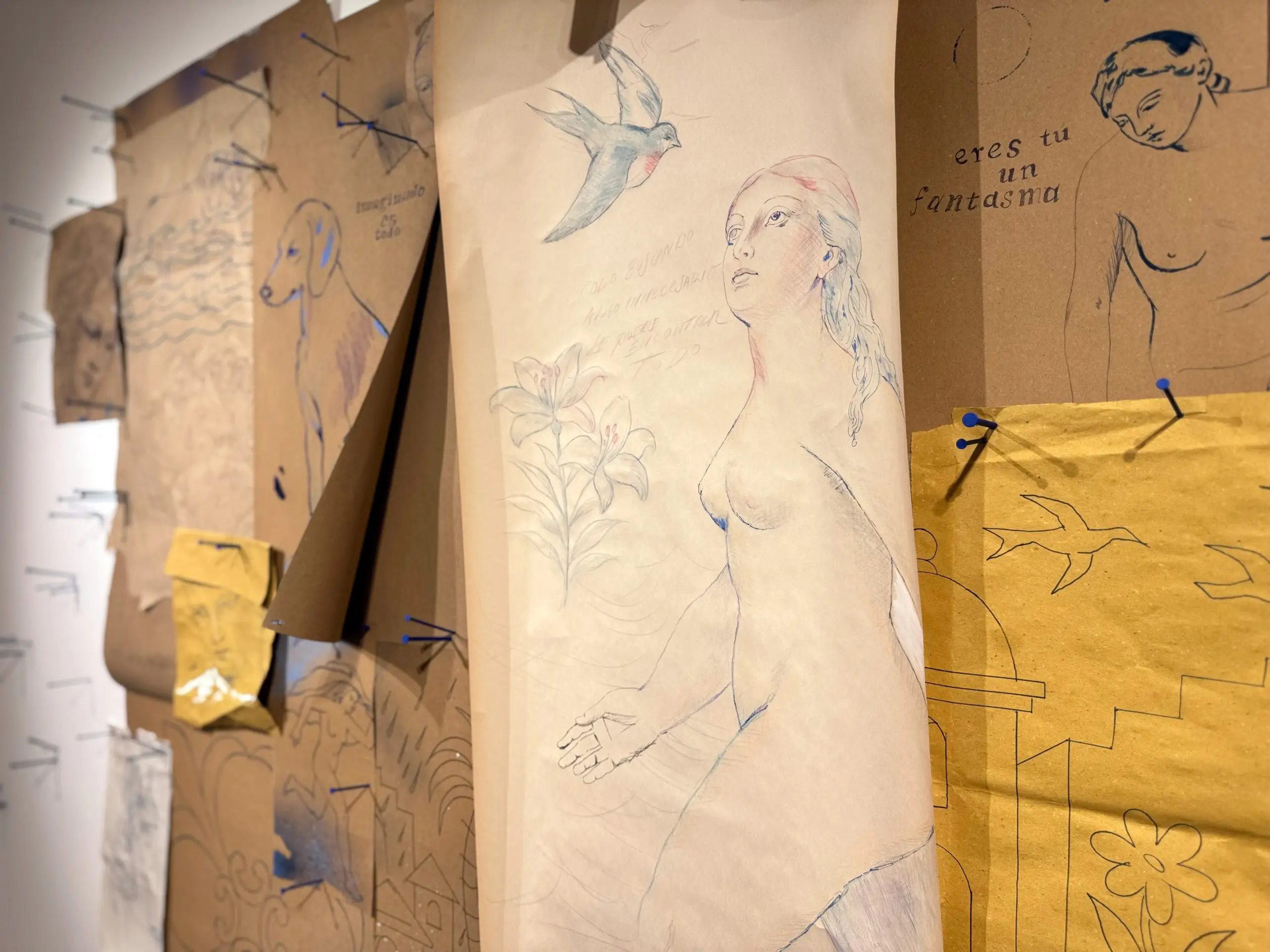
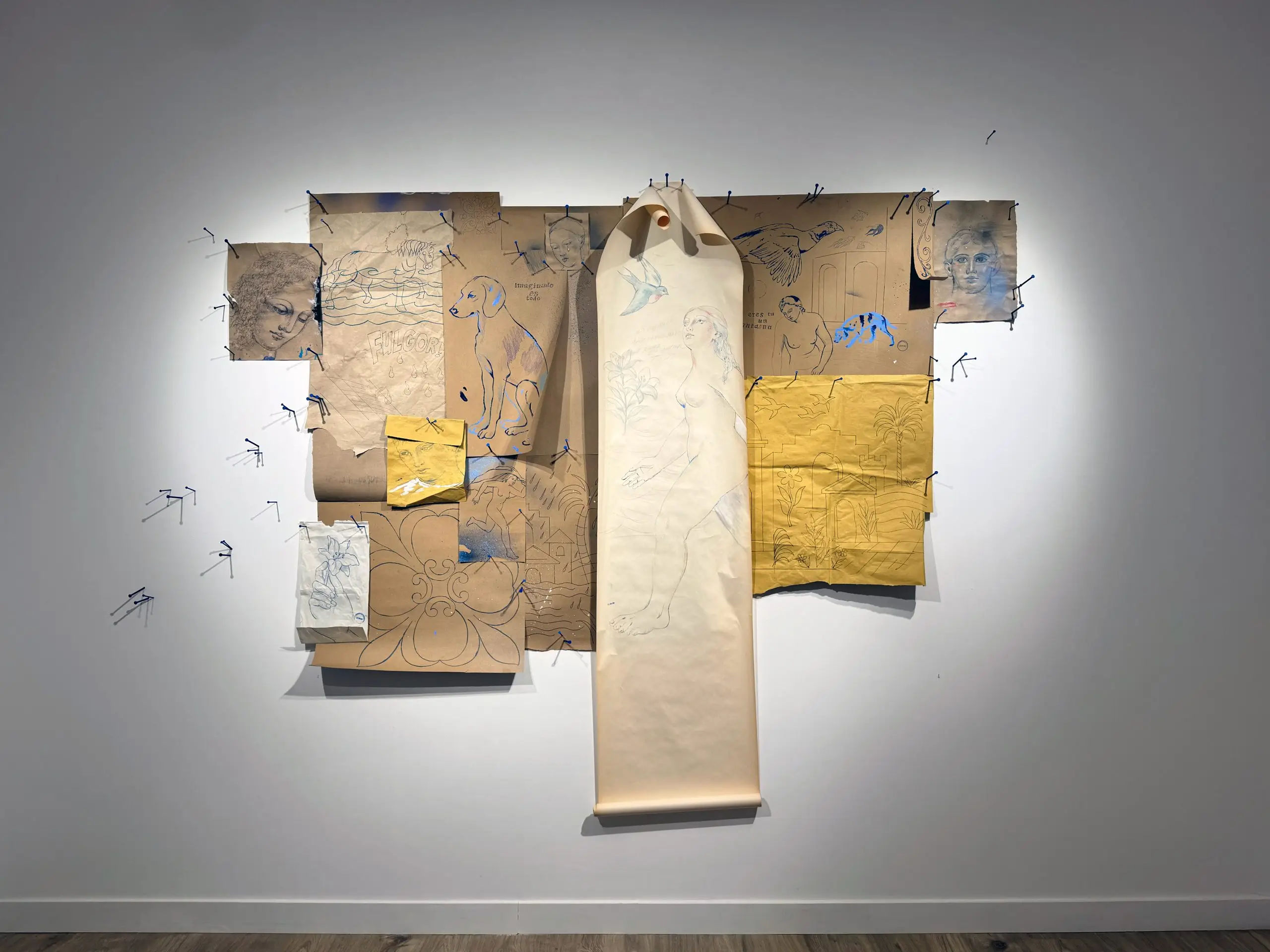
Sketches, 2025
Installation
Mixed media paper and hand painted nails
140 x 180 cm (55.1 x 70.9 in)
The Bravú
Sketches, 2025
Installation
Mixed media paper and hand painted nails
140 x 180 cm (55.1 x 70.9 in)
The Bravú
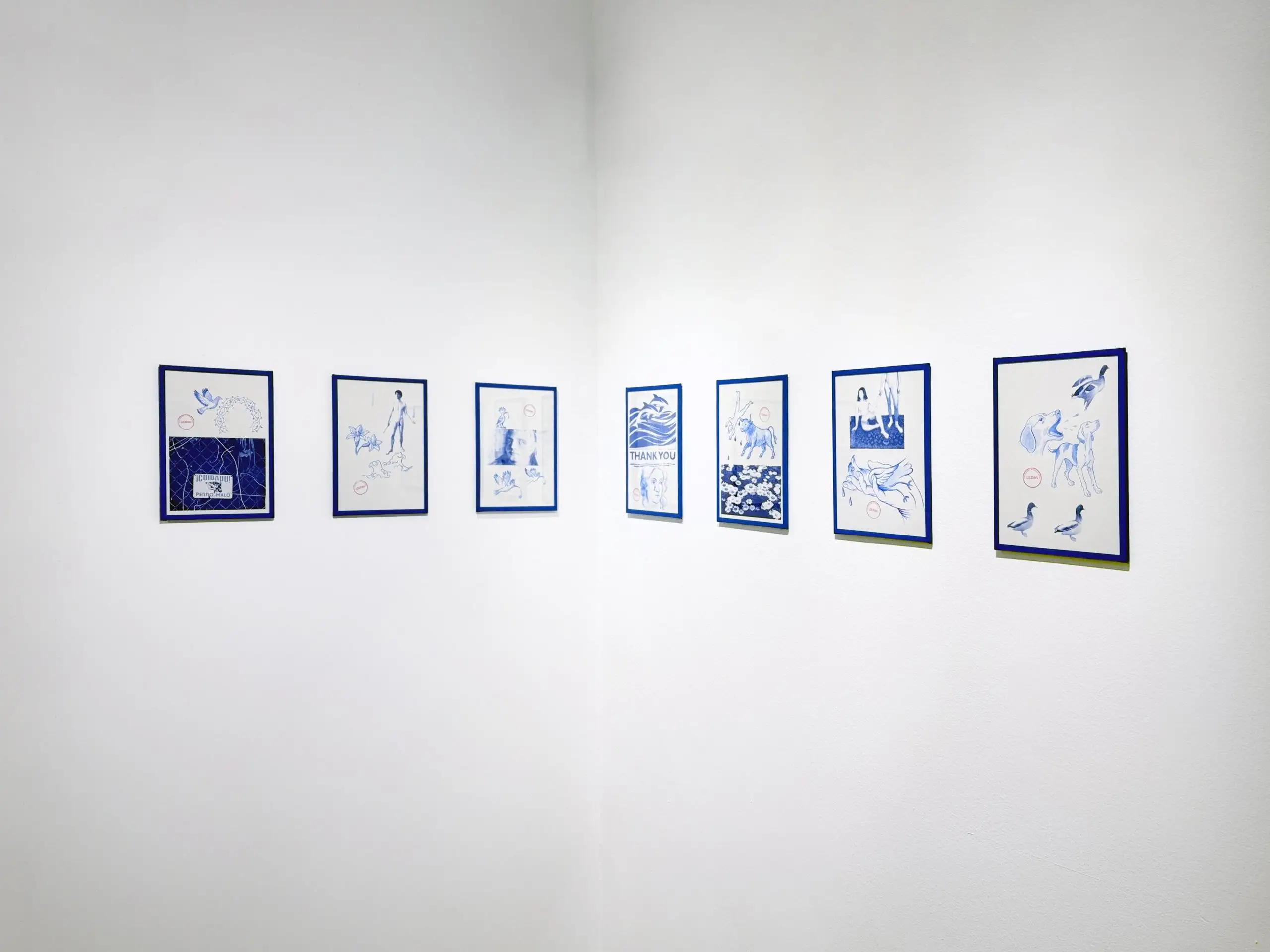
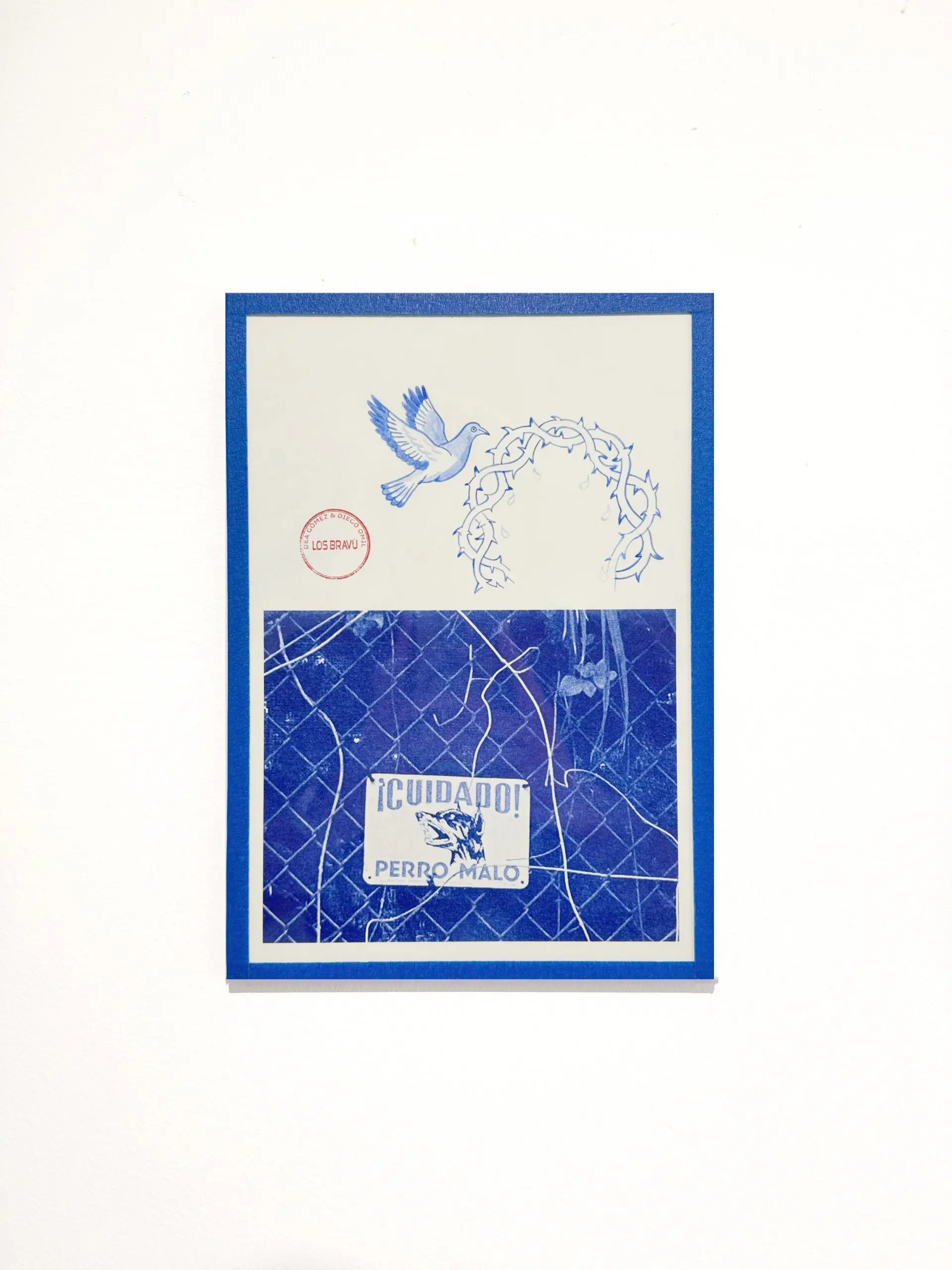
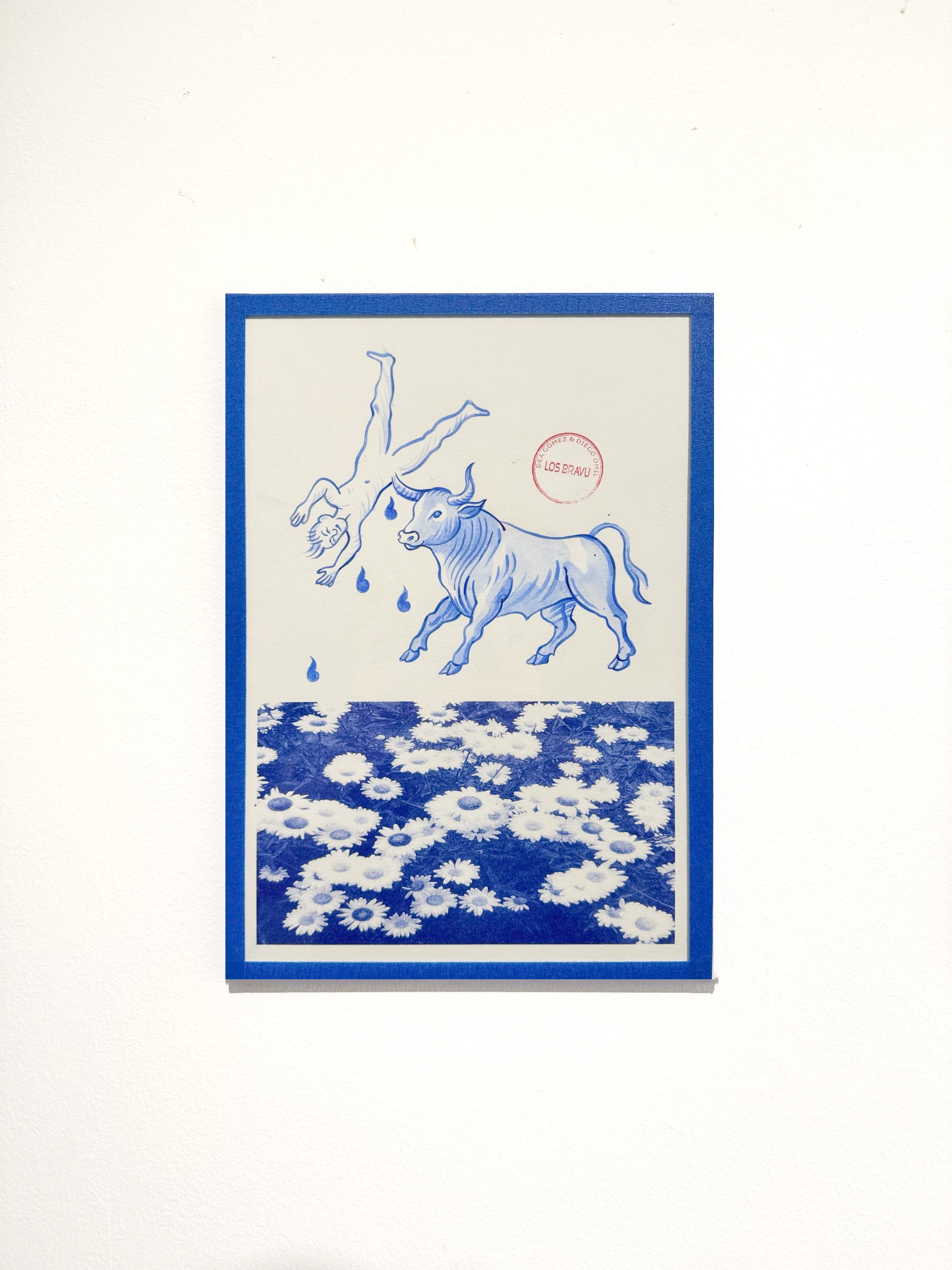
Risography Bad dog, 2025 Riso print on paper, intervened with acrylics
30 x 21 cm (11.8 x 8.2 in)
The Bravú
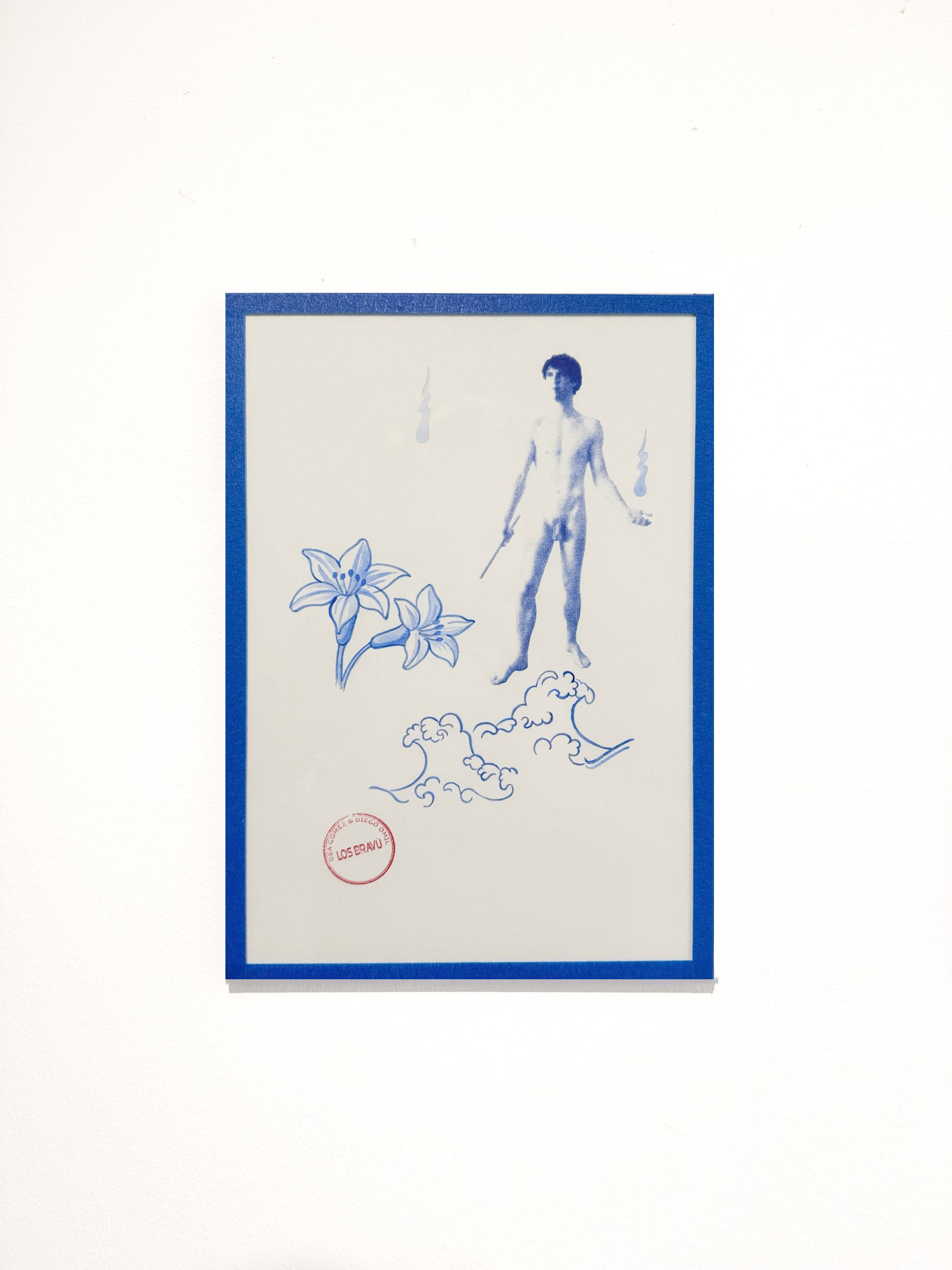
Risografía Lirios, 2025 Riso print on paper, intervened with acrylics
30 x 21 cm (11.8 x 8.2 in)
The Bravú
Risography Bad dog, 2025 Riso print on paper, intervened with acrylics
30 x 21 cm (11.8 x 8.2 in)
The Bravú
Risografía Lirios, 2025 Riso print on paper, intervened with acrylics
30 x 21 cm (11.8 x 8.2 in)
The Bravú
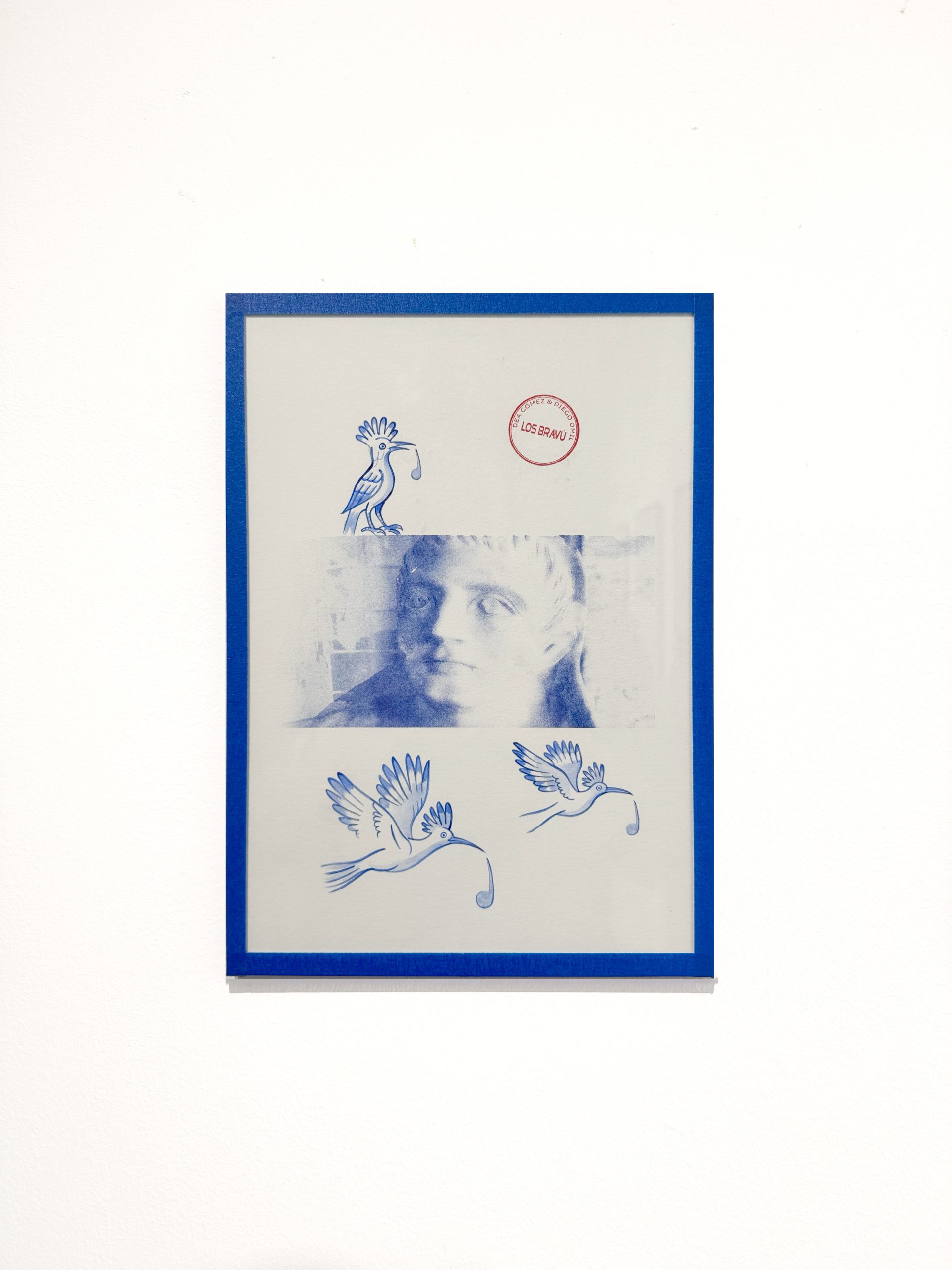
Risography Three hoopoes, 2025
Riso print on paper, intervened with acrylics
30 x 21 cm (11.8 x 8.2 in)
The Bravú
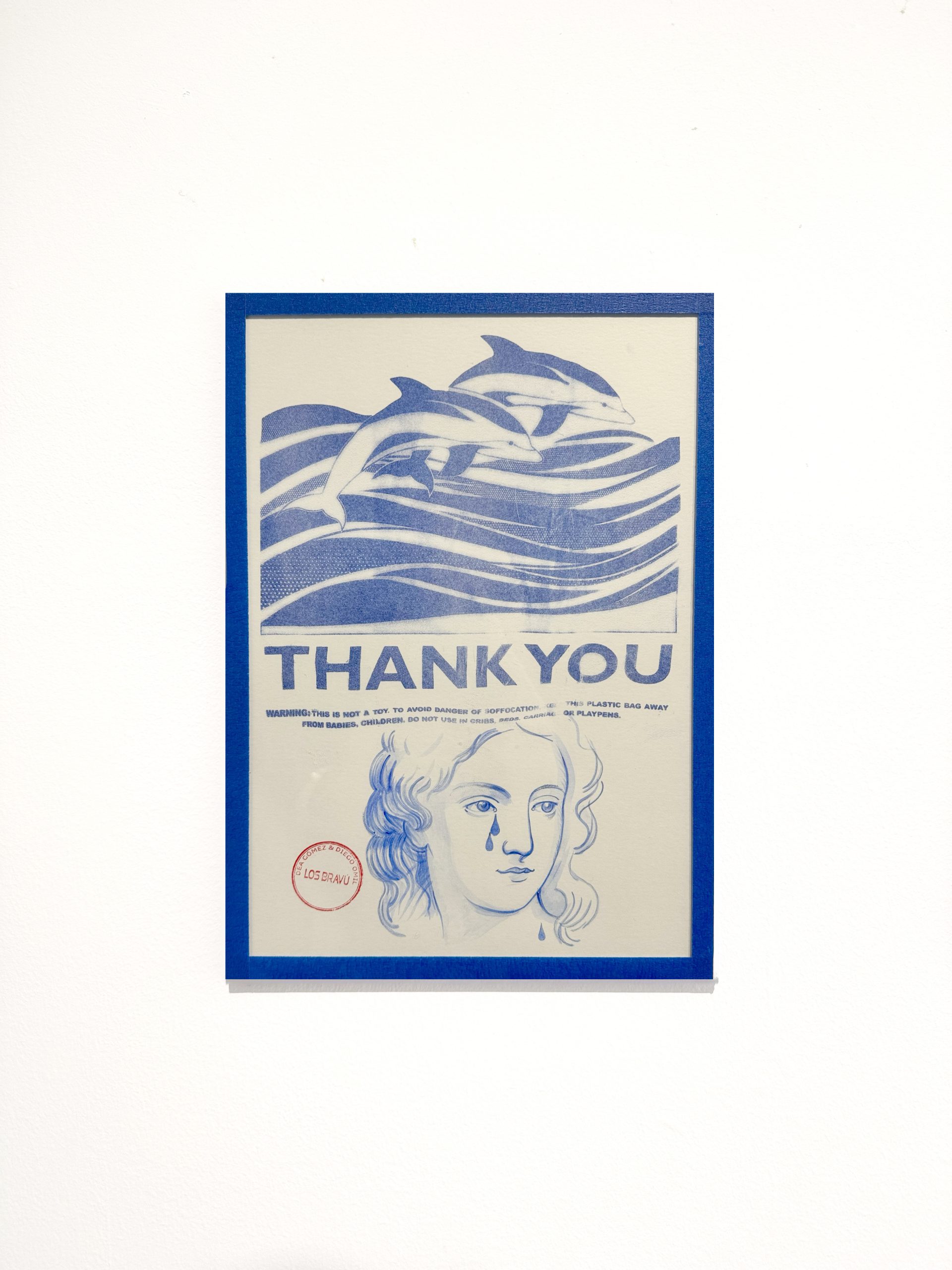
Risography Thank you, 2025 Riso print on paper, intervened with acrylics
30 x 21 cm (11.8 x 8.2 in)
 
The Bravú
Ferdinando Risography, 2025 Riso print on paper, intervened with acrylics
30 x 21 cm (11.8 x 8.2 in)
The Bravú
Risography Three hoopoes, 2025
Riso print on paper, intervened with acrylics
30 x 21 cm (11.8 x 8.2 in)
The Bravú
Risography Thank you, 2025 Riso print on paper, intervened with acrylics
30 x 21 cm (11.8 x 8.2 in)
The Bravú
Ferdinando Risography, 2025 Riso print on paper, intervened with acrylics
30 x 21 cm (11.8 x 8.2 in)
The Bravú
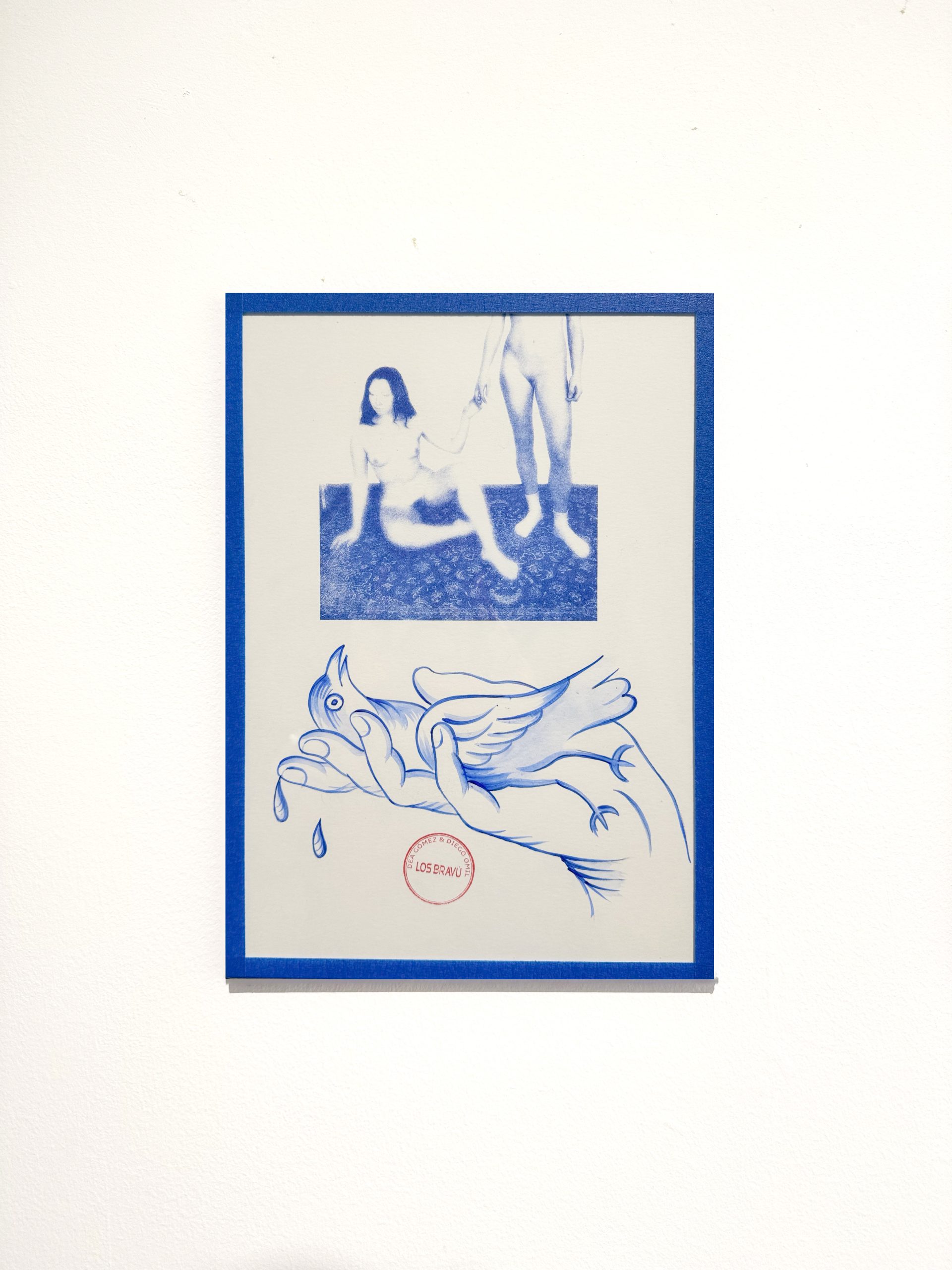
Risography Where the air is fresh and the flowers tremble, 2025
Riso print on paper, intervened with acrylics
21 x 30 cm (8.2 x 11.8 in)
The Bravú
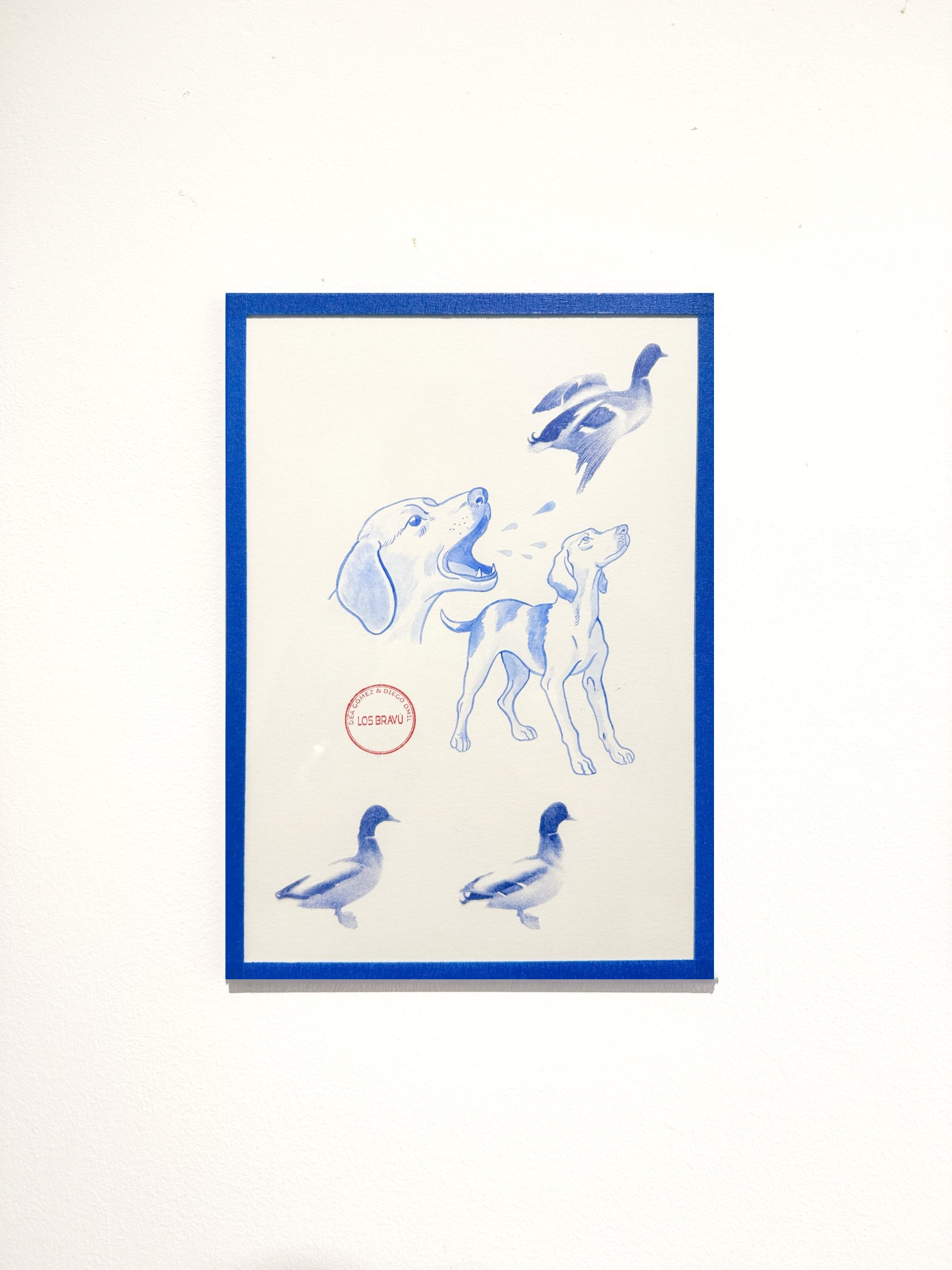
Risography Dog barking at ducks, 2025
Riso print on paper, intervened with acrylics
30 x 21 cm (11.8 x 8.2 in)
The Bravú
Risography Where the air is fresh and the flowers tremble, 2025
Riso print on paper, intervened with acrylics
21 x 30 cm (8.2 x 11.8 in)
The Bravú
Risography Dog barking at ducks, 2025
Riso print on paper, intervened with acrylics
30 x 21 cm (11.8 x 8.2 in)
The Bravú
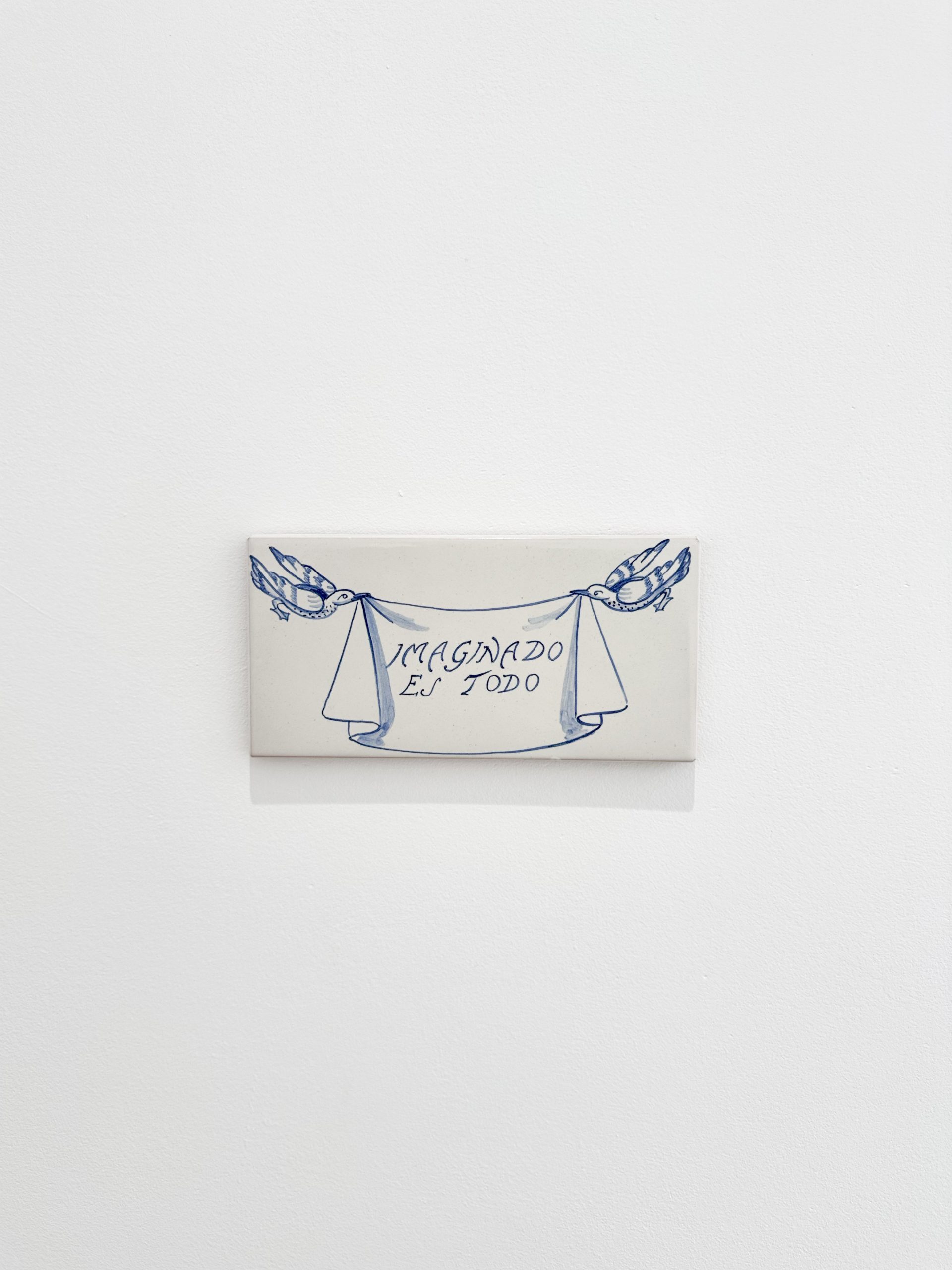
Imagined is all, 2025
Mosaic composed of 1 piece of tile, handmade in glazed ceramic with cobalt blue finish.
10 x 20 cm (0.4 x 7.8 in)/ Single piece
The Bravú
Imagined is all, 2025
Mosaic composed of 1 piece of tile, handmade in glazed ceramic with cobalt blue finish.
10 x 20 cm (0.4 x 7.8 in)/ Single piece

video

"In this exhibition we have rediscovered ourselves, with our origins in the world of comics and fanzine."

Dea Gomez