 EN
EN  ES
ES  IT
IT  FR
FR  ZH
ZH  PT
PT 

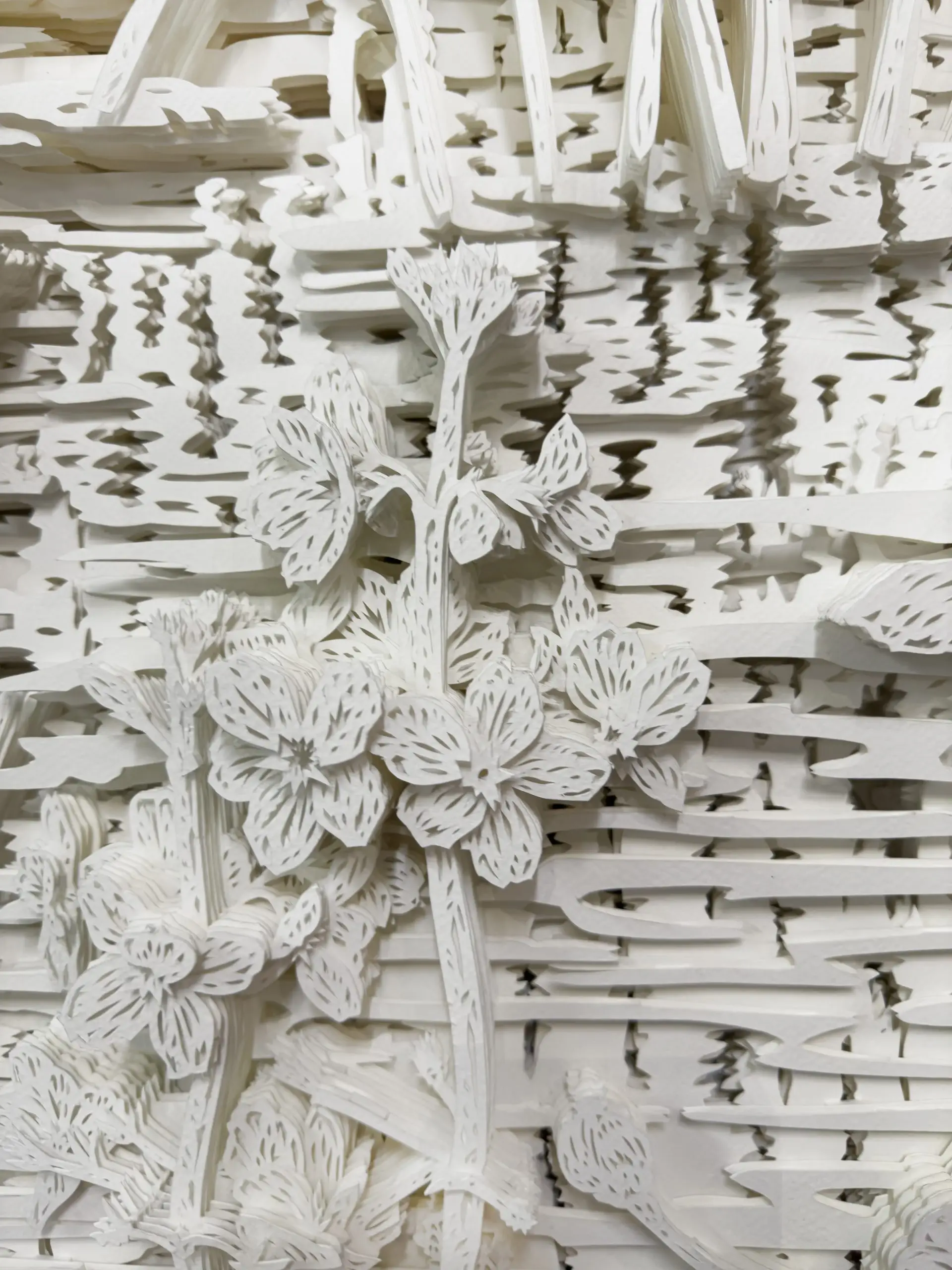
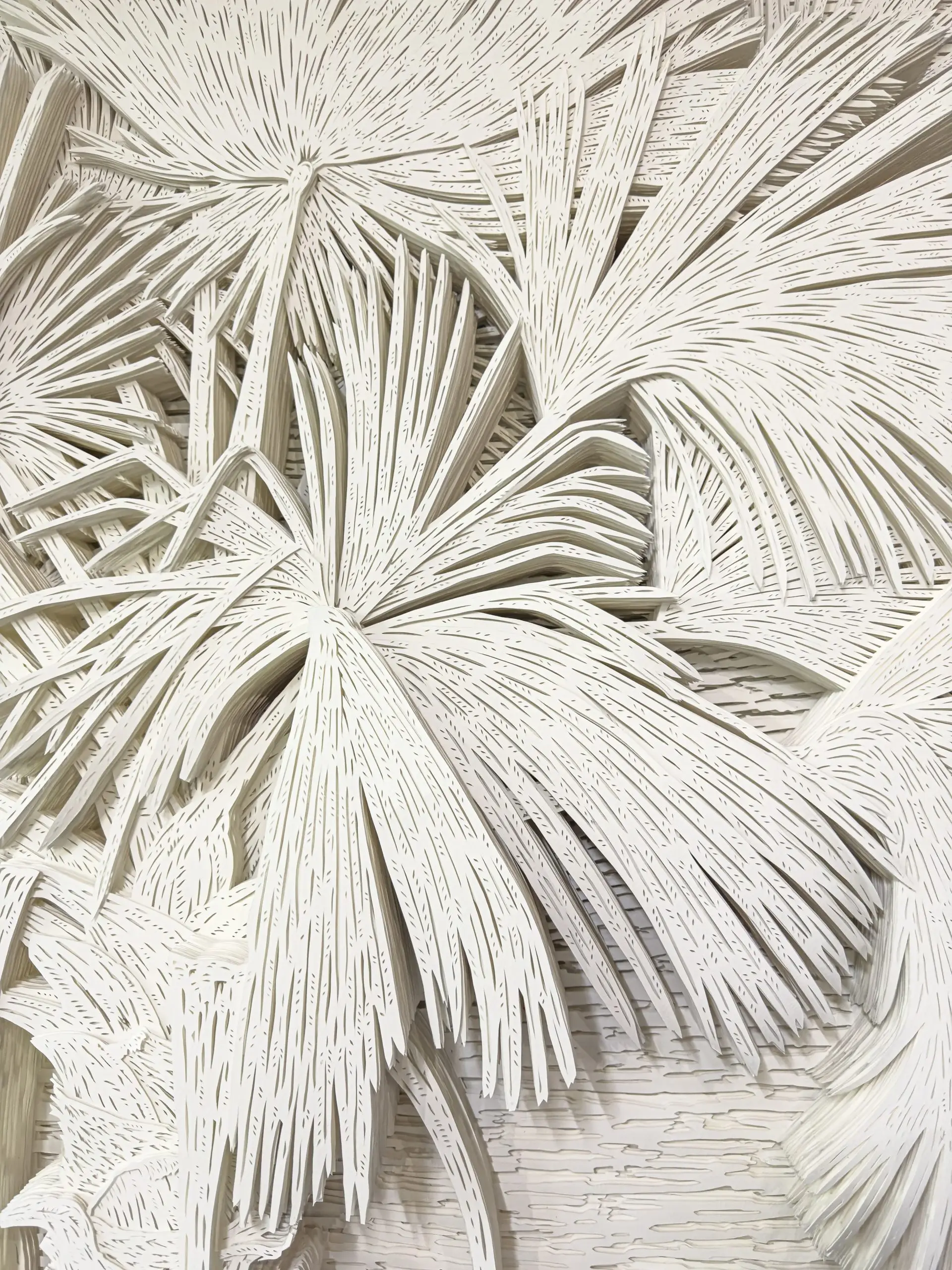


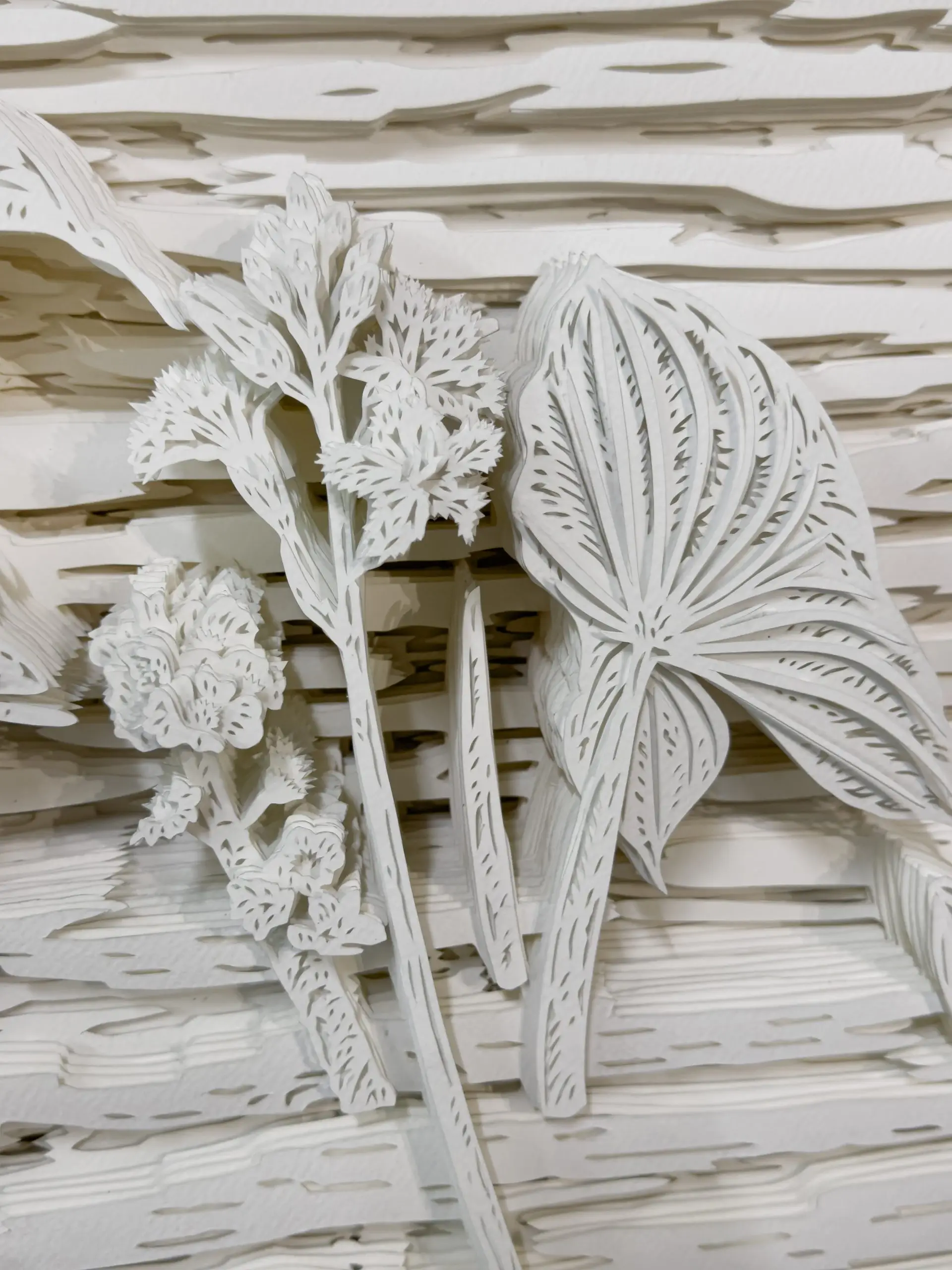
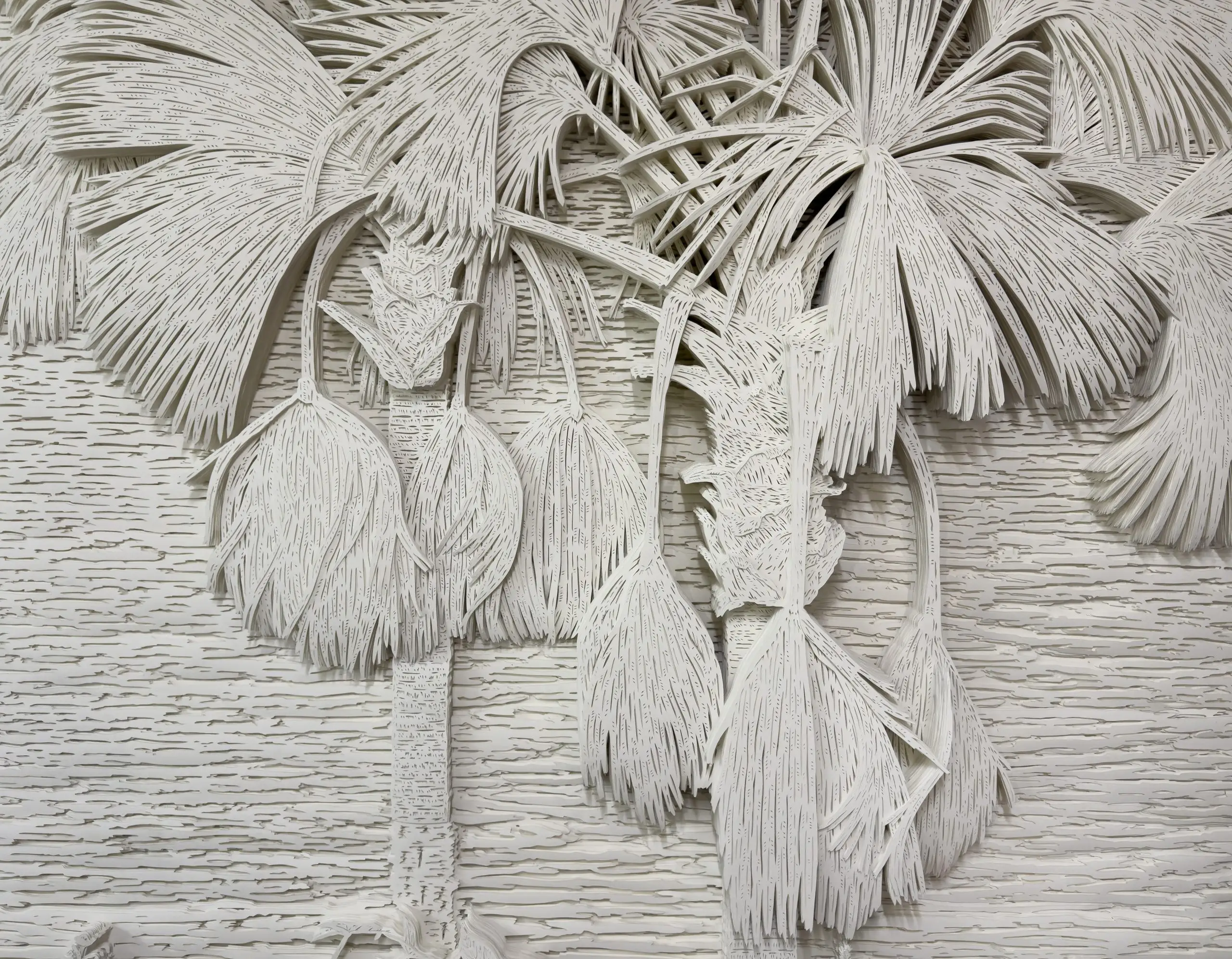
Swelling of the reservoir, from the series Manigua, 2025
Hand-cut paper / Fabriano 300 g Cold Press acid-free watercolor cardboard and museum glass
205 x 155 cm (80.7 x 61 in)
From an etymological point of view, the origin of the word manigua can be traced back to the language of the Taínos. It refers to a habitat where nature is wild, abundant, exuberant—even impenetrable—and is associated with a set of supernatural beliefs. Culturally, manigua It is ritual, syncretism, rebellion, healing, and freedom.
In the mangrove swamps, the first inhabitants of the Antilles developed their daily lives, and later African slaves remembered and practiced the religious beliefs of their peoples. During the wars in Cuba, it offered refuge to those seeking shelter, and knowledge of the plants that grew there was used to heal the wounded. All this ancestral wisdom has been preserved in popular culture, in the hands of herbalists and herbalists who zealously defend the healing and ritual potential of the plants that were once collected in the Cuban wilderness.
For me, manigua It is more than a natural environment: it is a concept, a body of knowledge that accompanies me wherever I go and underpins my daily practice. Its complexity is such that only at the intersection between imagination, writing, science, art, and tradition do I find its most faithful representation. Only by drawing a “cognitive map” can I truly rethink it.
For this project, I turned to the book by José Seoane Gallo, who—on the brink of drastic social change in the early 1960s—compiled a series of testimonies on the use of remedies derived from medicinal plants found in the Cuban countryside. His goal was to preserve this folk wisdom, which seemed destined to disappear.
Ariamna Contino