 EN
EN  ES
ES  IT
IT  FR
FR  ZH
ZH  PT
PT 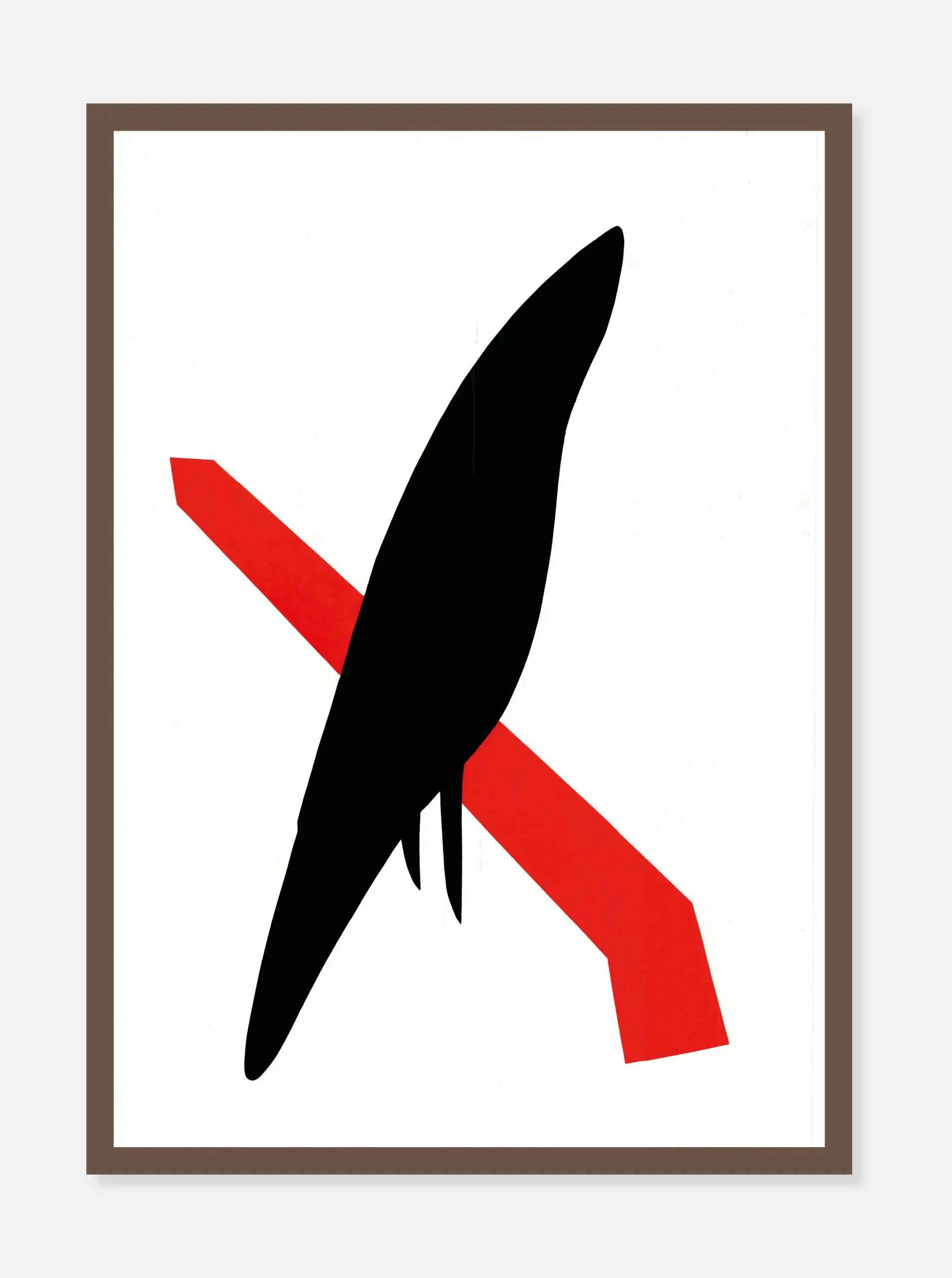
Adolfo Manzano
Untitled, 2026
Manual silkscreen printing on 320 gsm paper
50 × 35 cm (19.69 × 13.78 in)
Edition of 50 + 27 P/A
This edition is conceived as a transfer operation from the digital realm to the material territory of graphics. The process does not seek effects of wear and tear or conceptual alteration of the image, but a precise construction of the form through controlled technical decisions.
Silkscreen printing is used as a tool of definition: each ink pass establishes relationships of density, contrast and balance between chromatic masses. The final image is not a reproduced file, but a printed object where the paper, the ink and the printing gesture determine its physical presence.
The joint work between artist and printer is oriented to preserve the formal clarity of the project, avoiding accidental variations and prioritizing stability, register and cleanliness of printing. The technique thus becomes a structural language that supports the image, without adding ornamentation or visual interference.
Technical data sheet of the paper used
The edition has been stamped on Freelife Vellum 320 g/m² paper, a high quality paper composed of 55% of pure FSC® certified cellulose, 40% of FSC® certified recycled fibers and 5% of cotton fibers. This composition provides structural stability, strength and body, while introducing slight tonal variations and small irregularities typical of papers with high recycled content.
Its macroporous and slightly vellum surface favors an excellent reception of the water-based screen printing ink, allowing a good charge, contrast and depth without loss of definition. The choice of this support reinforces the process character of the series and establishes a material coherence between image, technique and concept.
Methodology datasheet (screens and printing)
Silkscreen edition of 50 copies, conceived under criteria of technical control, support stability and formal definition. The methodology is oriented to precise graphics, without variation between copies as an aesthetic resource.
Materials
Inks: water base
Screens: 120 and 100 yarns/cm meshes
Emulsion: high-definition photopolymer emulsion
Racleta: medium hardness (approx. 75 shore)
Mesh strategy
120 threads/cm (red ink): used in the first pass to control the ink load, minimize paper absorption and avoid expansion or deformation of the substrate. It allows uniform deposition and clean edges.
100 threads/cm (black ink): used in the second pass to build the figure, providing more ink body and visual weight without compromising definition.
Stamping process
Printing was carried out in two successive passes, with precise registration between layers. Pressure, squeegee angle and humidity level were controlled to ensure chromatic consistency, dimensional stability of the paper and uniformity between specimens.
The process prioritizes formal clarity, image cleanliness and technical control as structural values of the work.