 EN
EN  ES
ES  IT
IT  FR
FR  ZH
ZH  PT
PT 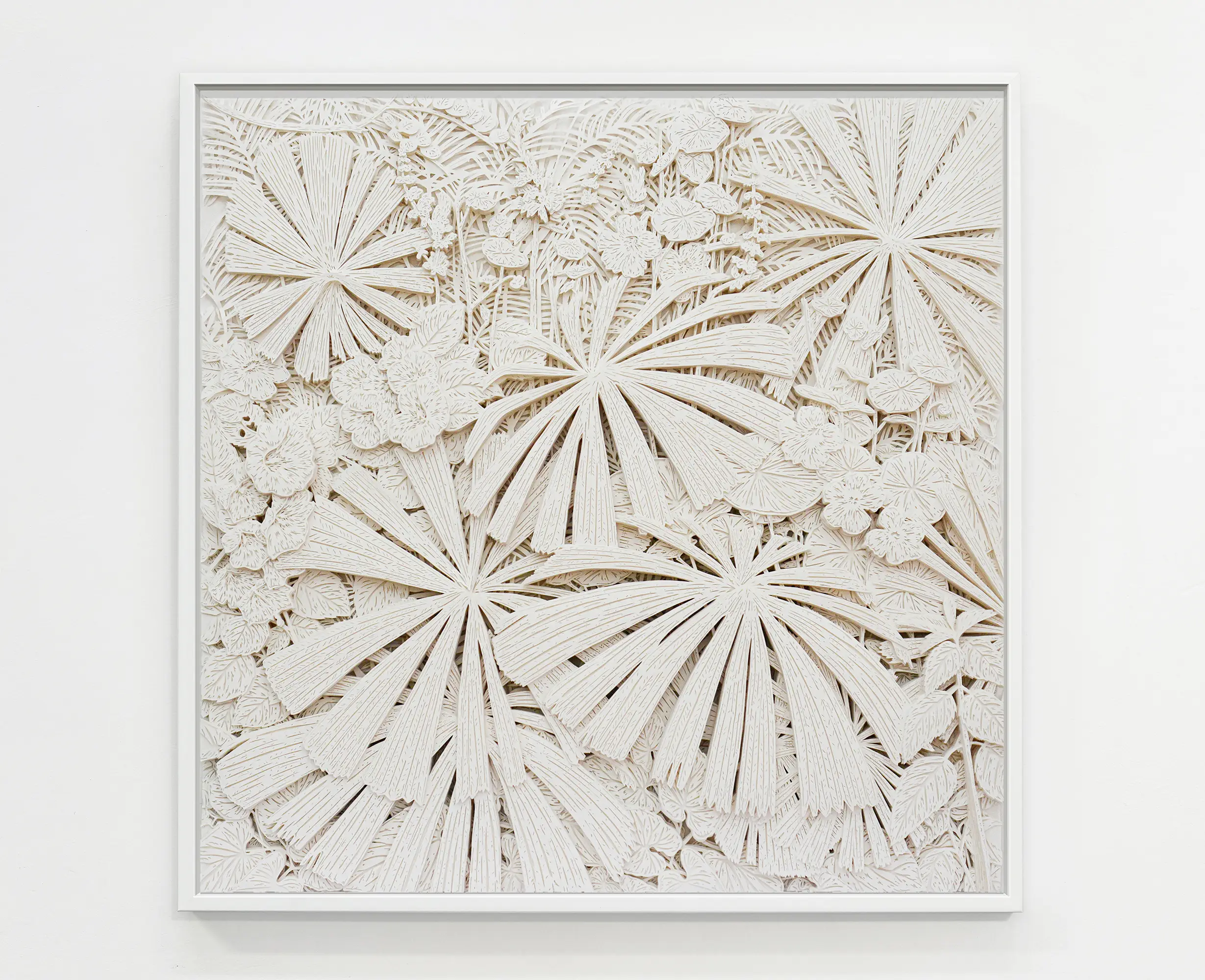


Hand-cut paper (Stramore Cold Press cardboard, 300 gsm)
125 x 125 cm
From an etymological point of view, the origins of the word "manigua" go back to the Taino language. In the Taino universe, it referred to the space where nature is usually wild, abundant, exuberant and sometimes impenetrable. The term would also be attributed to a set of supernatural beliefs. In its cultural sense, the manigua is rite, syncretism and myth; the manigua is rebellion and freedom. In this space, the first settlers developed their daily life, and later the African slaves would recall the religious beliefs of their people. In both cases, nature was assumed from a spiritual point of view, and both cemíes and saints would find in it a perfect habitat. During wars, the manigua served as a refuge and its knowledge was used to heal the wounded. All this ancestral knowledge has been preserved in popular culture by herbalists and "yerberos", who zealously defend the healing and ritual potential of the plants that were once extracted from the Cuban manigua.